
Creating a custom Fabric Apron Pattern is one of the most rewarding projects for both beginner and experienced sewists because it combines practical utility with endless creative expression. Whether you are looking to protect your clothes while cooking a five-course meal or need a sturdy barrier against sawdust in a woodworking shop, crafting your own apron ensures a perfect fit and a style that matches your personality. By selecting your own materials and following a professional-grade Fabric Apron Pattern, you move away from mass-produced, flimsy alternatives and toward a durable, bespoke garment that can last for decades.
The beauty of working with a dedicated Fabric Apron Pattern lies in its inherent simplicity and the logical progression of the assembly process. Most patterns focus on a few key components: the main body, the neck strap, the waist ties, and the optional but highly recommended pockets. When you understand the anatomy of a well-constructed apron, you can begin to experiment with different weights of fabric, decorative topstitching, and reinforced stress points to create something truly professional. This guide is designed to walk you through every nuance of the process, ensuring your final product is as functional as it is beautiful.
Before you cut into your chosen material, it is essential to recognize that a Fabric Apron Pattern is more than just a template; it is a blueprint for comfort and protection. Choosing the right pattern involves considering the coverage you need—whether it is a full bib style for maximum protection or a half-apron for light kitchen duties. In the following sections, we will delve into the technical aspects of selecting textiles, preparing your workspace, and executing the sewing steps with precision to ensure your DIY journey is a resounding success.
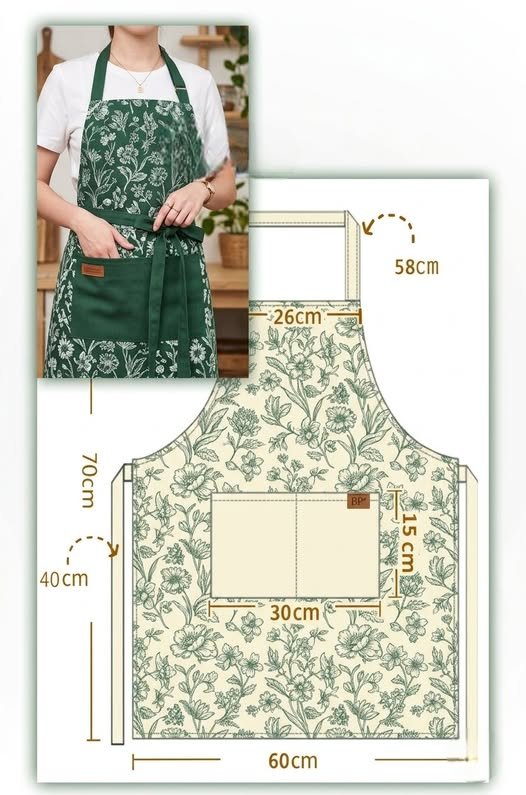
1. Selecting the Right Material for Your Fabric Apron Pattern
The foundation of any successful sewing project is the quality of the textile used, and for a Fabric Apron Pattern, durability is the primary concern. You want a fabric that can withstand frequent washing and resist stains, making medium-to-heavyweight cotton canvas or denim excellent choices. These materials provide a stable base that won’t shift too much during the cutting process, allowing you to follow your pattern lines with absolute accuracy.
While aesthetics are important, the weight of the fabric affects how the apron hangs on the body and how much protection it offers. A lightweight quilting cotton might be beautiful for a decorative hostess apron, but for heavy-duty tasks, a 10 oz canvas is much more appropriate. Always pre-wash your fabric before starting your Fabric Apron Pattern to account for shrinkage, ensuring that the finished garment maintains its intended dimensions after its first trip through the laundry.
Color and print selection also play a strategic role in the longevity of your project. Darker colors and busy prints are far more forgiving when it comes to hiding inevitable kitchen splatters or oil stains. If you are using a printed fabric, pay close attention to the direction of the grain and the orientation of the pattern. You want to ensure that your Fabric Apron Pattern pieces are laid out so that the design is upright and centered on the bib for a polished, professional look.
Texture is another often-overlooked element in fabric selection. A slightly textured weave can provide a better grip for your hands when wiping them quickly, whereas a very smooth synthetic blend might cause liquids to bead and roll off onto your shoes. For the most comfortable experience, many crafters prefer 100% natural fibers like linen or cotton. These materials breathe well, which is a significant advantage when you are working near a hot stove or in a humid garden environment.
Don’t forget to consider the “hand” of the fabric, which refers to how it feels and drapes. A stiff fabric might provide excellent protection but could feel restrictive around the neck or waist. Conversely, a very soft fabric might lose its shape over time. The goal when executing a Fabric Apron Pattern is to find a balance between a material that holds the crisp lines of the pattern and one that moves comfortably with your body as you work.
Finally, think about the notions and accents that will complement your chosen fabric. Coordinating thread colors, sturdy twill tape for ties, or even leather accents can elevate a basic Fabric Apron Pattern into a high-end piece of workwear. High-quality thread is non-negotiable, as the seams of an apron undergo significant tension, especially at the waist. By matching the strength of your thread to the weight of your fabric, you ensure the structural integrity of every stitch.
2. Understanding and Preparing Your Fabric Apron Pattern Layout
Before the first cut is made, you must master the art of the layout, which is the most critical phase of using a Fabric Apron Pattern. Begin by ironing your material to remove every wrinkle, as even a small fold can result in a distorted cut that throws off the symmetry of the bib or the length of the ties. Lay your fabric out on a large, flat surface, ensuring the selvages (the finished edges) are perfectly aligned to maintain the straight grain of the material.
A standard Fabric Apron Pattern usually requires you to cut one large piece for the body, often on a fold to ensure the left and right sides are identical. Using pattern weights or fine pins, secure your paper pattern to the fabric securely. If you are drafting your own Fabric Apron Pattern, use a tailor’s chalk or a disappearing ink pen to mark your measurements directly onto the reverse side of the material, leaving ample room for seam allowances.
One of the most common mistakes in apron making is ignoring the “grainline” indicated on the Fabric Apron Pattern. The grainline should run parallel to the selvage to prevent the apron from twisting or sagging over time. If your pattern includes pockets, try to “fussy cut” them if you are using a patterned fabric, meaning you align the pocket’s design to match the design on the main body of the apron for a seamless visual transition.
Consider the placement of the neck and waist ties during the layout phase. Some Fabric Apron Pattern designs use the same material for the ties, while others utilize contrasting ribbon or webbing. If you are cutting ties from your main fabric, ensure they are cut on the cross-grain for a bit of natural “give” or use a bias cut if you want them to be particularly supple. Accuracy here prevents the frustration of having ties that are too short to knot comfortably.
Marking all the “notches” and “dots” from your Fabric Apron Pattern onto your fabric is a step you should never skip. These marks indicate where the pockets should be placed, where the ties are inserted, and where hems should be folded. Using a small snip or a chalk mark saves you from having to refer back to the paper pattern constantly during the sewing process, keeping your workflow efficient and error-free.
Once everything is marked and pinned, use sharp fabric shears to cut along the lines of your Fabric Apron Pattern. Long, smooth strokes with the scissors will produce cleaner edges than short, choppy snips. After cutting, keep the pieces organized. It is helpful to keep the paper pattern pinned to the fabric until the moment you are ready to sew that specific component, preventing any confusion between similar-looking pieces like the neck strap and the waist ties.
3. Essential Sewing Techniques for a Professional Fabric Apron Pattern
The assembly of a Fabric Apron Pattern begins with the edges, as raw edges will fray quickly given the heavy use aprons endure. Start by creating a double-fold hem on the sides and bottom of the main body. This involves folding the edge over by a quarter inch, pressing it, then folding it again and pressing once more. This technique, often suggested in a high-quality Fabric Apron Pattern, encases the raw edge completely, providing a clean finish and added weight to the hem.
Topstitching is a hallmark of a well-made apron and is a technique you should practice to perfect your Fabric Apron Pattern execution. Use a slightly longer stitch length (around 3.0mm to 3.5mm) for a decorative look on the outer edges. For a professional touch, use a contrasting thread color that pops against the fabric. This not only strengthens the seams but also adds a visual element that makes the pattern look like a designer item rather than a quick DIY project.
Reinforcing stress points is the secret to an apron that lasts a lifetime. When you attach the waist ties and neck straps to the main body of the Fabric Apron Pattern, don’t just sew a single line of stitches. Instead, use a “box stitch” or a “cross-stitch” (a square with an ‘X’ inside). This distributes the pulling force across a larger area of the fabric, preventing the ties from ripping away from the bib when you move or bend over.
Pocket attachment is another area where precision matters in your Fabric Apron Pattern. Most people prefer a large kangaroo pocket or two smaller side pockets. To ensure they are level, use a ruler to measure the distance from the side hems and the bottom hem. Pin them thoroughly and sew around the sides and bottom, leaving the top open. Again, use backstitching or reinforced corners at the top of the pocket to handle the weight of tools or phones.
If your Fabric Apron Pattern features an adjustable neck strap, you will likely need to incorporate hardware like D-rings or a slide buckle. This adds a level of sophistication and makes the apron more versatile for different body types. Ensure your strap is narrow enough to fit through the hardware but sturdy enough not to fold over on itself. A well-placed piece of interfacing inside the strap can provide the necessary structure without adding too much bulk.
Finally, give your apron a professional “final press.” Use a steam iron to flatten all the seams and hems. This “sets” the stitches into the fabric and gives the entire project a crisp, finished appearance. A common saying in sewing is that you should spend as much time at the ironing board as you do at the sewing machine, and this is especially true when following a Fabric Apron Pattern to achieve a retail-ready result.
4. Customizing and Enhancing Your Fabric Apron Pattern
Once you have mastered the basic Fabric Apron Pattern, the world of customization opens up. You can modify the length to create a “cobbler style” apron or shorten it for a “bistro” look. Adding “towel loops” is a popular modification; simply sew a small loop of twill tape near the waistline so you can keep a drying cloth within reach at all times. These small functional tweaks make your pattern work harder for your specific needs.
Embroidery and applique are fantastic ways to personalize your Fabric Apron Pattern. Whether it is a simple monogram on the bib or a full floral design across the pockets, adding thread art makes the apron uniquely yours. If you plan to embroider, it is often easier to do so on the flat fabric pieces after they are cut according to the pattern but before they are sewn together, as this allows you to hoop the material more easily.
Mixing and matching different fabrics can create a stunning visual impact. Use a bold, patterned fabric for the pockets and ties while keeping the main body a solid color. This “color-blocking” technique is a great way to use up scraps from previous projects while following your Fabric Apron Pattern. Just ensure that all the different materials have similar laundering requirements so the apron doesn’t warp or bleed in the wash.
For those who use their aprons for gardening or workshop tasks, adding “tool slots” to the pockets is an essential upgrade. Within the larger pocket area defined by your Fabric Apron Pattern, sew vertical lines to create narrow sleeves. These are perfect for holding pens, thermometers, or small screwdrivers. Measure the tools you use most often to ensure the slots are the perfect width for a snug, secure fit.
Linings can also be added to a Fabric Apron Pattern for a more substantial feel. A lined apron feels more like a finished garment and provides an extra layer of protection against spills. To do this, simply cut the main body piece twice—once from your outer fabric and once from a lightweight lining cotton. Sew them right sides together, leave a small gap to turn them right side out, and topstitch the edges for a clean, “bagged out” finish.
Lastly, consider the closure system of your Fabric Apron Pattern. While traditional ties are standard, some prefer a “cross-back” style (also known as a Japanese apron) which removes the pressure from the neck. This modification requires extending the straps so they cross over the back and attach to the opposite sides of the waist. It is a more ergonomic choice for those who wear their aprons for many hours at a time, proving that a pattern is always a starting point for innovation.
FAQ: Common Questions About Fabric Apron Patterns
1. What is the best fabric for a kitchen apron?
For kitchen use, 100% cotton canvas, denim, or heavy linen are the best choices. They are breathable, durable, and can handle the high temperatures of a kitchen while being easy to wash.
2. How much fabric do I need for a standard apron?
Most adult-sized Fabric Apron Patterns require between 1 and 1.5 yards of 44-inch wide fabric. If you are making extra-long ties or large pockets, it is safer to have 2 yards.
3. Can a beginner sew a Fabric Apron Pattern?
Absolutely! An apron is one of the best first projects because it involves straight lines, basic hemming, and simple assembly. It is a great way to learn how to handle thicker materials and practice topstitching.
4. How do I make the neck strap comfortable?
Ensure the strap is at least 1 inch wide so it doesn’t dig into your skin. Using a soft cotton webbing or adding a padded section can also greatly increase comfort for long-term wear.
5. How do I prevent my apron from shrinking?
Always pre-wash and dry your fabric before you cut your pattern pieces. This ensures that any shrinkage happens before the garment is constructed, maintaining the perfect fit.
6. Do I need a special needle to sew heavy apron fabric?
Yes, if you are using denim or heavy canvas, use a size 90/14 or 100/16 “Jeans” or “Sharp” needle. This will prevent skipped stitches and help the machine pierce through multiple layers of thick material.
Conclusion
In this guide, we have explored the comprehensive journey of creating a high-quality garment using a Fabric Apron Pattern. From the initial selection of durable materials and the precision required in the layout phase to the technical sewing skills that ensure longevity, we have covered the essential steps to help you succeed. We also looked at how you can take a basic pattern and elevate it through customization, making it a true reflection of your personal style and functional needs.
Building your own apron is a testament to the value of slow fashion and handmade utility. By following a structured Fabric Apron Pattern, you have gained the skills to create something that is not only useful but also a potential heirloom. Whether you are gifting your creation or wearing it in your own creative space, the pride of a “job well done” is sewn into every seam.