
The Rag Quilt Tote Bag Tutorial is your ultimate guide to creating a stylish, durable, and delightfully textured accessory that combines the charm of traditional quilting with modern functionality. If you have ever looked at a pile of fabric scraps and wondered how to transform them into something beautiful yet practical, making a rag quilt tote bag is the perfect weekend project. This step-by-step tutorial will walk you through the entire process, ensuring that even beginners can achieve a professional, eye-catching result that stands out in any crowd.
When you embark on this rag quilt tote bag tutorial, you are not just making a bag; you are mastering a unique sewing technique defined by exposed, intentionally frayed seams. This specific style gives the tote its signature cozy, rustic aesthetic, making it an excellent gift or a personal staple for carrying books, groceries, or crafting supplies. Throughout this comprehensive tutorial, we will explore everything from fabric selection to the final washing process, which is where the magic truly happens as the edges bloom into soft, fluffy fringes.
To get the most out of this Rag Quilt Tote Bag Tutorial, it helps to understand why this project is so highly recommended by sewing enthusiasts worldwide. It is incredibly forgiving because minor imperfections hide within the frayed edges, and it allows for endless creativity in color coordination and pattern mixing. By focusing on high-quality construction and proper layout, your finished rag quilt tote bag will be as sturdy as it is beautiful, blending the artistic spirit of a rag quilt with the everyday utility of a tote bag.
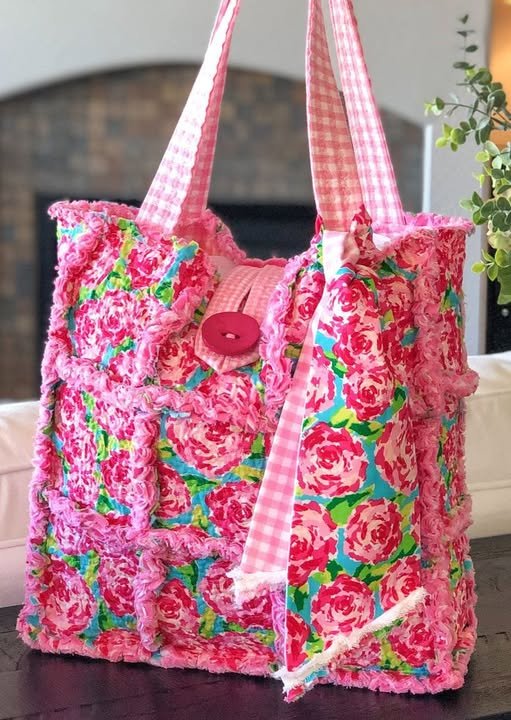
1. Essential Materials and Tools for Your Rag Quilt Tote Bag
Before you begin diving into the actual sewing process, gathering the right supplies is crucial for a smooth crafting experience. For a durable rag quilt tote bag, you will need high-quality cotton fabrics, flannel for the inner layers, and a strong thread that can handle multiple layers of fabric. Flannel is highly recommended for the interior because it frays beautifully, which is essential for achieving that classic rag quilt look.
In addition to your fabrics, you will need a reliable sewing machine equipped with a walking foot if possible, as you will be stitching through several layers simultaneously. A sharp pair of fabric scissors or specialized spring-loaded rag quilting snips will save your hands from fatigue during the clipping phase. Don’t forget your rotary cutter, cutting mat, acrylic ruler, and plenty of straight pins or sewing clips to keep everything aligned.
The beauty of this rag quilt tote bag tutorial lies in its versatility, allowing you to repurpose old denim, cotton scraps, or fat quarters. When selecting your color palette, try to mix large-scale prints with solids or smaller geometric patterns to create a visually appealing contrast. Planning your design beforehand ensures that your finished tote bag looks intentional and professionally designed rather than cluttered.
Preparing your workspace is another step that shouldn’t be overlooked when working on a rag quilt tote bag. Make sure you have a clean, flat surface for cutting your squares precisely, as accurate cuts make the assembly phase much easier. It is also wise to wind a few extra bobbins before you start sewing, as this project uses a considerable amount of thread.
Keep in mind that unlike traditional quilting projects, you do not want to pre-wash your fabrics for a rag quilt. Keeping the sizing in the fabric makes it easier to cut and sew precisely, and the intense fraying process should happen only after the entire bag is fully assembled. This ensures your rag quilt tote bag retains its structure throughout the construction phase.
Lastly, consider the material for your tote bag handles, as they need to bear the weight of whatever you choose to carry. You can create matching fabric straps using the same flannel and cotton, or you can opt for heavy-duty cotton webbing for a faster, utilitarian finish. Whichever you choose, ensure you have enough material to securely anchor the handles into the body of the bag.
2. Cutting and Preparing Your Fabric Squares
The first active step in our rag quilt tote bag tutorial is cutting your fabric into perfectly uniform squares. For a standard-sized tote, cutting your fabric into 6-inch or 7-inch squares works beautifully, allowing enough room for the seams while showcasing the fabric patterns. You will need to cut squares for the exterior, the interior lining, and the middle batting or flannel layer.
Because a rag quilt tote bag features exposed seams on the outside, you will be creating “sandwiches” out of your fabric pieces. Each sandwich consists of a backing square (which becomes the inside of your bag), a middle flannel square, and a top square. Take your time during the cutting phase, as precise squares lead to perfectly matched corners when you start piecing them together.
Once all your squares are cut, it is time to arrange them into a layout that pleases your eye. Layout your pieces on a large table or the floor to visualize how the front, back, and bottom panels of your rag quilt tote bag will look. This is your chance to balance colors, adjust pattern placement, and ensure no identical fabrics are sitting directly next to one another.
After finalizing your layout, the next step in this tutorial is to chain-piece or prep your individual quilt sandwiches. Stack your backing fabric face down, place the flannel layer in the middle, and top it with your exterior fabric facing up. Pinning these three-layer sandwiches together now will save you a lot of confusion once you move to the sewing machine.
To secure the layers together before assembling the bag, you will need to sew an “X” across each individual sandwich. Stitching from corner to corner anchors the middle layer so it won’t shift or bunch up later when the tote bag is used or washed. This quilting step adds that authentic, quilted texture to your rag quilt tote bag and provides structural integrity.
When sewing the “X” on each square, using a slightly longer stitch length can speed up the process and prevent the fabric from puckering. Once all your individual squares are quilted, stack them back into their rows according to your layout design. Now, your pieces are fully prepared, organized, and ready for the exciting assembly phase of this rag quilt tote bag tutorial.
3. Assembling the Quilt Rows and Bag Panels
Now that your squares are prepped, it is time to sew them into rows to form the main panels of your rag quilt tote bag. Unlike traditional quilting where you sew right sides together, rag quilting requires you to sew wrong sides together. This crucial technique ensures that the seam allowances are exposed on the outside of the bag to create the iconic frayed look.
Align your quilted squares according to your layout, place them wrong sides together, and sew using a strict 1/2-inch seam allowance. Using a consistent seam allowance is vital for this rag quilt tote bag tutorial because it guarantees your rows will line up perfectly and leaves enough fabric for fraying. Repeat this process until all your rows are completed.
Once your rows are assembled, you will sew the rows together to form the front, back, and bottom panels of your tote bag. Pin the rows carefully, making sure to nestle the exposed seams in opposite directions to reduce bulk at the intersections. Sew across the rows using the same 1/2-inch seam allowance, locking your stitches at the beginning and end of each row.
As you assemble the panels, you will start to see your rag quilt tote bag take shape, with rows of raised fabric ridges crisscrossing the surface. Don’t worry if the edges look a bit stiff or unruly at this stage; this is exactly how it is supposed to look before clipping. Keep your focus on maintaining straight lines and secure stitching throughout the assembly.
Next, you will join the front, back, and side or bottom panels together to transform your flat quilted pieces into a three-dimensional tote bag. Ensure that the wrong sides are facing each other during this step as well, so all structural body seams are also exposed on the exterior. Double-stitch the bottom corners to provide extra reinforcement for heavy lifting.
Before moving forward in this tutorial, take a moment to inspect all your seams to ensure no layers were missed during assembly. Because you are sewing through multiple thick layers, it is easy for a backing piece to slip out of alignment. Catching and fixing any loose stitches now ensures your rag quilt tote bag remains durable for years to come.
4. Clipping Seams and the Fraying Process
This section of the rag quilt tote bag tutorial is where the unique character of your project truly comes to life. Clipping the exposed seams is what allows the fabric to fray into that signature, fluffy fringe. Using your sharp scissors or rag snips, begin making snips along all the exposed seam allowances, spacing them roughly 1/4-inch to 1/2-inch apart.
When clipping, it is absolutely paramount that you do not cut into the actual seam line. Cutting the stitches will compromise the structural integrity of your rag quilt tote bag and cause it to fall apart in the wash. Stop your snips about 1/8-inch away from the stitch line to keep your bag perfectly secure while allowing maximum fraying.
Take your time during this step, as clipping every single exposed seam on a tote bag requires patience and a bit of hand endurance. Be sure to clip the horizontal seams, the vertical seams, and the outer edges along the top rim of the bag. The more thoroughly and consistently you clip, the more even and beautiful your final frayed fringe will look.
Once all the snipping is complete, shake out your rag quilt tote bag to remove any immediate loose threads. You will notice a lot of lint and loose fibers at this stage, which is completely normal for this type of quilting style. Now, your bag is ready for the transformative washing and drying process that completes the look.
Take your clipped tote bag to the washing machine and run it through a standard cycle using cold water and a little detergent. The agitation of the washing machine causes the cut edges of the cotton and flannel to unravel slightly, blooming into soft fringes. It is highly recommended to wash the bag alone or with old towels, as it will shed a significant amount of lint.
After the wash cycle, transfer your rag quilt tote bag to the clothes dryer and dry it on a normal heat setting. Clean your dryer’s lint trap halfway through the cycle, as the amount of fluff generated from a new rag quilt project can be substantial. When you pull the bag out of the dryer, you will be greeted by a beautifully frayed, cozy, and completed masterpiece.
FAQ – Frequently Asked Questions
What is the best type of fabric to use for a rag quilt tote bag?
100% cotton woven fabrics, homespun cotton, and high-quality cotton flannel are the absolute best choices for this project. Flannel is particularly essential for the middle or lining layers because its loose weave allows it to fray quickly and softly, creating the ideal fluffy fringe along the exposed seams.
Do I really need special scissors for this rag quilt tote bag tutorial?
While standard, sharp fabric scissors will work, specialized spring-loaded rag quilting snips are highly recommended. Because you have to make hundreds of small cuts close together through multiple layers of fabric, spring-loaded snips automatically reopen after each cut, significantly reducing hand strain and fatigue.
Can I wash my rag quilt tote bag in a regular washing machine?
Yes, you can wash it in a standard washing machine, but you must be prepared for a large amount of lint during the first few washes. It is best to wash your tote bag alone or with items you don’t mind getting lint on, and always make sure to clean out your dryer’s lint trap thoroughly during and after the drying process.
How do I ensure the handles of my tote bag are strong enough?
To make sturdy handles, reinforce them by inserting a layer of heavy flannel or cotton batting inside the fabric strap before sewing. When attaching the handles to your rag quilt tote bag, use a secure “X” box stitch pattern over the handle base to distribute weight evenly and prevent ripping.
Is this project suitable for absolute beginners in sewing?
Absolutely! A rag quilt tote bag is one of the most beginner-friendly quilting projects available. Because the seams are meant to look frayed and rustic, minor imperfections, uneven cuts, or slightly crooked lines are easily hidden within the textured fringes, making it a stress-free learning experience.
Conclusion
In this comprehensive Rag Quilt Tote Bag Tutorial, we have covered every step needed to create a gorgeous, durable, and highly functional accessory from scratch.
From selecting the perfect combination of cotton and flannel fabrics to cutting precise squares, assembling your rows with exposed seams, and mastering the satisfying clipping and fraying process, you now possess all the knowledge to complete this delightful DIY project successfully. This bag serves as a testament to how creative techniques can breathe new life into simple fabric combinations.