
Fabric Moth – Tutorial is a fantastic project for anyone looking to combine sustainability with creativity by breathing new life into forgotten textiles. Crafting a beautiful textile insect allows you to explore textures, color combinations, and basic sewing techniques while creating a stunning piece of art. Whether you are a seasoned textile artist or a beginner looking for a fun weekend project, this comprehensive guide will walk you through every single step of the process. By utilizing leftover scraps of cloth, you can easily minimize waste and transform ordinary materials into an enchanting, tactile sculpture that adds a touch of whimsical nature to your home decor.
When you dive into this detailed fabric moth – tutorial, you will quickly realize that the beauty of textile art lies entirely in its imperfections. Moths in nature are incredibly diverse, boasting intricate wing patterns, velvety bodies, and fascinating antennae that make them perfect muses for mixed-media projects. You do not need expensive materials or a complex sewing machine setup to achieve incredible results with this fabric moth – tutorial; in fact, some of the most stunning textile insects are created using simple hand-stitching techniques. Throughout this guide, we will focus on maximizing texture, selecting the right stabilizing elements, and adding realistic details that bring your handmade creation to life.
Before starting your artistic journey with this fabric moth – tutorial, it is helpful to gather a variety of materials with different weights and finishes to give your insect depth. Think about mixing sturdy woven fabrics for the base with softer, frayed textures for the wing overlays to mimic the dusty, velvet nature of real moth wings. This project is highly customizable, meaning you can choose a realistic color palette of earthy browns and muted greys, or opt for a vibrant, fantasy-inspired palette full of rich jewel tones. Let us explore the fundamental phases of creating your very own textile art piece, ensuring your crafting experience is smooth, rewarding, and highly enjoyable.
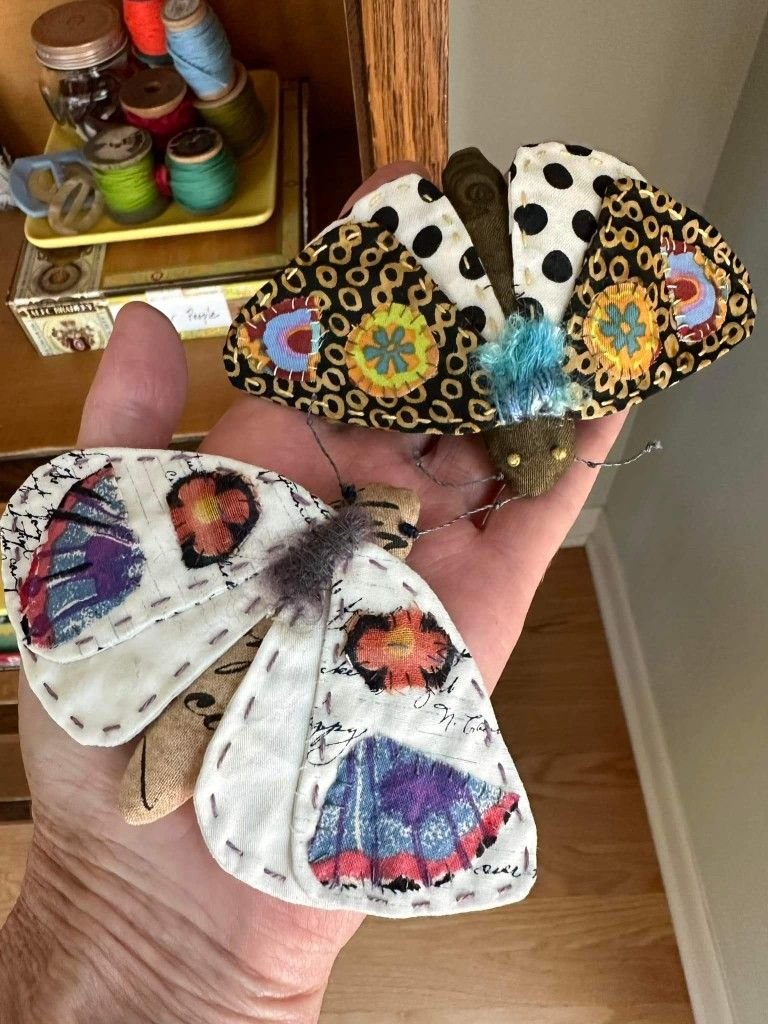
1 Gathering Materials and Preparing Your Workspace
To begin this fabric moth – tutorial, you must first collect the essential supplies that will form the foundation of your textile insect sculpture. The most critical component is your selection of textile scraps, where you can mix medium-weight woven cotton, linen, velvet, or even upcycled denim to create a rich, tactile surface. In addition to your main fabrics, you will need a reliable fusible interfacing or iron-on stabilizer, which provides the necessary stiffness to the wings so they do not flop over. Gathering these materials beforehand ensures an uninterrupted creative flow as you build your piece.
Next, make sure you have high-quality sewing threads in contrasting or complementary colors, as visible hand stitching adds immense charm to this fabric moth – tutorial. You will also require a pair of sharp fabric scissors for clean cuts, a water-soluble fabric marker for tracing patterns, and a variety of hand sewing needles. For the structural elements of the moth, especially the delicate antennae and the legs, you should source some flexible craft wire or floral wire. Having a small amount of polyester fiberfill or clean fabric scraps on hand will also be necessary to stuff the body of the insect.
Preparing your workspace is just as vital as gathering your supplies when following this detailed fabric moth – tutorial to ensure a comfortable crafting session. Find a flat, clean surface with excellent lighting, preferably near a window for natural light or under a bright task lamp so you can see fine stitches. Lay out your textile scraps by color and texture, allowing you to visually map out how the wings and body will complement each other. Keep your iron and ironing board nearby, as you will need them frequently to bond your stabilizers and press your textile layers flat.
Using upcycled denim from old jeans is one of the best ways to add character and structural integrity to the wings of your moth. Denim provides a fantastic, sturdy base layer that resists tearing and holds its shape beautifully when handled frequently during assembly. It also frays wonderfully along the edges, which can be intentionally exploited to mimic the fuzzy, organic texture found on real insect wings. By integrating these sustainable practices into your project, you give a second life to discarded garments while elevating the overall aesthetic of your art piece.
Another secret to success in this fabric moth – tutorial is selecting the right weight of fusible interfacing to back your delicate textiles. Interfacing acts as an invisible support system, preventing lightweight fabrics like silk or thin cotton from wrinkling or distorting when you add heavy embroidery. It makes the cutting process much cleaner, ensuring that your intricate wing shapes retain their precise sharp points and smooth curves. Simply iron the interfacing onto the wrong side of your chosen textile before cutting out any pattern pieces to save time and frustration.
Lastly, do not forget to prepare your decorative embellishments, such as small glass beads, metallic threads, or tiny sequins, to give your moth a magical sparkle. These small details can be used to simulate the compound eyes of the insect or the reflective patterns found on its lower wings. Organizing these tiny components in small dishes or magnetic trays within your workspace keeps them from rolling away while you sew. With your materials sorted, your tools organized, and your textiles stabilized, you are officially ready to move on to the pattern design phase.
2 Designing the Pattern and Cutting the Pieces
The next phase of our fabric moth – tutorial involves creating a balanced pattern that captures the elegant proportions of a real moth. You can draw your own template on a piece of sturdy cardstock, ensuring you create separate pieces for the upper wings, lower wings, and the central body segment. If you prefer symmetry, fold your paper in half when drawing the wings so that both the left and right sides match perfectly when unfolded. Aim for a design where the top wings are slightly larger and overlap the smaller bottom wings naturally.
Once you are satisfied with your paper templates, it is time to transfer the shapes onto your stabilized textiles using your fabric marker. Place your paper patterns onto the wrong side of the fabrics that have already been treated with fusible interfacing to guarantee clean tracing lines. Make sure to leave a small margin around the body pieces if you plan to sew and turn them inside out, while the wings can be cut precisely on the line if you prefer a raw, frayed edge look. Take your time during this step, as precise cutting forms the basis of a professional-looking insect.
When cutting the wing sections for this fabric moth – tutorial, consider creating multiple layers of decreasing size to form a beautiful, tiered effect on the wings. For instance, you can cut a large base wing from a sturdy dark fabric and then cut smaller accent shapes from lighter, textured textiles to place on top. This layering technique adds immense visual depth and mimics the complex, overlapping scales found on biological moth wings. Use sharp scissors to avoid jagged edges, cutting slowly along the curved lines of your marked patterns.
For the body of the insect, you will need to cut two identical oval or teardrop shapes that will eventually be stitched together and stuffed. Choosing a soft, textured material like velvet, corduroy, or faux fur for the body section will contrast beautifully against the flatter woven surfaces of the wings. If your chosen body textile is prone to unraveling easily, applying a thin layer of fabric glue or fray check along the very edges can save you a lot of trouble later on. Keep these body pieces safe and separated from your wing layers as you prepare for the stitching stage.
Incorporating varied textures is the ultimate way to make your project stand out, and this fabric moth – tutorial encourages experimentation with raw edges. If you are using upcycled denim for your accent layers, you can gently scratch the cut edges with your fingernail or a stiff brush to release the white fringe threads. This intentional fraying creates a soft, organic border that softens the transition between the different fabric layers on the wings. It creates an incredibly realistic, fuzzy appearance that makes the textile insect look far more lifelike and artistic.
Before you stick or sew anything permanently, lay all your cut textile pieces together on your workspace to review the overall composition. This is your chance to swap out colors, trim down layers that feel too bulky, or add extra accent pieces if the wings look a bit too plain. Look at the project from a distance to ensure the colors harmonize well and the contrast is strong enough to highlight the moth’s unique shape. Once you are completely happy with how your raw textile pieces look layered together, you can proceed to the sewing phase.
3 Stitching the Wings and Adding Textural Details
Now comes the most creative and relaxing part of the fabric moth – tutorial, which is attaching your wing layers together and adding decorative stitching. You can use a standard sewing machine to run a quick straight stitch around the interior layers, or you can opt for the meditative process of hand embroidery. Hand sewing allows for greater control and introduces a beautiful, rustic human touch to the piece through stitches like the running stitch, blanket stitch, or chain stitch. Secure your overlapping layers firmly, starting from the bottom layer and working your way up to the smallest accent piece.
To make the wings look truly authentic, use your thread to sew radiating lines that mimic the natural veins found in insect wings. Using a contrasting thread color, such as cream thread on dark blue denim or metallic gold thread on brown velvet, makes these structural lines pop beautifully. These stitched veins not only add incredible visual detail but also serve a practical purpose by quilting the fabric layers together, making the wings even stiffer and more durable. Vary the thickness of your threads by using multiple strands of embroidery floss to create a dynamic, organic look.
As you advance through this fabric moth – tutorial, consider adding small clusters of seed beads or French knots to the tips of the wings for added texture. These tiny embellishments catch the light beautifully and break up the flat surface of the textile, giving the impression of delicate, shimmering wing scales. You can concentrate these details around the natural “eye spots” of your moth design to draw the viewer’s attention to specific focal points. Keep your stitches neat on the front, and knot your threads securely on the back where they will eventually be hidden against the body.
If you want to introduce a touch of vintage charm, you can incorporate small pieces of lace or sheer organza into your wing layers during this step. Stitching a semi-transparent piece of lace over a solid background fabric creates a gorgeous shadowed effect that replicates the delicate nature of moth wings. This technique works exceptionally well when combined with the rugged texture of upcycled denim, creating a beautiful balance between tough and delicate elements. Experiment freely with your stitching, remembering that asymmetry in textile art can often look just as captivating as perfect symmetry.
Once the front decoration of both wings is complete, you will want to finish the back of the wings to hide all your messy knots and thread tails. Cut a matching set of wing bases from a clean piece of felt or plain cotton fabric to act as a backing panel. Place the decorative front wing and the plain backing wing wrong-sides-together, and sew around the entire perimeter using a neat blanket stitch or a tight running stitch. This seals all your embroidery work safely inside and gives the wings a clean, professional finish from every single angle.
Take a moment to gently bend and manipulate your finished wings to see how they hold up and look in three dimensions. Thanks to the layer of fusible interfacing applied earlier, the wings should feel firm yet flexible, capable of holding a slight curve without drooping instantly. Repeat the exact same embroidery and finishing process for both the left and right wing sets, keeping your stitch tension consistent throughout. With your gorgeous, highly textured wings fully completed, you can now shift your focus to assembling the plush body of your moth.
4 Assembling the Body and Finalizing Your Art Piece
Assembling the central body is the defining step of this fabric moth – tutorial that transforms your flat pieces into a wonderful three-dimensional sculpture. Take the two body segments you cut earlier and place them right-sides-together, pinning them securely in place so they do not shift while you sew. Stitch around the perimeter using a small, strong backstitch, making sure to leave a small gap of about one inch open at the top or side for turning. If you are sewing by hand, keep your stitches very close together to prevent any stuffing from leaking out later.
Carefully clip any sharp curves with your scissors, then turn the fabric body right-side out through the small opening you left behind, using a chopstick to gently push out the edges. Now, begin packing small clumps of polyester fiberfill or shredded textile scraps into the body cavity until it is plump and firm. You want the body to have a distinct, rounded shape that feels solid enough to support the weight of the large wings you just created. Once the body is stuffed to your liking, use an invisible ladder stitch to neatly close up the open gap by hand.
To create realistic antennae for your insect, take a short piece of craft wire and wrap it tightly with embroidery floss or a thin strip of fuzzy wool fabric. You can fray the ends of the fabric strip slightly to mimic the feathery, comb-like antennae characteristic of many beautiful wild moth species. Insert the base of the wire antennae into the head area of your stuffed body, securing them firmly in place with a few tight stitches and a drop of strong fabric glue. Bend the wires gently to give them a natural, lifelike curve that points slightly forward.
Now it is time to combine all your hard work by attaching the finished wings directly to the stuffed body of your moth. Position the wings on the back of the body, adjusting the overlap until they look symmetrical and perfectly balanced. Use a strong button thread or doubled sewing thread to stitch through the body and the wing bases multiple times, anchoring them securely together. Ensure your stitches are pulled tight so the wings do not wobble or sag when you pick up your finished textile art sculpture.
If you plan to display your completed creation on a wall or as a brooch, you can sew a small metal safety pin or a wire hanging loop onto the underside of the body. This hidden attachment point makes it incredibly easy to pin your moth to a curtain, frame it in a shadowbox, or wear it as a bold statement piece on a jacket. Take one final look at your project, trimming away any stray loose threads and gently fluffing up any frayed fabric edges to maximize the textured look. Your beautiful, handmade textile insect is now completely finished and ready to be admired by everyone.
By mastering the techniques outlined in this fabric moth – tutorial, you have unlocked a wonderful world of textile sculpture possibilities that you can continue to explore. You can scale this pattern up to create a giant decorative accent pillow, or scale it down to make tiny, delicate jewelry pieces using fine silk scraps. The combination of sustainable materials like upcycled denim and structural elements like fusible interfacing guarantees a durable, long-lasting piece of art. This project serves as a wonderful reminder that with just a little imagination, discarded fabric scraps can be elevated into something truly extraordinary.
Frequently Asked Questions
What are the best types of fabric to use for a textile moth project?
The best fabrics to use are those that offer a mix of stability and interesting texture. For the structural base of the wings, medium-weight fabrics like linen, canvas, or upcycled denim work beautifully because they hold their shape and handle dense stitching well. For the decorative layers and the body, look for highly tactile materials like velvet, corduroy, wool felt, or silk scraps, which mimic the soft, velvety texture of real insect wings. Mixing different weights and weaves adds depth and realism to your art piece.
Do I absolutely need a sewing machine to complete this tutorial?
No, you do not need a sewing machine at all to complete this project successfully. In fact, many textile artists prefer to sew these moths entirely by hand because it allows for greater precision when working with small, intricate pieces and delicate layers. Hand stitching with embroidery floss adds an organic, rustic texture to the wings that a machine simply cannot replicate. Basic stitches like the running stitch, backstitch, and blanket stitch are all you need to assemble and decorate your moth.
How do I stop the raw edges of my fabric from fraying too much?
To keep your raw edges under control, you should apply a medium-weight fusible interfacing to the back of your fabrics before cutting out your pattern shapes. The heat-activated adhesive bonds the textile fibers together, drastically reducing unwanted fraying while adding helpful stiffness. Alternatively, you can apply a very thin line of liquid fray preventer or fabric glue along the cut edges, or use a neat blanket stitch around the perimeter of the wings to lock the loose edges safely in place.
Can I wash my finished fabric moth if it gets dusty over time?
Because these moths are delicate, mixed-media art pieces often containing wire, glue, beads, and layers of fusible interfacing, it is highly recommended that you do not submerge them in water or put them in a washing machine. Washing can warp the internal stabilizers and ruin the delicate shape of the wings. Instead, clean your textile moth by gently dusting it with a soft, clean paint brush or a compressed air canister to remove surface dust without disturbing the fibers.
How can I display my finished textile moth sculpture at home?
There are several beautiful ways to display your completed moth to turn it into a true focal point in your home. A highly popular option is mounting the moth inside a glass shadowbox frame using a small pin hidden underneath the body, which protects it from dust while giving it a classic museum specimen look. You can also sew a small metal brooch pin to the back to wear it as wearable art, or attach a small wire loop so you can hang it directly on a wall or a decorative branch.
Conclusion
This comprehensive fabric moth – tutorial has guided you through the entire artistic process of transforming humble textile remnants into a beautiful, structured three-dimensional insect sculpture.
By learning how to select complementary textures, stabilize delicate pieces using fusible interfacing, and construct a plush body from sustainable materials like upcycled denim, you have gained valuable skills that can be applied to countless future textile art projects. Every stitch you added served to infuse your unique personality and creativity into a durable piece of art that beautifully celebrates the organic forms of nature.