
Mug mat – Tutorial: Crafting the Perfect Coaster and Snack Pad
If you are looking for a fun, functional, and highly customizable sewing project, this comprehensive mug mat – tutorial is exactly what you need to upgrade your coffee breaks. A mug mat, also frequently known as a mug rug, is a delightful hybrid between a traditional coaster and a placemat, offering just enough extra surface area to hold both your favorite hot beverage and a delicious morning snack. Crafting these miniature quilts allows you to explore creative textile designs without the commitment of a full-scale quilting project, making it the absolute perfect weekend activity for makers of all skill levels.
In this detailed guide, we will walk you through every single step required to create a beautiful, durable, and highly absorbent fabric rest for your mugs. Whether you want to clear out your scrap fabric bins, practice a new decorative quilting stitch, or create a thoughtful, handmade gift for a fellow coffee lover, this project delivers endless creative satisfaction. By understanding the core techniques of fabric selection, cutting accuracy, assembly, and edge finishing, you will be able to produce stunning, professional-quality home accessories that protect your wooden tables while adding a cozy, personalized touch to your living space or office desk.
Before we dive into the actual step-by-step assembly process, it is important to understand why this specific sewing project has taken the crafting community by storm. Beyond their obvious aesthetic appeal, these handmade items serve a highly practical purpose by absorbing condensation from cold drinks and insulating hot mugs to prevent heat damage on delicate furniture surfaces. Because they require very little material, they represent one of the most eco-friendly ways to practice sustainable crafting and upcycle leftover textiles from previous garment or quilting endeavors. Grab your sewing machine, gather your favorite cotton fabrics, heat up your iron, and let us get started on this rewarding creative journey.
1. Selecting the Best Materials for Your Mug Mat
Choosing the right textiles is the foundational step of our mug mat – tutorial because the materials you select directly impact how well your finished project absorbs moisture and resists heat. For the exterior shell, high-quality 100% quilting cotton is widely considered the absolute best choice because it is exceptionally easy to cut, press, and sew under a standard machine needle. Cotton also handles frequent washing beautifully, which is vital since your coaster will inevitably encounter accidental coffee spills, tea stains, or crumbs.
To give your project the structure and heat resistance it needs to protect your furniture, you will need to select a suitable middle layer or batting. Regular cotton quilting batting works wonderfully for a traditional, soft feel, but if you frequently use exceptionally hot ceramic mugs, incorporating a layer of insulated fleece is a highly recommended upgrade. This specialized material features metallic fibers woven into the polyester polyester mesh to reflect heat away from your wooden or glass tabletops.
In addition to your main fabrics and batting, you will need to gather a few essential sewing notions before cutting into your gorgeous material. A sharp rotary cutter, a self-healing cutting mat, and a clear acrylic quilting ruler are highly recommended tools that ensure your squares and rectangles have perfectly straight lines and crisp 90-degree corners. You will also want to choose a high-quality all-purpose polyester or cotton sewing thread that either matches your fabric scheme or provides a bold, contrasting pop of color.
For those who love sustainable crafting and eco-friendly sewing projects, you can easily look beyond the traditional fabric store shelves for your materials. Upcycling old denim jeans, worn-out flannel shirts, or linen scraps is a phenomenal way to give durable textiles a second life while adding unique textures to your finished piece. Denim makes an exceptionally sturdy backing material, while soft flannel can serve as an extra absorbent interior layer if you do not have traditional batting on hand.
Proper fabric preparation is another secret weapon that separate amateur sewing projects from beautiful, professional-looking home decor items. Always take the time to pre-wash and dry your cotton fabrics before cutting them, as this process pre-shrinks the fibers and prevents your beautiful mat from warping or puckering the very first time it goes through the laundry cycle. Once dry, give the textiles a thorough pressing with a hot steam iron to remove every single wrinkle, making your cutting process incredibly precise.
To make a standard, comfortably sized rectangular mat, a great starting dimension for beginners is cutting a top piece and a backing piece that measure 6 inches by 9 inches. This specific aspect ratio leaves plenty of room for a large oversized mug on one side and a couple of cookies, a pastry, or a stirring spoon on the other. Cut your interior batting layer slightly larger than your fabric pieces, roughly 7 inches by 10 inches, as fabric tends to shift and shrink slightly during the actual machine quilting process.
2. Preparing and Cutting Your Fabric Pieces
The second stage of this mug mat – tutorial focuses entirely on precision cutting, which forms the literal framework for a stress-free assembly experience at your sewing machine. Lay your pre-washed, freshly pressed fabric flat on your self-healing cutting mat, aligning the straight grain of the textile with the grid lines printed on the mat. Place your acrylic ruler firmly on top of the fabric, applying steady downward pressure with your non-dominant hand to prevent the slick ruler from sliding around while you operate the cutter.
Carefully engage the safety guard of your rotary cutter, press the sharp circular blade firmly against the edge of the acrylic ruler, and push the tool away from your body in a smooth, continuous motion. Repeat this process until you have cleanly cut one fabric rectangle for the front side and one matching fabric rectangle for the back side, each measuring 6 inches by 9 inches. If you prefer a perfectly square look rather than a classic rectangle, you can easily adjust your dimensions to cut 7-inch by 7-inch squares instead.
Next, take your chosen batting or insulated fleece and cut a single piece that matches the slightly larger dimensions of 7 inches by 10 inches that we discussed previously. Having this extra half-inch of batting overhang on all four sides acts as a safety buffer, ensuring that even if your fabric pieces shift slightly under the moving sewing machine presser foot, your entire design will remain fully supported by the insulating core. You can easily trim away any excess, overlapping batting later once the quilting steps are completely finished.
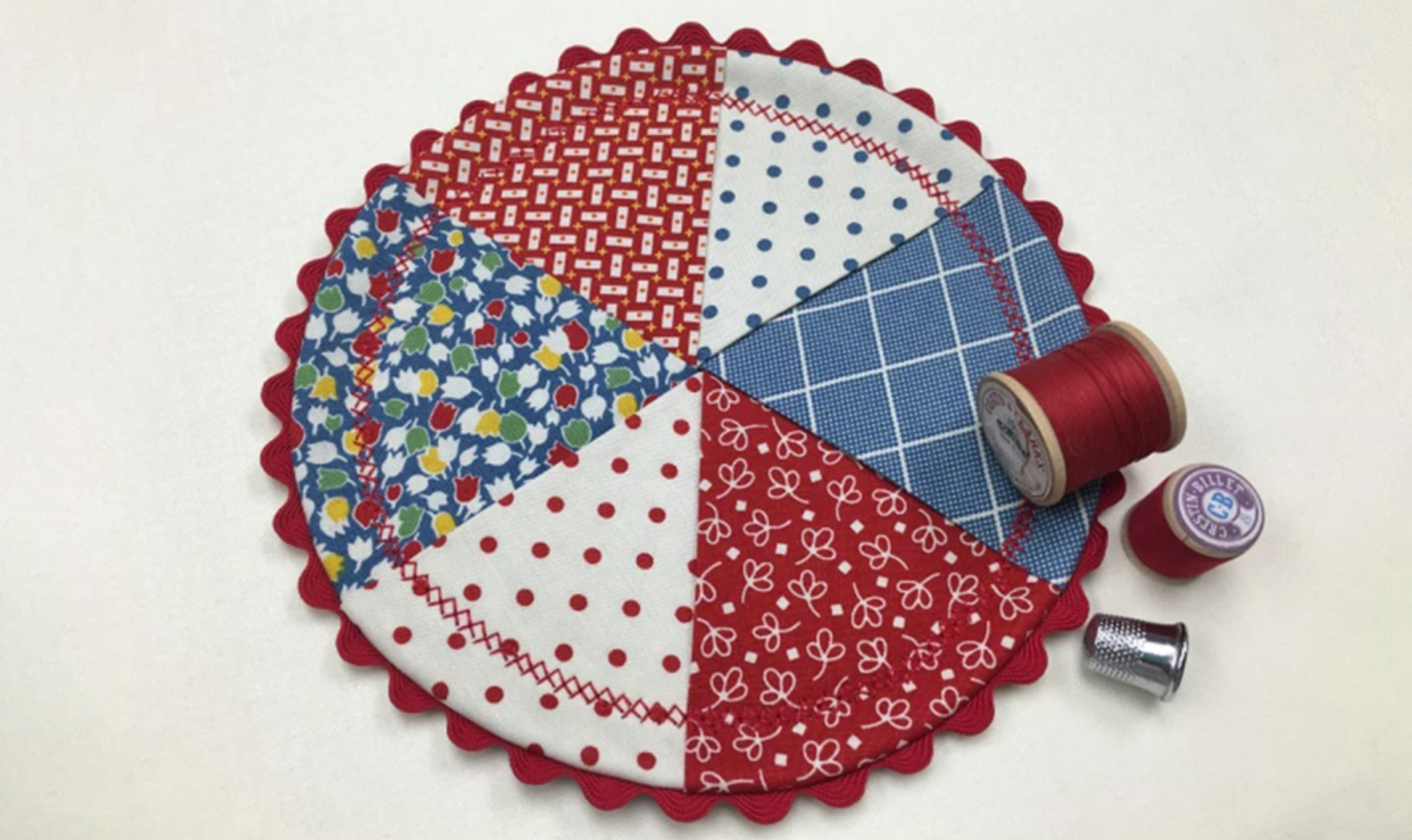
If you want to inject extra creativity into your project, you do not have to limit yourself to using a single, solid piece of fabric for the front panel. You can easily create a beautiful patchwork look by sewing smaller fabric scraps, strips, or leftover charm squares together using a standard quarter-inch seam allowance until they form a combined 6-inch by 9-inch panel. Popular, beginner-friendly layout options include a classic log cabin design, simple vertical stripes, or an arrangement of four traditional half-square triangles.
For those who are just beginning their sewing journey, working with a single, vibrant focal print for the top panel is an excellent way to build confidence before tackling advanced patchwork. Look for fun novelty prints featuring coffee beans, cute teacups, floral motifs, or modern geometric shapes that match the decor of your kitchen or office workspace. Using a single print allows you to focus all of your energy on mastering straight machine seams, proper fabric guiding, and neat edge-turning techniques.
Once all three individual layers are cut and ready, arrange them neatly on your worktable to create what quilters affectionately refer to as a quilt sandwich. Lay your protective batting layer down first on the table surface, then place the backing fabric on top of the batting with its printed, colorful side facing up towards you. Finally, place your front fabric panel directly on top of the backing fabric, but make sure its printed side is facing down, resulting in the right sides of both fabric panels touching each other.
3. Stitching and Assembling the Layers Together
Now that your quilt sandwich is properly stacked with the right sides facing together, this mug mat – tutorial moves into the exciting assembly and stitching phase. Secure the aligned layers together using a few sharp sewing pins or plastic quilting clips placed around all four perimeters, making sure the edges of the top and bottom fabric panels match up perfectly. Leave a clearly marked 3-inch gap along the center of one of the longer 9-inch sides, which will remain unsewn to allow you to turn the project right-side out later.
Take the pinned stack over to your sewing machine, which should be threaded with your chosen thread and set to a standard, medium straight stitch length of roughly 2.5 millimeters. Lower your presser foot at one edge of the marked 3-inch opening, sew a few brief backstitches to lock your thread in place, and begin sewing around the perimeter using a strict 1/4-inch seam allowance. Guide the raw edges of your fabric smoothly along the 1/4-inch mark on your machine’s needle plate to maintain absolute consistency.
As you approach each corner of the rectangle, slow down your sewing machine speed and stop stitching exactly 1/4 inch away from the intersecting edge of the fabric. With the sewing machine needle down firmly through all three layers of the fabric sandwich, raise your presser foot, carefully pivot the entire project 90 degrees, lower the presser foot back down, and continue stitching along the next clean side. Repeat this precise pivoting technique on all four corners of your mat to ensure your edges look sharp and professional.
Continue sewing along the final side until you reach the second mark of your designated 3-inch turning opening, and execute another set of firm backstitches before clipping your threads close to the fabric. To ensure that your corners turn out incredibly crisp and flat without creating bulky, unsightly lumps, take a sharp pair of fabric scissors and carefully clip away the excess fabric diagonally at each of the four corners. Be incredibly careful not to accidentally cut through the actual thread of your newly sewn stitches during this step.
Carefully slide your fingers through the unsewn 3-inch opening, reaching between the two right sides of the fabric panels, and gently pull the entire mat right-side out through the gap. Use a blunt, specialized tool like a plastic point turner, a wooden chopstick, or a dull knitting needle to gently push out each of the four clipped corners from the inside until they look perfectly square and sharp. Take the turned piece to your ironing board and press the entire mat flat, making sure to fold the raw edges of the 3-inch opening inside by 1/4 inch so they align seamlessly with the rest of the finished edge.
To complete the assembly, you will now perform a clean topstitch around the entire perimeter of the turned mat, which will beautifully close up the 3-inch turning opening without requiring any tedious hand-sewing. Position your ironed mat under the presser foot and sew a neat line of stitching a mere 1/8 inch away from the outer edge, sewing all the way around the rectangle. This decorative topstitching line not only seals your turning gap securely but also gives the entire perimeter a wonderfully flat, tailored, and store-bought appearance.
4. Customizing Your Project with Creative Quilting
The final creative stage of our mug mat – tutorial involves adding functional quilting lines across the body of the coaster to securely bind the layers together and add gorgeous visual texture. Quilting prevents the interior batting from shifting, bunching up, or disintegrating inside the fabric shell when the item is thrown into the washing machine. If you are a complete beginner, sewing a series of simple, straight parallel lines spaced roughly 1 inch apart across the surface is an incredibly elegant and foolproof way to finish your piece.
For those using a standard sewing machine sewing foot, you can easily use the edge of your presser foot as a consistent guide to sew straight accent lines across the fabric. If your machine comes equipped with a walking foot, or a even-feed foot, this is the absolute perfect time to install it on your machine bar. A walking foot feeds the top layer of fabric through the machine at the exact same speed as the bottom layer, completely eliminating fabric puckering, shifting, or bubbling as you quilt through the thick layers.
If you want to venture beyond basic parallel lines, you can easily try your hand at a classic crosshatch quilting design, which creates a stunning diamond pattern across your fabric. To do this, use a water-soluble fabric marker or a piece of tailor’s chalk to draw diagonal lines at a 45-degree angle across the front of your pressed mat, spacing them evenly apart. Sew directly along your drawn chalk lines, and then repeat the process in the opposite direction to create a beautiful, timeless quilted grid.
Advanced crafters who possess a free-motion quilting foot can use this small canvas to practice whimsical free-motion designs like stippling, loops, swirls, or even writing personalized words like “Coffee” or “Chaos.” Free-motion quilting requires you to lower your sewing machine’s feed dogs, allowing you to manually move the fabric sandwich in any direction you desire, effectively drawing on the textile with your thread. Because the project footprint is so wonderfully small, it represents the ultimate low-risk way to build your free-motion muscle memory.
Do not be afraid to experiment with bold, contrasting thread colors during the quilting stage to make your design lines pop off the background fabric. For instance, if you are using a dark navy denim or black cotton fabric for your top panel, using a vibrant white, bright yellow, or shimmering metallic thread can instantly elevate your project into a piece of modern art. Conversely, if you prefer a subtle, minimalist look, choose a high-quality thread that matches the background color of your fabric perfectly to let the textile print shine.
Once your creative quilting lines are fully executed, trim away any tiny remaining loose thread tails with a pair of snips, and give the completed coaster one final, heavy press with your steam iron to set the stitches into the cotton fibers. Congratulations, your beautiful, handmade creation is officially finished, cured, and ready to protect your desk or accompany your morning beverage ritual! These items make incredible housewarming gifts, holiday stocking stuffers, or craft fair bestsellers, so feel free to repeat this process to create a whole matching set.
Frequently Asked Questions (FAQ)
What is the ideal size for a standard coaster or snack pad?
While there are no strict rules in creative crafting, the most popular and practical size for a rectangular snack pad is roughly 6 inches by 9 inches. This specific dimension provides a balanced, pleasing aesthetic layout that leaves ample room for a wide ceramic mug on one side and a sweet pastry or side snack on the other. If you prefer a traditional, symmetrical shape, a 7-inch by 7-inch square is also highly functional.
Can I wash my handmade fabric drink rest in a washing machine?
Yes, absolutely! As long as you used 100% quilting cotton fabrics and high-quality batting, your finished mat can easily be tossed into a standard washing machine. It is highly recommended to wash them on a gentle cycle with cold water and similar colors to protect the vibrancy of the textile prints, and then lay them flat to air dry or tumble dry on a low heat setting. Give them a quick press with a hot iron after washing to restore their crisp shape.
What is the absolute best batting material to use for heat protection?
For optimal protection against scorching hot beverages, a combination of 100% natural cotton batting and a specialized layer of insulated fleece (such as Insul-Bright) is highly recommended. Insulated fleece features deep polyester fibers needle-punched with a reflective metallized poly film that effectively reflects heat or cold back to its source, ensuring your premium wood, laminate, or glass furniture remains completely safe from heat marks and rings.
Do I need a specialized walking foot on my sewing machine to do the quilting?
While a specialized walking foot makes the quilting process significantly smoother by feeding all the thick layers through the machine at the exact same speed, it is not strictly mandatory for a small project like this. If you do not own a walking foot, you can successfully quilt your mat using a standard sewing foot by reducing your machine’s presser foot pressure slightly, using plenty of pins or clips to hold the layers secure, and sewing at a slow, controlled speed.
Can I make this sewing project entirely out of old recycled clothes?
Upcycling old clothing items is a phenomenal, eco-friendly way to approach this project! Old denim jeans, worn-out linen shirts, cotton canvas bags, and flannel pajamas are spectacular choices for creating durable, textured mats. Denim is exceptionally sturdy and makes a fantastic, non-slip backing material, while colorful flannel scraps can be pieced together to create an incredibly soft, rustic, and highly absorbent top panel patchwork design.
Conclusion
In this comprehensive mug mat – tutorial, we have covered every essential technique required to design, cut, assemble, topstitch, and quilt a beautiful, functional fabric coaster from scratch.
By selecting the right combination of absorbent quilting cottons, heat-resistant batting, and employing clean sewing machine techniques like corner pivoting and edge topstitching, you can easily create gorgeous home accessories that are as practical as they are visually charming. These small-scale projects offer the perfect creative canvas to experiment with new color palettes, upcycle old textiles, and master your quilting skills without overwhelming expense or time commitments.