
If you’re exploring ways to improve your crochet projects, learning the Basic Crochet Cords: Traditional, Elastic, Tubular, Fishbone, Doubles, and Locked – Pattern is a game-changer. These versatile cords can be used for everything from bag straps and jewelry to drawstrings and decorative trims. The beauty of crochet cords lies in their strength, style, and adaptability. No matter your skill level, mastering these basic cord patterns will elevate your handmade creations.
Each style of cord in the Basic Crochet Cords: Traditional, Elastic, Tubular, Fishbone, Doubles, and Locked – Pattern serves a specific function. Some are strong and functional, while others are light and decorative. This variety allows crocheters to select the right cord based on the project’s purpose—whether you need a stretchy band, a sturdy strap, or an elegant detail.
In this article, we’ll walk you through the different types of basic crochet cords, how to make each one, where to use them, and essential tips to ensure professional results. With just a hook and yarn, you’ll unlock a new level of crochet possibilities. Let’s get started!
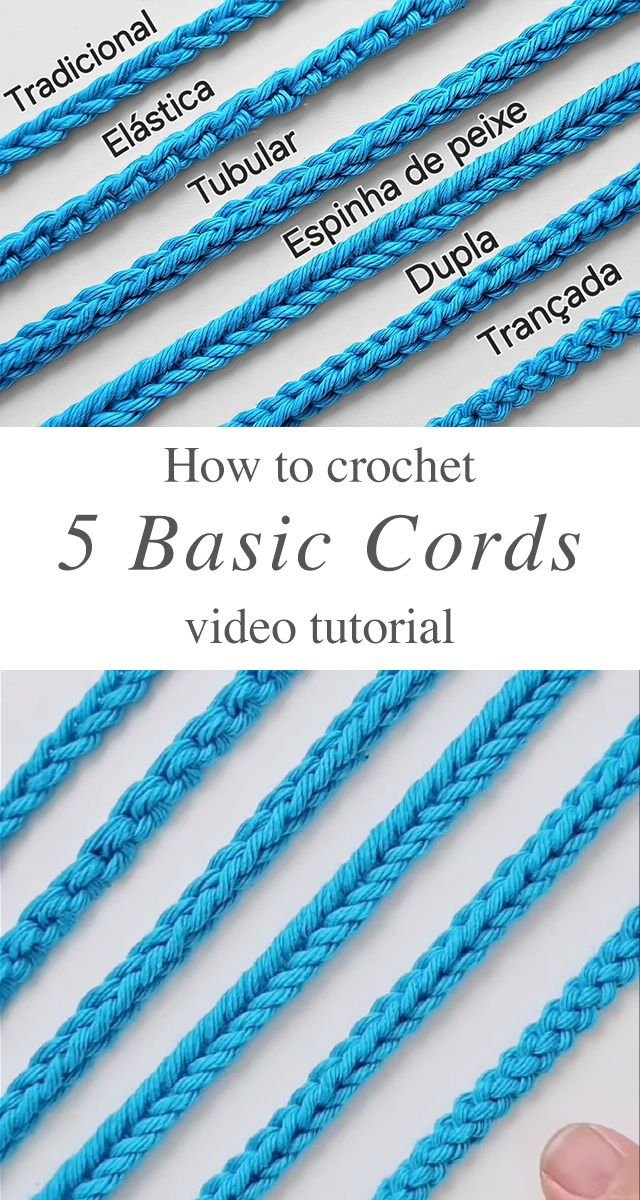
1. Traditional and Elastic Crochet Cords
The traditional crochet cord is the most commonly used and easiest to learn. It’s built with a simple chain base and single crochet stitches, forming a flat yet sturdy structure. This type of cord is perfect for drawstrings, bag handles, and belts.
To make a traditional cord, start with a foundation chain of the desired length. Then, working back along the chain, insert single crochets in each stitch. This can be repeated for several rows to create a thicker, denser cord. The result is durable and has a subtle texture that works well with most projects.
Elastic crochet cords, on the other hand, incorporate materials like elastic thread or stretchy yarns. These cords are commonly used for hairbands, fitted cuffs, or anything that needs flexibility. While the technique is similar to traditional cords, the inclusion of elastic material changes the behavior of the stitches, allowing for more stretch.
When working with elastic threads, it’s important not to pull too tightly. Maintaining even tension is key to achieving a neat, functional result. These cords are especially helpful in children’s garments or activewear accessories where movement is essential.
Another way to achieve an elastic effect is to use ribbing techniques, alternating front and back post stitches. This gives the cord a springy texture even with standard yarn, mimicking the effect of built-in stretch.
Both traditional and elastic cords are the foundation of cord-based crochet work. They’re simple but powerful tools in the crocheter’s toolkit, providing strong support or stretch where it’s needed most.
Experiment with different yarn types—cotton for stiffness, wool for warmth, or blends for versatility. You’ll quickly see how the material changes the look and function of your cords.
2. Tubular and Fishbone Crochet Cords
Tubular crochet cords are hollow, three-dimensional cords that are perfect for bag straps, necklaces, and handles. They’re created by crocheting in the round, which gives them a smooth, rope-like finish. This cord is ideal when you need something soft yet strong.
To begin a tubular crochet cord, chain a small number of stitches (usually 3 to 5) and join to form a ring. Work continuous single crochets in a spiral or joined rounds, taking care to keep the stitches even. The result is a smooth, flexible tube that holds its shape and can be stuffed or left hollow.
Tubular cords can be customized in thickness by increasing the number of stitches in the round. For added durability, consider inserting a small rope or cable inside the tube. This is especially useful for bag handles or wearable accessories that carry weight.
Fishbone crochet cords offer a textured, decorative look. The name comes from the way the stitches criss-cross to resemble the spine of a fish. While more intricate than basic cords, the result is visually striking and worth the effort.
To crochet a fishbone cord, you’ll use alternating stitch directions and loops, often working into the back loop or using slip stitches to create a tight, braided effect. This technique produces a flat, firm cord that lies nicely and doesn’t twist.
These cords are perfect for edging, decorative straps, or jewelry. They’re not as stretchy as others, but their texture and appearance make them great for style-forward projects.
Both tubular and fishbone cords provide form and function in unique ways. If you want strength and structure, go tubular. If you’re after texture and visual flair, the fishbone technique is your friend.
Try blending yarn colors in these cords for an ombre or striped look. Even simple patterns can look high-end with the right color palette.
3. Doubles and Locked Crochet Cords
Double crochet cords are thicker, faster to make, and more prominent in appearance. They’re built with double crochet stitches, which are taller and give more flexibility. These cords are excellent for projects that need a chunky, bold touch.
To create a double crochet cord, start with a chain, then work double crochets across in one or multiple rows. You can also fold and stitch the piece lengthwise to create a flat rope. The tall stitches give a soft drape and make the cord less stiff than its single crochet counterpart.
Locked crochet cords, in contrast, are tight and durable. They’re made using slip stitches or modified stitch techniques that “lock” the yarn into place. This makes the cord ideal for heavy-duty applications like bag handles, belts, and even pet leashes.
Locked cords don’t stretch much, which makes them stable. The stitch density means they take longer to make, but the final result is strong and dependable. These cords are great when you need something that won’t lose its shape over time.
One method to make a locked cord is to crochet a chain and then work tight slip stitches through the back loop only. This method creates a sleek, rope-like strand that doesn’t unravel easily.
Another technique is to use a “braided” approach by combining multiple strands in slip-stitch rows, forming a strong, interwoven design. This method is perfect for macrame-style finishes.
When choosing between double and locked cords, consider your project’s purpose. Double cords are soft and showy, while locked cords are lean and tough.
4. Best Uses and Creative Applications
Understanding how to use the Basic Crochet Cords: Traditional, Elastic, Tubular, Fishbone, Doubles, and Locked – Pattern opens up a world of crafting opportunities. Each type of cord can add structure, detail, or functionality to different parts of your project.
Traditional and locked cords are excellent choices for bag handles, belts, and drawstrings. Their strength and consistency ensure your work stands the test of time and wear.
Elastic and double cords work well for wearables—headbands, waistbands, and adjustable ties. The stretch in elastic cords allows comfort, while double cords add a bold design element.
Use tubular cords for statement accessories like necklaces or wrapped bracelets. Their rounded structure offers a clean finish and can be customized in thickness and color.
Fishbone cords are ideal for decorative purposes. Add them to pillow edges, wall hangings, or crochet jewelry to bring texture and uniqueness to your designs.
Cords also make great home décor accents. Use them for curtain tiebacks, plant hangers, or keychain loops. Their practicality and style are unmatched when made by hand.
Don’t forget gift-making! A well-crafted crochet cord can become a beautiful lanyard, strap, or bracelet that’s both personal and functional. It’s a wonderful way to share your crochet skills with others.
FAQ: Basic Crochet Cords: Traditional, Elastic, Tubular, Fishbone, Doubles, and Locked – Pattern
Q1: What is the easiest crochet cord for beginners?
The traditional crochet cord using chain and single crochet is the easiest and most beginner-friendly. It’s quick to learn and works well for many basic uses.
Q2: How do I make a cord stronger?
Use tighter stitches like slip stitch or back-loop-only techniques. You can also double the yarn or use thicker yarn for added durability.
Q3: Can I make crochet cords without a pattern?
Yes! Once you understand the structure of each type of cord, you can freestyle them based on project needs. However, using a pattern ensures consistent results.
Q4: What’s the best yarn for crochet cords?
Cotton is ideal for firm cords, while acrylic or blended yarns provide flexibility. Use elastic yarn for stretch-based cords.
Q5: Can I use crochet cords in macrame?
Yes! Many crocheters incorporate cords into macrame wall hangings and plant holders. It’s a creative fusion of two beautiful crafts.
Q6: How do I prevent cords from curling or twisting?
Proper tension and blocking help reduce curling. Avoid over-twisting stitches and always test your cord flat before attaching it to a project.
Conclusion
Learning the Basic Crochet Cords: Traditional, Elastic, Tubular, Fishbone, Doubles, and Locked – Pattern equips you with a diverse range of skills that enhance your crochet work in both style and function. Whether you’re looking to add strength
, stretch, or decorative flair, there’s a crochet cord technique that fits your need perfectly.
This guide explored the construction and usage of each cord type, offering practical advice and creative applications. From sturdy bag handles to stylish jewelry cords, your next project can benefit from one—or more—of these techniques.
If this article helped you understand and experiment with the Basic Crochet Cords: Traditional, Elastic, Tubular, Fishbone, Doubles, and Locked – Pattern, please leave a sincere opinion and any suggestions in the comments below. Your feedback encourages learning and inspiration for everyone in the crochet community.
Happy crocheting! 🧶