
A Crochet Egg Decoration – Pattern is the perfect way to bring a touch of handmade charm to your seasonal festivities, offering a sustainable and artistic alternative to plastic ornaments. Whether you are preparing for a vibrant Easter brunch or simply want to add some rustic, farmhouse-style flair to your kitchen, these small projects provide an incredible outlet for creativity. The beauty of working with a dedicated pattern is the ability to achieve a perfectly symmetrical egg shape every time, ensuring your decorations look professional and polished while maintaining that cozy, “made with love” feel.
When you dive into a Crochet Egg Decoration – Pattern, you are engaging in a project that is as versatile as it is adorable. These little treasures can be stuffed to create soft plushies, or they can be crocheted as thin covers for real or wooden eggs, acting as delicate “sweaters” for your centerpieces. Because they require very little yarn, they are the ultimate “stash-buster” project, allowing you to use up those leftover scraps of cotton or wool that are too small for a scarf but too beautiful to throw away.
In this comprehensive guide, we will explore everything you need to know about mastering the Crochet Egg Decoration – Pattern. From choosing the right hook sizes to ensure a tight, no-gap finish to exploring advanced decorative stitches like the puff stitch or embroidery overlays, we have you covered. By the end of this article, you will be equipped to create a whole basket of colorful, textured eggs that will delight guests and become cherished family heirlooms for years to come.
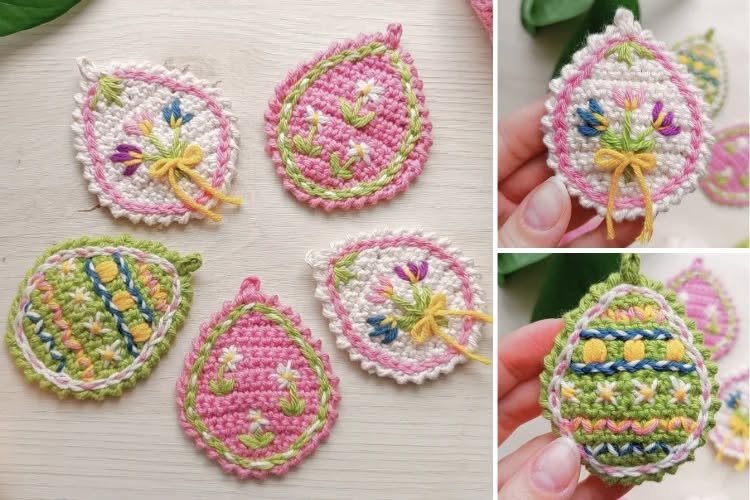
1. Selecting the Ideal Materials for Your Crochet Egg Decoration – Pattern
The foundation of any successful Crochet Egg Decoration – Pattern is the yarn you choose, as it determines both the texture and the durability of the finished ornament. For most egg projects, a 100% mercerized cotton yarn is the gold standard because it offers excellent stitch definition and a slight sheen that looks beautiful under dining room lights. Cotton also holds its shape much better than acrylic, which is crucial when you want your egg to look plump and symmetrical rather than saggy or distorted over time.
Selecting the right hook size is equally important to ensure the Crochet Egg Decoration – Pattern doesn’t allow the stuffing to peek through. If your yarn label recommends a 4.0mm hook, consider “hooking down” to a 3.0mm or even a 2.5mm hook to create a dense, opaque fabric. This tight tension is a hallmark of high-quality amigurumi techniques, providing a smooth surface that mimics the natural shell of an egg while giving you a sturdy canvas for any additional embroidery or beadwork you might want to add later.
Stuffing your Crochet Egg Decoration – Pattern requires a bit of finesse to avoid the “lumpy” look that can plague small round projects. High-quality polyester fiberfill is the most common choice, but for a more eco-friendly approach, you could use wool roving or even clean yarn scraps. The secret is to add the stuffing in small, fluffed-up tufts rather than one large clump, ensuring the egg is firm but not overstretched, which keeps the crochet stitches looking neat and uniform from top to bottom.
Color palettes can make or break the aesthetic of your Crochet Egg Decoration – Pattern. If you are aiming for a traditional Easter look, pastel shades like mint, lavender, and lemon are classic choices that never go out of style. However, if you want something more modern, consider a “boho” palette with mustard yellow, terracotta, and sage green. Using variegated yarn is another fantastic way to add visual interest to a simple stitch pattern without having to manually change colors every few rows.
Don’t forget the importance of stitch markers when working through your Crochet Egg Decoration – Pattern. Since eggs are usually worked in continuous spirals rather than joined rounds, it is incredibly easy to lose track of your starting point. A simple plastic marker or even a piece of contrasting scrap yarn will save you hours of “frogging” (ripping out stitches) by ensuring your increases and decreases happen at the exact right moments to maintain that iconic ovoid silhouette.
Lastly, consider the finishing touches that will elevate your Crochet Egg Decoration – Pattern from a simple toy to a piece of art. Having a sharp yarn needle on hand is essential for the “invisible finish” at the top of the egg and for weaving in ends securely. You might also want to gather some ribbons, twine, or even tiny dried flowers to glue or sew onto your finished handmade eggs, giving them a personalized touch that reflects your unique style and kitchen decor.
2. Master Techniques for Achieving the Perfect Egg Shape
The secret to a realistic Crochet Egg Decoration – Pattern lies in the ratio of increases at the top and decreases at the bottom. Most eggs start with a “Magic Ring” and expand quickly to create the blunter, wider end of the egg. By using a series of single crochet increases (two stitches in one), you build the volume needed to fill the base. Understanding this geometric crochet logic allows you to scale your eggs up or down, from tiny quail-sized decorations to giant ostrich-egg centerpieces.
As you move into the middle section of the Crochet Egg Decoration – Pattern, you will encounter the “straight” rounds where no increases are made. This part of the pattern is vital because it establishes the length of the egg. If you want a more elongated, “elegant” egg, you can add one or two extra rounds of standard single crochet here. This flexibility is what makes a versatile crochet pattern so valuable—you are the architect of your own decorative ornaments and can adjust the “growth” as you see fit.
The tapering at the top of the Crochet Egg Decoration – Pattern requires the use of the “invisible decrease” technique. Unlike a standard decrease, which can leave a small bump or gap, the invisible version involves working only through the front loops of the stitches. This creates a seamless transition that is almost impossible to spot, ensuring that your crochet egg looks like one continuous, smooth surface. It is a game-changing skill for anyone serious about high-end amigurumi and holiday crafts.
Adding texture to your Crochet Egg Decoration – Pattern can be done by incorporating specialty stitches like the “bobble” or “puff” stitch. By working these into the middle rounds, you create a 3D effect that mimics the look of an embossed or “Fabergé” style egg. This adds a sophisticated layer to your seasonal decor, making the eggs feel more substantial and artistic. Just remember that textured stitches use more yarn, so plan your “scrap-busting” accordingly!
Working in the “Back Loop Only” (BLO) is another technique often found in a detailed Crochet Egg Decoration – Pattern. This leaves a small ridge on the surface of the egg, which can be used later as an anchor point for ruffles, lace borders, or contrasting color rows. It is a brilliant way to add complexity to the visual design without needing to know highly advanced stitches, making it accessible for intermediate beginners who want to push their boundaries.
Finally, closing the top of your Crochet Egg Decoration – Pattern is where the magic happens. Once you have decreased down to just a few stitches, you cut the yarn and “weave” the tail through the remaining front loops. When you pull this tail tight, the hole disappears completely, leaving a sharp, clean point. This “cinching” method is the professional way to finish any round crochet project, ensuring your eggs look store-bought in their perfection but handmade in their charm.
3. Creative Ways to Display and Use Your Crochet Eggs
Once you have mastered the Crochet Egg Decoration – Pattern, the next step is deciding how to showcase your work. One of the most popular ways to display these items is by placing them in a rustic wooden bowl or a vintage wire basket lined with faux moss. This “nest” aesthetic highlights the organic textures of the yarn and creates an instant focal point for a coffee table or a mantelpiece, bringing the freshness of spring indoors.
For those who love a bit of height in their decor, you can turn your Crochet Egg Decoration – Pattern into hanging ornaments. By attaching a simple loop of twine or silk ribbon to the top of each egg, you can hang them from a “tree” made of pussy willow branches or birch twigs. This “Easter Tree” tradition is a beautiful way to display a collection of handmade ornaments, allowing the light to catch the different yarn textures and colors from all angles.
The Crochet Egg Decoration – Pattern can also be used to create personalized place settings for a festive dinner. Imagine a beautifully crocheted egg sitting in a ceramic egg cup at each guest’s plate, perhaps with their name embroidered on the side or a small tag tied around it. It serves as both a beautiful table decoration and a take-home gift that your friends and family can cherish, making your hosting efforts feel even more special and thoughtful.
If you have kids or grandkids, you can use the Crochet Egg Decoration – Pattern to create a “silent” egg hunt. Unlike plastic eggs that crack or real eggs that can spoil if hidden too well, crochet eggs are soft, durable, and completely safe for indoor play. You can even hide small bells or lavender sachets inside the stuffing to add a sensory element to the game. These playful crochet toys are a fantastic way to engage children in holiday traditions without the sugar rush of candy.
Garlands are another creative application for your Crochet Egg Decoration – Pattern. By stringing a dozen or more eggs together with a sturdy crochet chain or a length of jute, you can create a festive bunting to hang across a window or a doorway. This adds a pop of color and handmade style to the entire room. You can alternate the eggs with crochet flowers or leaves to create a botanical theme that celebrates the arrival of the new season.
Finally, consider using your Crochet Egg Decoration – Pattern as a base for high-end “art eggs.” You can use “surface crochet” or embroidery to add intricate patterns like vines, stars, or even tiny animals onto the finished egg. This transforms a simple crochet project into a piece of fine craft. Some artists even use thin metallic threads to give their eggs a regal, jeweled appearance, proving that there are no limits to what you can achieve with a hook and some imagination.
4. Maintenance and Care for Your Crochet Decorations
To ensure the longevity of your Crochet Egg Decoration – Pattern, proper storage is key. Because these items are stuffed, they can be crushed if kept at the bottom of a heavy box of decorations. It is best to store them in a sturdy plastic container or a shoe box, perhaps wrapped in acid-free tissue paper to prevent the yarn fibers from snagging or picking up dust. Keeping them in a cool, dry place prevents any moisture from affecting the stuffing inside.
If your Crochet Egg Decoration – Pattern gets a bit dusty or dirty after a season on display, most can be safely cleaned. If you used cotton or acrylic yarn, you can gently spot-clean the surface with a damp cloth and a tiny drop of mild soap. Avoid soaking the eggs completely, as the stuffing can take a long time to dry and might develop a musty smell. A gentle “surface wash” is usually all that’s needed to keep your holiday crochet looking fresh.
Over time, you might notice some “pilling”—small balls of fuzz—forming on the surface of your Crochet Egg Decoration – Pattern, especially if they have been handled frequently by children. You can easily remove these with a small fabric shaver or a pair of embroidery scissors. Keeping the surface clean and smooth ensures that the stitch definition remains the star of the show, preserving the professional look of your handmade ornaments for many years.
If you have used your Crochet Egg Decoration – Pattern as a cover for real blown-out eggs, you need to be extra careful. The crochet “skin” provides some protection, but the shell underneath is still fragile. For these versions, it is best to store them in an egg carton, which provides individual padded slots for each egg. This prevents them from bumping into each other and cracking, ensuring your delicate crochet lace stays perfectly supported.
Reshaping is a natural part of caring for any stuffed Crochet Egg Decoration – Pattern. If an egg looks a bit lopsided after being in storage, simply roll it between your palms for a few seconds. The heat from your hands and the gentle pressure will help redistribute the stuffing and “train” the crochet fabric back into its original ovoid shape. It’s a quick 10-second fix that makes a world of difference in your display.
Finally, if you notice any loose threads or a “tail” popping out, don’t just cut it! Use your yarn needle to weave the end back into the center of the egg. In a Crochet Egg Decoration – Pattern, the ends are usually tucked deep into the stuffing. If one comes loose, pulling it back in and “burying” it ensures the integrity of the stitches remains intact, keeping your handmade decorations secure and beautiful for decades of seasonal celebrations.
FAQ – Frequently Asked Questions
Can a beginner handle a Crochet Egg Decoration – Pattern?
Yes, absolutely! This is an ideal project for beginners because it uses only basic stitches like the single crochet, increase, and decrease. It is a small-scale project that allows you to practice shaping without the commitment of a large blanket or sweater.
How long does it take to crochet one egg?
Depending on your speed and the complexity of the pattern, a single egg usually takes between 20 to 45 minutes. This makes it a perfect “one-sitting” project that provides instant gratification and allows you to build a large collection in just a few evenings.
What is the best yarn weight for this pattern?
Most people prefer using a Sport (weight 2) or DK (weight 3) yarn for a Crochet Egg Decoration – Pattern. These weights are thin enough to show off intricate details but thick enough that the project works up quickly. However, you can use any weight as long as you match your hook size to the yarn.
Do I need to use a real egg inside?
No, most modern Crochet Egg Decoration – Pattern designs are “amigurumi style,” meaning they are stuffed with fiberfill. However, some vintage-style lace patterns are designed to be starched and dried over a real egg or a plastic form to create a hollow, delicate shell.
Can I make these eggs in different sizes?
Yes! To change the size of your Crochet Egg Decoration – Pattern, you can simply change your yarn weight and hook size. Using bulky yarn and a large hook will result in a giant egg, while using crochet thread and a tiny steel hook will create a miniature charm.
How can I make my eggs stand upright?
If you want your eggs to stand on their own without a holder, you can place a small flat weight (like a clean coin or a plastic washer) at the very bottom of the egg before you finish stuffing it. This lowers the center of gravity and helps the crochet decoration stay balanced on flat surfaces.
Conclusion
The Crochet Egg Decoration – Pattern is a wonderful gateway into the world of seasonal crafting, offering a perfect blend of simplicity and endless creative potential. Throughout this guide, we have discussed the importance of material selection, the technical skills like the invisible decrease that make your work shine, and the many ways you can display these charming ornaments in your home.
By following a structured pattern, you can create a cohesive and beautiful set of decorations that reflect your personal style while practicing essential crochet skills that will serve you in all your future projects.