
Square Fabric Bag – Tutorial is your ultimate guide to creating a stylish, functional, and completely customizable accessory from scratch. If you have ever wanted to dive into the world of sewing or are looking for a satisfying weekend project, making a square fabric bag is the perfect place to start. Not only does this project allow you to express your personal style through textile choices, but it also leaves you with a highly practical item you can use for groceries, books, or daily essentials.
In this comprehensive Square Fabric Bag – Tutorial, we will break down the entire process into easy, manageable steps that anyone can follow. Sewing your own bags is an incredibly rewarding hobby that promotes sustainability by reducing the reliance on single-use plastics. Plus, there is a unique sense of pride that comes from answering “Thanks, I made it!” whenever someone compliments your accessory.
Before we thread our needles, let us look at what makes this specific design so wonderful. The square fabric bag offers a structured, roomy shape that maximizes interior space, making it far more versatile than a standard flat tote. Whether you are a seasoned sewist or a complete beginner, this Square Fabric Bag – Tutorial is tailored to help you achieve a professional-looking finish with minimal stress.
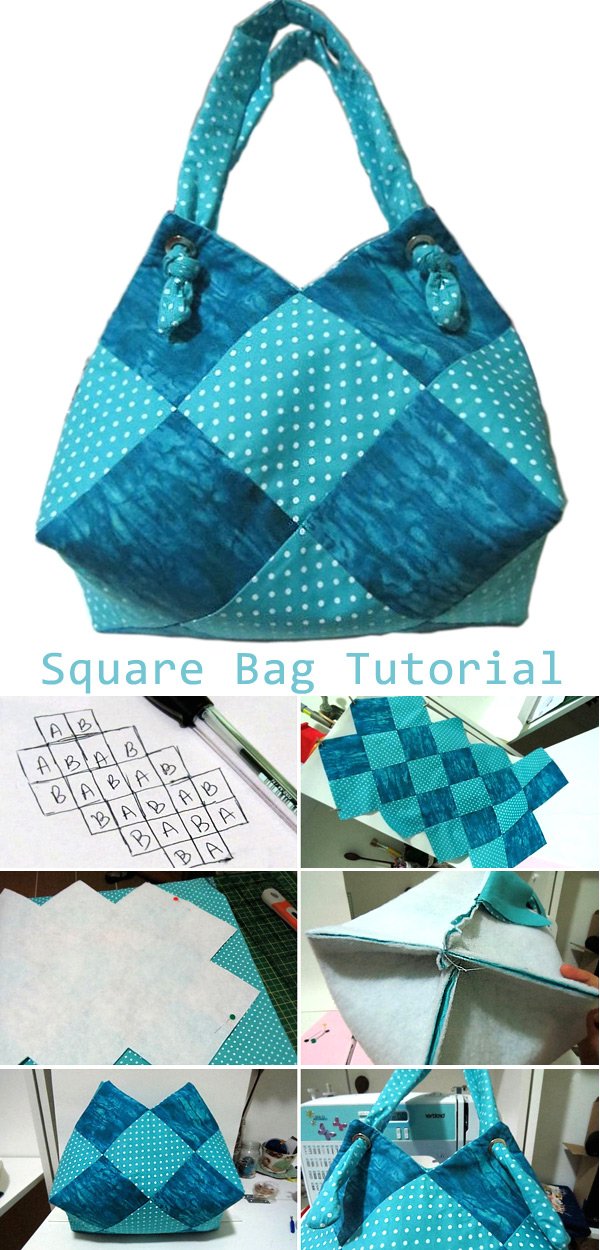
1. Choosing the Right Materials for Your Square Fabric Bag
When planning your square fabric bag, selecting the right textile is the most critical first step. For a durable, everyday bag, you want to look for medium to heavy-weight woven fabrics. Excellent choices include cotton canvas, denim, duck cloth, or heavy linen, as these materials provide the structural integrity required to keep the square shape intact.
If you fall in love with a lighter fabric, like a fun quilting cotton, do not worry. You can still use it for your square fabric bag by reinforcing it with fusible interfacing. Interfacing is an invisible hero in sewing; it iron-ons to the back of your fabric, adding stiffness and strength without adding bulk.
Do not forget about the interior lining of your bag. A contrasting lighter-weight cotton fabric works beautifully for the inside, making it easier to see your items when looking into the bag. Choosing a complementary pattern or a bright solid color can give your square fabric bag a delightful, high-end designer feel.
Aside from the main body, you need to consider the handles or straps. You can make your own straps using matching fabric strips, or you can opt for ready-made cotton webbing or nylon webbing. Webbing is incredibly strong, saves you a few sewing steps, and gives the bag a clean, modern aesthetic.
To complete your gathering phase, ensure you have high-quality polyester thread that matches your fabric color. Polyester thread is preferred over pure cotton for bags because it has a slight stretch and higher tensile strength, ensuring your seams will not pop under heavy loads.
Lastly, prepare your cutting and measuring tools. A good rotary cutter, a self-healing cutting mat, and a long clear acrylic ruler are game-changers for ensuring your fabric pieces are cut into perfectly straight, precise squares and rectangles, which is vital for this geometric design.
2. Preparing and Cutting Your Fabric Pieces Accurately
Accuracy during the cutting phase is what separates an amateur project from a professional result. For this Square Fabric Bag – Tutorial, we will be cutting two main outer panels, two lining panels, and two strap pieces. Having a clean, flat workspace is essential before you begin layout out your materials.
Start by pressing all of your fabric with a hot iron to remove any wrinkles or creases. Cutting wrinkled fabric leads to inaccurate measurements, which can warp your square fabric bag during assembly. Once ironed, lay your fabric flat on your cutting mat, aligning the selvage edges.
Measure and cut two outer pieces measuring 16 inches by 16 inches for a standard-sized tote. Repeat this exact process for your interior lining fabric, cutting two identical 16-inch squares. If you are using fusible interfacing, cut two more squares of the same size from the interfacing material.
If you decided to craft your own fabric straps, cut two long strips measuring 4 inches wide by 30 inches long. This width allows you to fold the straps into fourths, hiding the raw edges inside and creating a durable, four-layer strap that feels comfortable on your shoulder.
For those using fusible interfacing, now is the time to fuse it to the wrong side of your outer fabric pieces. Follow the manufacturer’s instructions, using a damp pressing cloth and firm downward pressure with your iron rather than a sliding motion, to ensure a permanent bond.
To give our square fabric bag its 3D depth, we need to box the corners. On the bottom two corners of both your outer panels and lining panels, use a fabric marker to draw a small 2-inch by 2-inch square, then carefully cut these small squares out.
3. Assembling the Outer Shell and Creating the Boxed Corners
With all your pieces prepared, it is time to move to the sewing machine. Place your two outer fabric panels together with the right sides facing, meaning the beautiful, printed sides are touching each other on the inside. Pin or clip the sides and the solid bottom edge together.
Sew down the two sides and across the bottom edge using a 1/2-inch seam allowance. Do not sew into the 2-inch square cut-outs you made in the previous step; leave those open. Always remember to backstitch at the beginning and end of every seam to lock your stitches.
Now, let us create the magic of the square fabric bag by boxing the corners. Open up one of the bottom cut-out corners and flatten it so the side seam aligns perfectly with the bottom seam. Pin this newly formed straight edge securely in place.
Sew across this pinned edge with a sturdy 1/2-inch seam allowance, backstitching thoroughly at both ends. Repeat this exact process for the other corner. When you turn the piece right-side out, you will see a beautifully structured, flat-bottomed square shape emerge.
Next, replicate this exact assembly process with your two interior lining pieces. However, there is one crucial twist: leave a 4-to-5-inch opening unsewn in the middle of the bottom seam of the lining. We will need this gap later to turn the whole bag right-side out.
Once the lining side and bottom seams are sewn (with the opening left open), box the corners of the lining fabric exactly as you did for the outer shell. Press all your open seams flat with an iron to give the finished bag a crisp, neat look.
4. Attaching the Straps and Finishing Your Square Fabric Bag
If making fabric straps, fold the 4-inch strips in half lengthwise and press, then open them up and fold the raw outer edges inward to meet at the center crease. Fold the entire strap in half again, enclosing the raw edges, and topstitch down both long sides.
Take your outer bag shell (which is currently turned right-side out) and determine strap placement. Measure 4 inches inward from each side seam along the top raw edge of the bag. Pin the ends of one strap to these marks, ensuring the loop hangs downwards against the right side of the fabric.
Baste the straps in place by sewing a quick line 1/4-inch away from the top edge. Repeat this on the opposite side of the outer bag with the second strap. Make sure your straps are not twisted before pinning them down.
Now, take your outer bag (right-side out) and insert it completely inside your lining bag (which should still be wrong-side out). The right sides of the outer bag and the lining bag should now be touching, with the straps sandwiched safely between the two layers.
Align the top raw edges and the side seams of both the outer bag and the lining, pinning securely all the way around the top perimeter. Sew entirely around this top circular edge using a 1/2-inch seam allowance, removing pins as you go.
Reach inside the opening you left at the bottom of the lining and gently pull the outer bag through. The entire bag will turn right-side out. Tuck the raw edges of the lining opening inward, topstitch it closed, push the lining inside the outer bag, press the top edge flat, and run a final topstitch around the upper rim for a professional finish.
FAQ – Frequently Asked Questions
What is the best fabric for a beginner making a square fabric bag?
For beginners, 100% cotton canvas or medium-weight quilting cotton with fusible interfacing is highly recommended. These fabrics stay in place easily, do not slip around while cutting or sewing, and press beautifully with a standard household iron.
Why do I need to box the corners of the bag?
Boxing the corners is the geometric trick that transforms a flat, 2D pouch into a 3D square fabric bag. It creates a flat bottom and structural sides, allowing the bag to stand upright more easily and hold bulkier items without distorting its shape.
Can I wash my DIY square fabric bag?
Yes, absolutely! However, the washability depends entirely on the fabric and interfacing you used. If you used pre-washed cotton canvas and high-quality woven interfacing, you can safely wash your bag on a gentle cycle with cold water and air dry it to prevent shrinkage.
What sewing machine needle size should I use for canvas?
When working with heavier fabrics like canvas or denim for your square fabric bag, you should switch to a heavier needle. A size 90/14 or 100/16 denim/jeans needle is ideal because it can pierce through multiple layers of thick fabric without bending or breaking.
How can I add a pocket to this square fabric bag design?
Adding a pocket is simple! Before you assemble the bag pieces, you can cut a small rectangle of fabric, finish its top edge, fold the remaining sides under, and topstitch it onto the right side of one of your lining panels or outer panels.
Conclusion
In this Square Fabric Bag – Tutorial, we explored the rewarding process of turning simple fabric panels into a durable, structured, and versatile three-dimensional tote.
From selecting sturdy materials like canvas and using fusible interfacing for added stability, to accurately cutting your patterns, boxing the corners, and executing a clean topstitch, you now possess the core skills needed to create beautiful bags at home. This project is a wonderful blend of functionality and creative freedom that will undoubtedly elevate your sewing journey.