
The Crazy Quilt Block – Pattern is perhaps the most liberating and artistic technique in the entire world of quilting, offering a break from the rigid rules of traditional geometric piecing. Unlike standard patterns that require precise measuring and matching of corners, this specific design encourages a “free-form” approach where scraps of various shapes, sizes, and textures come together to create a stunning, mosaic-like effect. Whether you are looking to preserve precious fabric memories from old clothing or simply want to use up every last bit of your fabric stash, mastering the Crazy Quilt Block – Pattern allows your creativity to lead the way without the stress of perfect symmetry.
Historically, the Crazy Quilt Block – Pattern gained immense popularity during the Victorian era, where it was treated as a high-art form used to showcase expensive silks, velvets, and intricate embroidery. Today, the modern quilter uses this patchwork style to create eclectic home decor, textured throw blankets, and wearable art that tells a unique story. The beauty of this approach is that no two blocks are ever the same; every choice of fabric placement and every decorative stitch contributes to a one-of-a-kind textile masterpiece that reflects the maker’s personality and history.
In this comprehensive guide, we will explore the essential elements that make a Crazy Quilt Block – Pattern successful, from the foundation piecing methods to the elaborate embellishments that define the style. We will focus on how to balance “chaos” with structural integrity, ensuring your finished block is as durable as it is beautiful. By understanding the core terminology and assembly steps, you will be able to transform a pile of “random” scraps into a cohesive and professional-looking quilt design. Let’s gather our most colorful fabrics and prepare to dive into the wonderful, whimsical world of the Crazy Quilt.
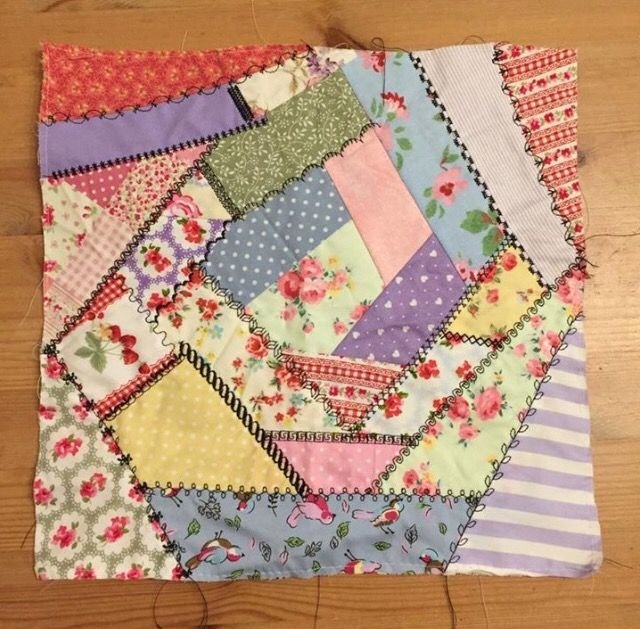
1. Establishing the Foundation for Your Crazy Quilt Block – Pattern
The secret to a stable Crazy Quilt Block – Pattern is the use of a Foundation Fabric (also known as a muslin or stabilizer base). Because the pieces in this pattern are often cut at irregular angles and may include delicate materials like silk or lace, sewing them directly onto a square of cotton prevents the block from stretching or becoming distorted. This foundation acts as a “canvas” upon which you build your design, ensuring that even the most “crazy” arrangements remain flat and easy to join with other quilt blocks later on.
When selecting materials for your Crazy Quilt Block – Pattern, you have the unique opportunity to play with Textural Contrast. Unlike traditional quilts that stick to 100% cotton, a crazy quilt thrives on the mix of velvet, satin, brocade, and even denim. Combining a shiny silk scrap next to a matte wool piece creates a visual depth that is the hallmark of this artistic quilting style. However, it is important to consider the “washability” of your choices; if you plan to use the quilt daily, stick to various textures of cotton and linen for easier maintenance.
The Center Scrap is the starting point for almost every Crazy Quilt Block – Pattern. Usually, you choose a five-sided (pentagon) or irregularly shaped piece of fabric and pin it to the center of your foundation square. From this central point, you will work outward in a clockwise or counter-clockwise fashion, adding pieces to each side of the center. This “organic growth” method ensures that the block expands naturally, covering the entire foundation fabric without leaving any gaps or requiring complex mathematical calculations.
Flip-and-Fold Piecing is the technical term for how pieces are added to a Crazy Quilt Block – Pattern. You place a new scrap of fabric right-sides-together with the edge of the center piece, sew a straight line along that edge, and then “flip” the new piece over and press it flat. This technique hides the raw seams underneath the fabric, resulting in a clean, finished surface. It is a very forgiving method, as you can trim the outer edge of the new piece into any irregular shape before adding the next one to the patchwork sequence.
One critical concept in a Crazy Quilt Block – Pattern is Seam Overlap. You must ensure that every new piece of fabric completely covers the raw edge of the piece it is being sewn to. In traditional quilting, we worry about a quarter-inch seam, but in a crazy quilt, the focus is on “coverage.” By overlapping the edges correctly, you create a sturdy, multi-layered fabric that can support the heavy embroidery and beadwork that often follows the piecing phase of the quilting project.
Finally, consider the Color Story of your block. Even though it is “crazy,” a successful Crazy Quilt Block – Pattern usually follows a loose color palette—such as “jewel tones,” “pastels,” or “warm autumn shades.” Using a consistent color family helps tie the diverse textures and random shapes together, preventing the block from looking like a pile of rags and instead making it look like a curated handmade heirloom. Planning your colors before you start sewing allows the final quilt top to feel intentional and sophisticated.
2. Embellishing the Seams with Decorative Stitchery
What truly separates a Crazy Quilt Block – Pattern from a standard scrap quilt is the elaborate use of Embroidery Stitches along every seam. In the Victorian tradition, the seams where two fabrics meet are treated as borders for decorative thread work. Common stitches include the feather stitch, the herringbone stitch, and the chevron stitch. These stitches serve a dual purpose: they add incredible beauty and detail to the block, and they further secure the fabric edges to the foundation, increasing the durability of the quilt.
The term Silk Floss refers to the high-quality, shiny thread often used for these embellishments. Because the Crazy Quilt Block – Pattern is meant to be luxurious, using a thread with a high sheen makes the embroidery pop against the various fabric textures. You can use multiple strands for a bold look or a single strand for delicate, vine-like patterns. The goal is to make each seam of your crazy quilt a miniature work of art, often incorporating floral motifs or geometric “spiders” which were popular symbols in early quilt history.
Spider Web Motifs are a legendary element found in many a Crazy Quilt Block – Pattern. Traditionally, quilters would embroider a small spider and its web in one corner of the block for good luck. This adds a touch of storytelling to your patchwork, giving the viewer something specific to look for among the sea of colors. Whether you choose to follow this tradition or create your own signature motif, adding these “hidden” details makes the Crazy Quilt Block – Pattern a deeply personal and engaging project.
Beadwork and Sequins can also be integrated into the seams of a Crazy Quilt Block – Pattern. By sewing small glass beads or “bugle beads” directly onto the embroidery lines, you add a three-dimensional shimmer to the fabric. This is particularly effective if the quilt will be used as a wall hanging or a decorative throw, as the beads catch the light beautifully. However, if the handmade quilt is intended for a child’s bed, it is best to stick to flat embroidery for safety and comfort reasons.
Another essential term is Ribbon Embroidery. This involves using very thin silk ribbons instead of thread to create 3D flowers like roses or daisies on the surface of your Crazy Quilt Block – Pattern. Ribbon work adds a romantic, Victorian-inspired aesthetic that elevates the “scrap” look into something truly high-end. Learning how to make a “ribbon rose” can turn a simple intersection of seams into a focal point of your textile design, making the block feel rich and layered.
Lastly, the Motif Placement should be varied. In a Crazy Quilt Block – Pattern, you don’t want all your embroidery to be the same size or density. Some seams might feature a simple, understated line, while a larger “patch” of fabric might host a large embroidered flower or a monogram. This variation in “visual weight” is what keeps the eye moving across the quilt block, discovering new details at every turn. It is the creative “play” of the Crazy Quilt that makes it so addictive for those who love detail-oriented crafts.
3. Squaring Up and Joining the “Crazy” Blocks
Once you have filled your foundation fabric and completed your embroidery, the next step in the Crazy Quilt Block – Pattern is Squaring Up. Because you were sewing irregular shapes outward, your fabric edges will likely be ragged and uneven. Using a large acrylic square ruler and a rotary cutter, you trim the block back to its original foundation size (usually 10 or 12 inches). This step is vital because it turns the “chaos” back into a manageable geometric shape that can be sewn to other quilt blocks with ease.
The term Sashing is often used when joining units of the Crazy Quilt Block – Pattern. Sashing refers to the strips of solid fabric (often black velvet or dark silk) sewn between the crazy blocks. This acts like a “frame” for each individual masterpiece, providing a place for the eye to rest and ensuring that the different blocks don’t “clash” too much. Sashing also makes it easier to manage the final assembly of a large-scale quilt, as it provides straight lines to follow during the sewing process.
Fussy Cutting can be applied even in the joining phase. If you have a specific embroidered motif in your Crazy Quilt Block – Pattern that you want to highlight, you can center your sashing or borders around it to ensure it is the star of the show. This level of planning ensures that your most time-consuming work—like a ribbon-embroidered flower—isn’t hidden in a seam or cut off during the final trimming of the quilt top. It’s about honoring the “art” within the patchwork.
Another consideration is the Seam Bulk. Because crazy quilts often use thick fabrics like velvet and have many layers of embroidery, the places where four blocks meet can become very thick. To manage this in your Crazy Quilt Block – Pattern, many quilters choose to “press seams open” rather than to one side. This distributes the fabric layers more evenly, making it much easier for your sewing machine to pass over the intersections without skipping stitches or breaking a needle on your handmade project.
The Quilt Top Assembly for a Crazy Quilt Block – Pattern is like putting together a giant puzzle. Before you sew anything together, it is a pro-tip to lay all your finished blocks out on a “design wall” or the floor. This allows you to see if two blocks with similar colors are touching and to rotate them for the best visual balance. In a crazy quilt, balance isn’t about symmetry; it’s about ensuring the “visual weight” of the textures and colors is distributed across the entire quilt surface.
Finally, let’s talk about the Border. For a Crazy Quilt Block – Pattern, a simple, wide border in a dark, solid color is usually the best choice. It provides a definitive “end” to the busy design and helps the vibrant scraps and embroidery stand out. Some quilters choose to add a small amount of “crazy” piecing to the corners of the border to tie the whole thing together. The border is the final “embrace” for your textile art, providing the structural frame needed for a long-lasting heirloom.
4. Final Finishing and Care of an Heirloom Quilt
Because the Crazy Quilt Block – Pattern already has a foundation fabric and many layers of embroidery, traditional “quilting” (the stitches that go through the top, batting, and back) is often kept to a minimum. Instead, many crafters use a technique called Tying. This involves taking a small stitch through all three layers at the corners of each block and tying a knot on the surface. Tying secures the quilt sandwich without distracting from the intricate work on the crazy quilt top.
If you do choose to do traditional quilting on your Crazy Quilt Block – Pattern, it is usually done in the “negative space” or the sashing. Using a walking foot on your sewing machine allows you to sew straight lines or simple “echo” stitches that follow the frame of the blocks. This adds a subtle texture and ensures that the batting (the middle layer) stays in place over years of use, maintaining the warmth and structure of your handmade bedding.
The term Batting is the fluffy middle layer of your quilt. For a Crazy Quilt Block – Pattern, a low-loft cotton or silk batting is often the best choice. Since the top is already quite heavy and thick from the various fabric types and thread work, a thick polyester batting would make the quilt too stiff and “puffy.” A thinner, natural-fiber batting allows the quilt to have a beautiful “drape,” making it feel more like a luxurious wrap or a piece of high-end home decor.
Binding is the final step where you wrap a strip of fabric around the raw edges of the quilt. For a Crazy Quilt Block – Pattern, a “bias binding” made from a sturdy cotton or satin is recommended. This protects the edges from fraying and provides a clean, finished look. If your quilt is intended for display, a “sleeve” can also be added to the back during the binding process, allowing a rod to be inserted for hanging your textile art on a wall.
Care and Cleaning are vital topics for the Crazy Quilt Block – Pattern. If you have used delicate fabrics like silk, velvet, or antique lace, your quilt should never be machine washed. Instead, spot cleaning or professional dry cleaning (by someone who specializes in textiles) is necessary. Because of the heavy embroidery and beads, these quilts are often considered “display only” or “lap quilts” rather than everyday bedding, ensuring the longevity of the craftsmanship.
Finally, every Crazy Quilt Block – Pattern should be finished with a Quilt Label. Since these quilts are often made from meaningful scraps—like a piece of a wedding dress or a child’s first shirt—the label should document the history of the materials used. Write down your name, the date, and the “story” behind the fabrics. This turns your Crazy Quilt into a documented piece of history, making it a truly priceless family heirloom for future generations to cherish.
FAQ: Frequently Asked Questions about the Crazy Quilt Block – Pattern
1. Do I really need a foundation fabric for a Crazy Quilt Block – Pattern?
Yes, it is highly recommended. Because the shapes are irregular and often cut on the “bias” (diagonally), they are very prone to stretching. The foundation fabric provides a stable, non-stretch base that keeps your crazy quilt block square and prevents it from puckering when you add heavy embroidery or beads later on.
2. Can I use a sewing machine for the decorative stitches?
While traditional crazy quilts are hand-embroidered, many modern sewing machines have decorative stitch settings (like the blanket stitch or feather stitch). You can certainly use your machine to “outline” the seams of your Crazy Quilt Block – Pattern, which is much faster and provides a clean, uniform look for a modern patchwork project.
3. What size should my starting scraps be?
There are no rules! You can start your Crazy Quilt Block – Pattern with a piece as small as 2 inches or as large as 5 inches. The only goal is that each subsequent piece is large enough to span the entire edge of the previous shape. This “improv” style is what makes the crazy quilt so much fun for those who want to avoid strict measuring.
4. How do I choose colors so it doesn’t look messy?
The “magic” trick is to pick one unifying color. For example, if you have a lot of random scraps, try to make sure every scrap has a tiny bit of “blue” in it, or use a consistent black sashing between blocks. This small amount of repetition creates a “visual anchor” that makes the Crazy Quilt Block – Pattern look cohesive and artistic rather than cluttered.
5. Is the Crazy Quilt Block – Pattern suitable for beginners?
Actually, yes! It is a great way for beginners to learn fabric handling and basic machine sewing without the pressure of “matching points.” Because “mistakes” just become part of the irregular design, it is a very low-stress way to enter the world of quilting and fiber art.
6. Can I use a Crazy Quilt Block – Pattern to make clothes?
Absolutely! The “crazy” technique is very popular for making vests, jackets, and tote bags. Because the fabric you create is thick and reinforced by the foundation, it is very durable and holds its shape well, making it a favorite for wearable art and unique fashion accessories.
Conclusion
In this article, we have journeyed through the artistic and liberating world of the Crazy Quilt Block – Pattern. We explored the importance of using a foundation fabric for stability and how to grow your design outward from a center scrap using the flip-and-fold method.
We delved into the Victorian tradition of embroidery stitches and silk floss to turn simple seams into intricate works of art. Finally, we covered the professional steps of squaring up, sashing, and binding to ensure your project is a durable, high-quality family heirloom. This pattern is a true celebration of “imperfection,” turning the random remnants of life into a beautiful, textured story.