
The Drunkard’s Path Quilt – Pattern is one of the most iconic and historically rich designs in the world of quilting, offering a unique blend of traditional symbolism and modern artistic flexibility. Known for its distinct curved pieces that create a sense of fluid movement, the Drunkard’s Path Quilt – Pattern has challenged and inspired quilters for generations, bridging the gap between simple geometric blocks and complex, flowing compositions. Mastering this specific design allows a crafter to move beyond straight lines and explore the dynamic world of curved piecing, which is often considered a milestone in a quilter’s technical journey.
When you embark on a project using a Drunkard’s Path Quilt – Pattern, you are engaging with a piece of history that dates back to the 19th century, where the staggered, winding lines were often associated with the temperance movement. Today, however, the Drunkard’s Path Quilt – Pattern is celebrated primarily for its incredible versatility; by simply rotating the blocks, a quilter can create endless variations including circles, waves, bubbles, or even abstract floral motifs. This adaptability makes it a favorite for those who enjoy “playing” with their layouts on a design wall before finalizing their assembly.
In this comprehensive guide, we will explore the essential elements that make a Drunkard’s Path Quilt – Pattern successful, from selecting the right fabric contrasts to mastering the delicate art of sewing curves without puckering. We will break down the geometry of the block—which consists of a quarter-circle and a corresponding “L-shaped” background piece—and provide tips for both traditional hand-sewing and modern machine techniques. By the end of this article, you will feel confident in your ability to choose, cut, and sew a Drunkard’s Path Quilt – Pattern that showcases your skill and personal style.
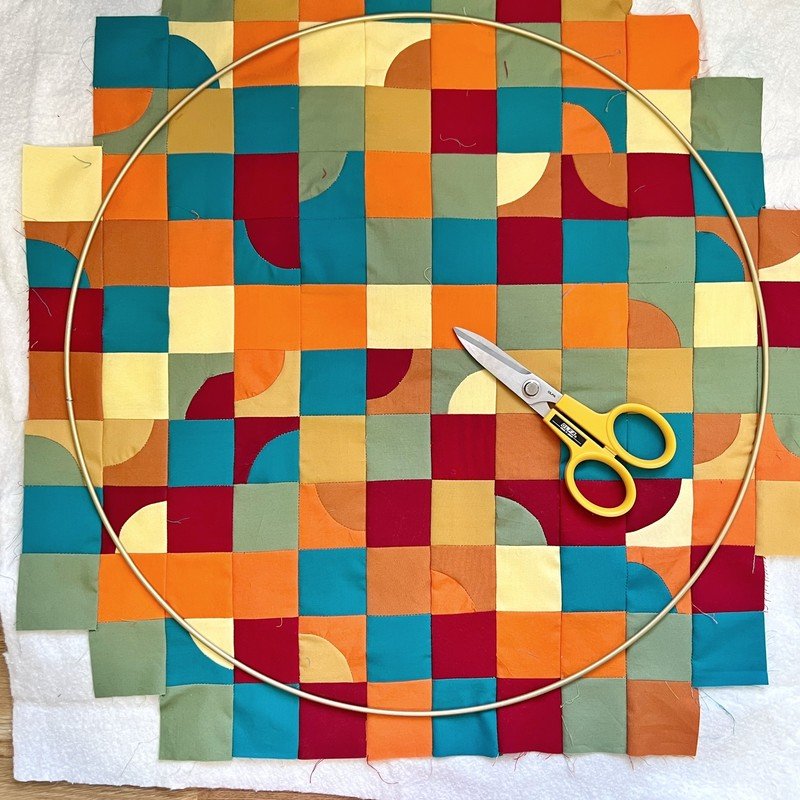
1. Understanding the Anatomy of a Drunkard’s Path Quilt – Pattern
At its core, every Drunkard’s Path Quilt – Pattern is based on a simple square block that is divided into two distinct parts: a “pie” shape (the convex curve) and a “background” shape (the concave curve). The magic happens when these blocks are joined together; depending on how you orient the curves, you can create a series of interlocking circles or a winding, maze-like path. Understanding this basic geometry is the first step toward visualizing the complex secondary patterns that emerge once multiple blocks are combined in a Drunkard’s Path Quilt – Pattern.
Accuracy in cutting is more critical for a Drunkard’s Path Quilt – Pattern than for almost any other block because the curves must align perfectly to lie flat. Most quilters use specialized acrylic templates or a Drunkard’s Path Quilt – Pattern rotary cutting set to ensure that every quarter-circle and background piece is identical. If your cuts are off by even a fraction of an inch, the curves will struggle to meet, leading to unsightly bumps or distorted squares that won’t nest together correctly during the final assembly phase.
Fabric choice plays a massive role in how the Drunkard’s Path Quilt – Pattern is perceived by the viewer. Traditionally, high-contrast colors—such as deep blues against crisp whites—were used to make the “path” stand out clearly. In modern interpretations of the Drunkard’s Path Quilt – Pattern, quilters often use a spectrum of monochromatic shades or even vibrant, clashing prints to create a more contemporary, abstract look. The key is to ensure there is enough visual “separation” between the two components of the block so the curved design remains the focal point.
Precision pinning is a technique that cannot be skipped when working with a Drunkard’s Path Quilt – Pattern. Because you are sewing a convex edge to a concave edge, the fabric will naturally want to pull in different directions. By using a “three-pin” method—pinning the center and both ends of the curve—you can evenly distribute the fabric and prevent the dreaded “puckering” that often plagues beginners. A well-pinned Drunkard’s Path Quilt – Pattern ensures that the seam remains smooth and professional after pressing.
The size of the block also dictates the difficulty level of your Drunkard’s Path Quilt – Pattern. Smaller blocks (such as 3-inch or 4-inch squares) have much “tighter” curves, which are significantly harder to sew on a machine than larger 6-inch or 8-inch blocks. For your first attempt at a Drunkard’s Path Quilt – Pattern, it is highly recommended to start with a larger block size to get a feel for the pivoting motion required at the sewing machine before moving on to more intricate, miniature versions.
Pressing is the final, often overlooked step in the anatomy of a Drunkard’s Path Quilt – Pattern. To achieve a flat finish, most experts suggest pressing the seam allowance toward the “pie” (convex) piece, although some patterns may suggest pressing toward the background. Using a tailor’s clapper or a bit of steam can help “set” the curve, ensuring that your Drunkard’s Path Quilt – Pattern looks as neat from the back as it does from the front, which is essential for a high-quality heirloom quilt.
2. Sewing Techniques for the Perfect Drunkard’s Path Quilt – Pattern
When you sit down at the sewing machine to piece your Drunkard’s Path Quilt – Pattern, the “slow and steady” approach is your best friend. Unlike straight seams where you can speed through the length of the fabric, curves require a gentle “feeding” motion where you guide the fabric under the needle with your fingers. Many quilters find that a quarter-inch foot is indispensable for a Drunkard’s Path Quilt – Pattern, as it provides a consistent guide for maintaining the seam allowance throughout the entire arc of the curve.
One of the most effective tricks for sewing a Drunkard’s Path Quilt – Pattern is to sew with the “concave” (background) piece on top. This allows the feed dogs of your sewing machine to help ease in the excess fabric of the “convex” piece underneath. If you find that the fabric is bunching up, stop with the needle down, lift your presser foot, and slightly realign the edges before continuing. This “pivot and sew” method is a hallmark of a masterfully executed Drunkard’s Path Quilt – Pattern.
For those who find traditional pinning tedious, “glue basting” has become a popular alternative for the Drunkard’s Path Quilt – Pattern. Using a small amount of water-soluble fabric glue along the seam allowance can hold the curves in place perfectly without the risk of pins shifting or causing small nicks in the fabric. This technique is particularly helpful for modern Drunkard’s Path Quilt – Pattern designs that use very thin or slippery fabrics, as it provides extra stability during the stitching process.
If you are a fan of hand-work, the Drunkard’s Path Quilt – Pattern is an excellent candidate for English Paper Piecing (EPP) or traditional hand-piecing. Hand-sewing gives you ultimate control over the tension of the curve, often resulting in a flatter block than machine-sewing can achieve. While it takes significantly longer to finish a Drunkard’s Path Quilt – Pattern by hand, the process is incredibly meditative and allows you to work on your project while traveling or relaxing away from the craft room.
Dealing with “dog ears”—the small triangles of fabric that stick out at the corners after sewing—is a necessary part of the Drunkard’s Path Quilt – Pattern process. Once your block is sewn and pressed, you should “square it up” using a ruler. This ensures that every block in your Drunkard’s Path Quilt – Pattern is exactly the same size before you begin joining the rows together. Skipping this step can lead to a quilt top that is slanted or doesn’t lay flat on the bed.
Modern sewing machines with a “knee lift” are particularly well-suited for a Drunkard’s Path Quilt – Pattern. This feature allows you to lift the presser foot using your knee, keeping both hands free to guide the curved fabric as it moves through the machine. This level of control is a game-changer for complex Drunkard’s Path Quilt – Pattern layouts that require hundreds of curved seams, as it reduces hand fatigue and increases the overall accuracy of your stitch line.
3. Creative Layouts and Design Variations for a Drunkard’s Path Quilt – Pattern
The true beauty of the Drunkard’s Path Quilt – Pattern lies in the “secondary patterns” that appear when multiple blocks are combined. If you point all the quarter-circles toward the center of a four-block unit, you create a full circle. If you point them away from each other, you create a star-like shape. A clever Drunkard’s Path Quilt – Pattern can even mimic the look of a “Double Wedding Ring” quilt but with much simpler construction, making it accessible to intermediate quilters.
Color blocking is a popular trend in contemporary Drunkard’s Path Quilt – Pattern designs. Instead of using a variety of different fabrics, some designers use only two colors to create high-impact, graphic imagery that looks like modern art. This “minimalist” Drunkard’s Path Quilt – Pattern approach is perfect for nursery decor or for wall hangings in a modern home, where the focus remains on the purity of the geometric curves rather than the patterns of the fabric itself.
“Scrappy” versions of the Drunkard’s Path Quilt – Pattern are perhaps the most traditional and charming. By using hundreds of different fabric scraps for the “pie” pieces while keeping a consistent neutral color for the background, you create a vibrant, eclectic look that tells a story of all your past projects. A scrappy Drunkard’s Path Quilt – Pattern is a wonderful way to use up your “stash” and create a truly one-of-a-kind heirloom that feels warm and lived-in.
For those who want to experiment with scale, “Giant Drunkard’s Path” quilts are a fantastic option. By using 12-inch or even 18-inch templates, you can create a bold, oversized Drunkard’s Path Quilt – Pattern that comes together very quickly. These large-scale curves are much easier to sew and make a powerful visual statement, especially when used with solid fabrics in a “Mid-Century Modern” style. Large-scale Drunkard’s Path Quilt – Pattern projects are also great for showing off large-print floral fabrics.
Negative space is another design element that can elevate your Drunkard’s Path Quilt – Pattern. By leaving large sections of the quilt top as solid background fabric and only placing the curved blocks in specific areas, you can create the illusion of bubbles floating or waves breaking. This modern take on the Drunkard’s Path Quilt – Pattern is highly popular in modern quilt guilds and shows, as it allows the intricate quilting (the stitching through the layers) to become a visible part of the design.
Finally, don’t forget that you can combine a Drunkard’s Path Quilt – Pattern with other traditional blocks like “Half-Square Triangles” or “Flying Geese.” Mixing straight-edged blocks with curved blocks creates a sophisticated contrast that keeps the eye moving across the quilt. A hybrid Drunkard’s Path Quilt – Pattern is a great way to showcase your versatility as a quilter and can result in some of the most complex and breathtaking designs in the craft.
4. Finishing and Quilting Your Drunkard’s Path Quilt – Pattern
Once your quilt top is assembled, deciding how to quilt your Drunkard’s Path Quilt – Pattern is the next big step. Many quilters choose to “echo” the curves, stitching parallel lines alongside the seams to emphasize the circular movement. This style of quilting enhances the “wave” effect of the Drunkard’s Path Quilt – Pattern and provides a rhythmic, textural finish that complements the piecing. If you are quilting on a home machine, a walking foot can help keep the layers from shifting.
For a more decorative approach, “free-motion quilting” can be used to fill the quarter-circles of your Drunkard’s Path Quilt – Pattern with feathers, swirls, or pebbles. This contrasts the structured geometry of the blocks with organic, flowing thread-work. If your Drunkard’s Path Quilt – Pattern has a lot of solid “negative space,” this is the perfect opportunity to show off some elaborate custom quilting that will make the entire piece stand out as a work of fine art.
The choice of “batting” (the middle layer) also affects the final look of your Drunkard’s Path Quilt – Pattern. If you want a flat, modern look, a 100% cotton batting is ideal as it has a lower “loft.” If you prefer a more traditional, “puffy” quilt where the stitches sink into the fabric, a wool or polyester-blend batting will give your Drunkard’s Path Quilt – Pattern more dimension and warmth. Consider the climate where the quilt will be used when making this choice.
Binding a Drunkard’s Path Quilt – Pattern is usually done with straight-grain fabric, but some quilters choose to use “bias binding” if they have added curved edges to the quilt perimeter itself. For most projects, a standard double-fold binding in a contrasting color provides a clean “frame” for your Drunkard’s Path Quilt – Pattern. Choosing a binding fabric that matches the “path” color can create a “seamless” look that allows the design to flow right off the edges of the quilt.
Labeling your Drunkard’s Path Quilt – Pattern is a vital part of the finishing process. Include your name, the date, the location, and the name of the pattern. Because the Drunkard’s Path Quilt – Pattern has such a rich history, you might also want to include a small note about why you chose the colors or who the quilt is intended for. This transforms your Drunkard’s Path Quilt – Pattern from a simple household item into a documented piece of family history that can be passed down for generations.
Lastly, properly washing and caring for your Drunkard’s Path Quilt – Pattern will ensure it lasts for decades. Use a gentle detergent and consider using “color catchers” during the first wash, especially if you have used high-contrast fabrics. A well-made Drunkard’s Path Quilt – Pattern becomes softer and more beautiful with each wash, developing a “crinkle” that is the hallmark of a beloved handmade quilt. Treat your Drunkard’s Path Quilt – Pattern with love, and it will remain a centerpiece of your home for years to come.
FAQ – Frequently Asked Questions
Is the Drunkard’s Path Quilt – Pattern too hard for beginners?
While it is more challenging than straight-line quilting, it is definitely achievable for a patient beginner. The key is to practice sewing curves on scrap fabric before starting your actual Drunkard’s Path Quilt – Pattern blocks.
Do I need special templates for a Drunkard’s Path Quilt – Pattern?
While you can make your own cardboard templates, acrylic templates are highly recommended. They are more durable and allow you to use a rotary cutter, which ensures the high level of accuracy needed for a successful Drunkard’s Path Quilt – Pattern.
How do I prevent the fabric from stretching while sewing curves?
Avoid pulling on the fabric as it moves through the machine. Use pins or glue to hold the edges together, and let the feed dogs do the work. Staying within the seam allowance is crucial for maintaining the shape of the Drunkard’s Path Quilt – Pattern.
What size blocks are standard for a Drunkard’s Path Quilt – Pattern?
There is no “standard,” but 6-inch and 7-inch blocks are very common. They provide a good balance between ease of sewing and a pleasing visual scale for a bed-sized Drunkard’s Path Quilt – Pattern.
Can I use flannel or minky for this pattern?
Yes, but be aware that these fabrics stretch more than quilting cotton. If you use them for a Drunkard’s Path Quilt – Pattern, consider using a spray starch to stiffen the edges before sewing the curves.
What does the name “Drunkard’s Path” mean?
Historically, the name refers to the staggering, non-linear path a person might take when intoxicated. During the temperance movement in the United States, the Drunkard’s Path Quilt – Pattern was often used to spread messages about the dangers of alcohol, though today it is primarily a design choice.
Conclusion
In this article, we have journeyed through the intricate and rewarding world of the Drunkard’s Path Quilt – Pattern. We explored the fundamental anatomy of the curved block, emphasizing the importance of accurate cutting and specialized tools like acrylic templates. We discussed the technical side of sewing curves—highlighting the “concave-on-top” method and the benefits of glue basting—and looked at the endless design variations that make the Drunkard’s Path Quilt – Pattern a favorite among both traditional and modern quilters.
From choosing high-contrast fabrics to the final echoes of the quilting stitches, it is clear that this pattern is as much about the process as it is about the beautiful, flowing result. Whether you are creating a scrappy heirloom or a minimalist wall hanging, the Drunkard’s Path Quilt – Pattern remains a timeless testament to the skill and creativity of the quilting community.