
An Easy Fabric Basket – Pattern is the ultimate gateway project for anyone looking to combine functionality with creative flair. Whether you are a seasoned sewist or a complete beginner picking up a needle for the first time, crafting a storage solution from scratch provides a sense of accomplishment that store-bought bins simply cannot match. This guide is designed to walk you through the entire process of creating a sturdy, stylish, and customizable fabric container that fits perfectly into any room of your home, from the nursery to the home office.
The beauty of following an Easy Fabric Basket – Pattern lies in its versatility and the minimal requirement for specialized tools. You don’t need an industrial setup to achieve professional results; all it takes is some high-quality cotton fabric, a bit of interfacing for structure, and a standard sewing machine. By choosing your own prints and textures, you can ensure your DIY home decor aligns perfectly with your personal aesthetic while keeping your space organized and clutter-free.
In this comprehensive tutorial, we will explore the nuances of the Easy Fabric Basket – Pattern, focusing on how to select the right materials and master the assembly techniques. We will dive deep into the importance of seam allowances, the magic of box corners, and how to ensure your basket stands tall without collapsing. By the end of this article, you will have all the knowledge necessary to produce a fleet of handmade fabric bins that are as durable as they are beautiful.
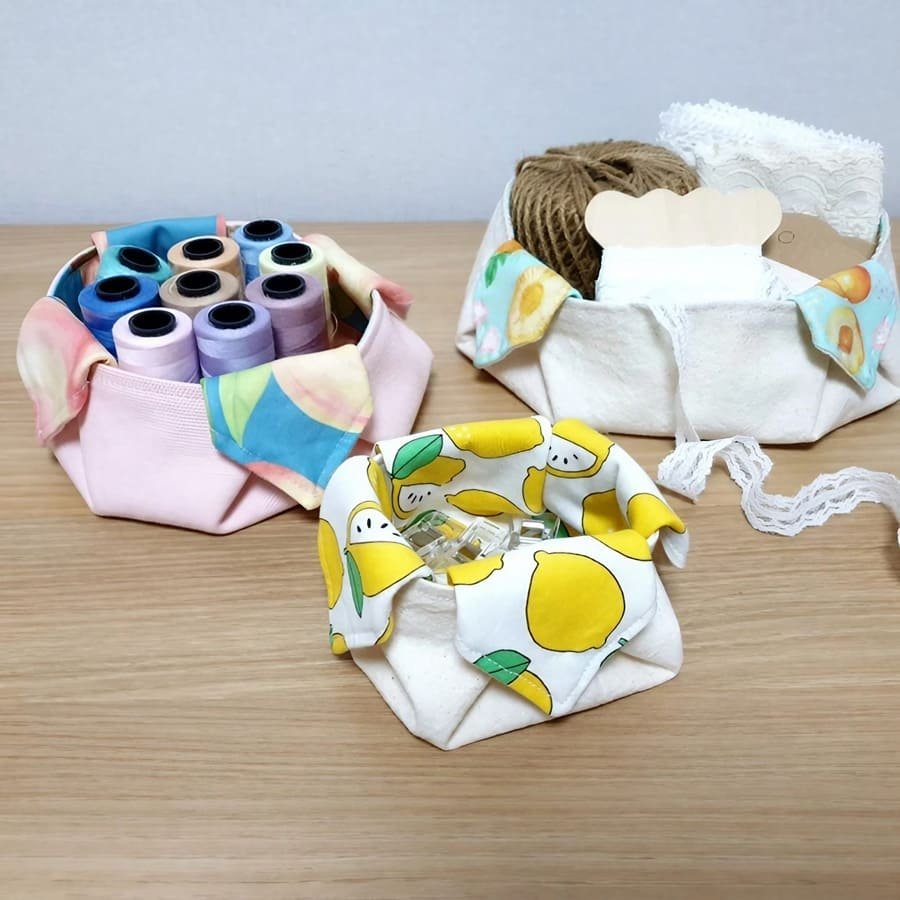
1 Understanding the Easy Fabric Basket – Pattern Basics
The foundation of any successful sewing project is a clear understanding of the Easy Fabric Basket – Pattern layout. This specific pattern is designed to be a “beginner-friendly” template that uses simple geometric shapes—usually squares or rectangles—to create a three-dimensional object. The primary goal is to transform flat pieces of woven fabric into a structural item that can hold weight, which is achieved through a technique known as boxing the corners.
When we talk about the Easy Fabric Basket – Pattern, we are referring to the blueprint that dictates the height, width, and depth of your finished product. Most patterns will consist of an outer fabric piece, a lining fabric piece, and a layer of fusible fleece or interfacing. The interfacing is the “secret ingredient” that provides the necessary stiffness, ensuring your basket doesn’t just flop over when it’s empty.
To start, you will need to cut your fabrics according to the pattern dimensions provided in your specific project plan. A standard medium-sized basket often starts with fabric rectangles measuring around 12 by 18 inches. It is crucial to use a rotary cutter and a quilting ruler to ensure your edges are perfectly straight, as even a small deviation can result in a lopsided basket once the side seams are closed.
Choosing the right textile combination is another vital part of the Easy Fabric Basket – Pattern experience. While quilting cotton is the most popular choice due to its massive variety of prints, you can also experiment with canvas, denim, or upholstery fabric for the exterior to add extra durability. The lining should generally be a smoother, lighter fabric that complements the exterior design without adding too much bulk to the seam intersections.
Precision in the early stages of the Easy Fabric Basket – Pattern will save you significant frustration later. This includes ironing your fabric to remove all wrinkles before cutting and ensuring that your pattern weights or pins are securely holding the template in place. Remember, the “Easy” part of the name comes from the simplicity of the steps, but the quality of the finish comes from your attention to detail during the preparation phase.
Finally, always remember to account for the seam allowance, which is the distance between the edge of the fabric and the line of stitching. Most Easy Fabric Basket – Pattern instructions utilize a 1/4 inch or 1/2 inch seam allowance. Consistency is key here; if your seams vary in width, the lining of the basket may end up being larger than the exterior, causing unsightly bunching or sagging inside the finished container.
2 Selecting Materials for Your Easy Fabric Basket – Pattern
Selecting the right materials is the most influential factor in how your Easy Fabric Basket – Pattern turns out. For the exterior, look for medium-weight cotton or linen blends that offer a balance of flexibility and strength. These fabrics are easy to manipulate under a sewing machine foot but are dense enough to hide the internal structure of the interfacing.
The interfacing or stabilizer is perhaps the most critical component of the Easy Fabric Basket – Pattern. If you want a soft, slouchy look, a light fusible fleece works wonders. However, if you are aiming for a crisp, upright storage bin that can hold heavy items like toys or books, you should opt for a heavyweight firm stabilizer (like Peltex or Decovil). This material is ironed onto the wrong side of the fabric to provide an instant “backbone.”
Don’t overlook the importance of high-quality sewing thread. Since fabric baskets often undergo stress at the seams when being moved or filled, using a 100% polyester thread is recommended for its strength and slight elasticity. Match the thread color to your fabric for a seamless look, or choose a contrasting topstitch thread to make the upper rim of your basket a design feature.
For the inner lining, you want something that feels good to the touch but is also easy to clean. Many makers prefer solid-colored broadcloth or a small-scale print that doesn’t compete with the exterior’s Easy Fabric Basket – Pattern aesthetic. If you plan to use the basket in a bathroom or kitchen, consider using a laminated cotton or a water-resistant liner to protect the basket from moisture and spills.
Tools play a supporting role in the Easy Fabric Basket – Pattern workflow. You will need sharp fabric shears, a marking pen (that disappears with heat or water), and plenty of wonder clips. Clips are often superior to pins when working with multiple thick layers of fabric and interfacing, as they hold the “sandwich” together firmly without bending or pricking your fingers during the stitching process.
Lastly, think about embellishments and handles. An Easy Fabric Basket – Pattern can be elevated significantly by adding cotton webbing handles, leather straps, or even fabric “ears” for a whimsical touch. Adding these elements requires planning during the cutting stage, as they must be basted into place before the final assembly to ensure they are securely anchored between the fabric layers.
3 Step-by-Step Assembly of the Easy Fabric Basket – Pattern
The assembly of the Easy Fabric Basket – Pattern begins with the preparation of the fabric panels. First, you will fuse your chosen interfacing to the wrong side of either the exterior fabric or the lining (or both, for extra rigidity). Using a hot iron with plenty of steam ensures a permanent bond, preventing the fabric from bubbling or shifting during the sewing stages.
Once the pieces are prepped, you will place the two exterior pieces right sides together and sew along the sides and the bottom. It is vital to leave the top open. Repeat this exact process for the lining pieces, but here is a pro tip for the Easy Fabric Basket – Pattern: leave a 3-4 inch gap in the bottom seam of the lining. This “turning hole” is essential for flipping the basket right-side out later.
Now comes the “boxing” part of the Easy Fabric Basket – Pattern. To create a flat bottom, you will pull the side seam and the bottom seam apart at the corner until they meet, creating a triangle shape. Mark a straight line across the triangle (the length of the line determines the width of the basket’s base) and sew across it. Trim the excess fabric to leave a clean corner. Do this for both the exterior and the lining.
The next phase involves nested assembly. Turn your exterior basket right-side out, but keep your lining wrong-side out. Insert the exterior basket into the lining basket so that the right sides of the fabric are touching each other. Align the side seams perfectly and secure the top edge with clips. This is where the Easy Fabric Basket – Pattern truly starts to take its three-dimensional shape.
Sew all the way around the top circular rim using a steady seam allowance. Because you are sewing through multiple layers of fabric and heavy interfacing, you may need to increase your stitch length slightly or use a denim needle to prevent the machine from skipping stitches. Take your time around the seams to ensure a professional, even finish on the top edge.
The final transformation happens now. Reach through the hole you left in the lining and carefully pull the exterior fabric through. It will look like a messy ball at first, but keep pulling until the whole Easy Fabric Basket – Pattern is right-side out. Tuck the lining into the exterior, press the top edge flat with an iron, and topstitch around the rim. Finally, sew the hole in the lining shut using a ladder stitch or a quick machine pass.
4 Customizing and Scaling Your Easy Fabric Basket – Pattern
One of the greatest advantages of the Easy Fabric Basket – Pattern is that it is infinitely scalable. Once you understand the basic geometry, you can create anything from tiny jewelry bowls to large laundry hampers. To scale the pattern, simply increase the initial dimensions of your fabric rectangles, ensuring that the ratio of height to width remains functional for your specific needs.
Customization can also be achieved through fabric manipulation. Before assembling your Easy Fabric Basket – Pattern, you can add quilt lines to the exterior panels. This not only adds a beautiful visual texture but also serves to further stiffen the fabric by “locking” it to the fleece. Cross-hatch or vertical lines are popular choices for a modern, minimalist look.
Color blocking is another fantastic way to put a unique spin on the Easy Fabric Basket – Pattern. Instead of using a single piece of fabric for the exterior, you can sew two different fabrics together (for example, a heavy canvas bottom and a printed cotton top) before starting the assembly. This creates a “dipped” look that is very trendy in contemporary interior design.
If you want to add functionality, consider adding internal pockets to your lining. Before you sew the lining pieces together, attach a small pleated rectangle of fabric to one of the interior panels. This turns your Easy Fabric Basket – Pattern into a perfect craft caddy for holding scissors, pens, or knitting needles, keeping your small items from getting lost at the bottom.
For those who love a rustic aesthetic, incorporating natural materials like jute or hemp into your Easy Fabric Basket – Pattern can yield stunning results. You can sew a strip of burlap around the center or use thick rope for handles. Just be sure your sewing machine can handle the extra thickness, or use a heavy-duty needle specifically designed for thick textiles.
Don’t forget the power of labels and tags. Adding a small “Handmade” leather tag or a cork label to the side of your basket adds a level of professionalism that makes these items perfect for gifting. Whether you are making them for a baby shower gift or for your own pantry, the Easy Fabric Basket – Pattern provides a blank canvas for your creative expression and organizational dreams.
FAQ – Frequently Asked Questions
1. What is the best fabric to use for an Easy Fabric Basket – Pattern?
The best choice for beginners is 100% quilting cotton for both the exterior and lining because it is easy to cut, doesn’t slip, and takes interfacing well. For a more “high-end” or durable look, cotton canvas or duck cloth is excellent for the exterior.
2. Why is my fabric basket falling over?
If your basket isn’t standing up, the issue is likely the interfacing. For a sturdy basket, you need a firm, non-woven stabilizer or a double layer of fusible fleece. Make sure the interfacing is fused properly to the fabric without any lifting at the edges.
3. Can I wash my fabric basket?
Yes, but it depends on the interfacing used. If you used fusible fleece, you can usually machine wash on a gentle cycle and air dry. If you used a heavy-duty stiffener like Peltex, spot cleaning is recommended, as machine washing may cause the internal structure to crease permanently.
4. How do I calculate the size of the bottom for the Easy Fabric Basket – Pattern?
The width of the bottom is determined by the length of the line you sew when boxing the corners. For example, if you sew a 4-inch line across the corner, your basket will have a 4-inch deep base. Remember that increasing the base width will decrease the overall height of the basket.
5. Do I need a special sewing machine for this pattern?
A standard home sewing machine is perfectly fine for an Easy Fabric Basket – Pattern. However, if you are using very thick fabrics or heavy stabilizers, use a Size 90/14 or 100/16 needle and go slowly over the side seams where the layers are thickest.
6. Can I make this basket without a sewing machine?
While a machine is much faster and provides stronger seams, you can absolutely sew an Easy Fabric Basket – Pattern by hand using a backstitch. It will take more time, but the result will be just as functional and have a lovely “slow-stitch” charm.
Conclusion
Creating your own storage solutions using an Easy Fabric Basket – Pattern is an incredibly rewarding experience that blends practical organization with the joy of sewing. In this article, we have covered everything from the initial selection of fabrics and stabilizers to the precise techniques of boxing corners and finishing the top rim with a professional topstitch. By following these steps, you can create a variety of customized fabric bins that bring order and beauty to your home.
We hope this guide inspires you to dust off your sewing machine and start your first project! Whether you are making a small tray for your keys or a large bin for your yarn stash, the Easy Fabric Basket – Pattern is a versatile tool in any crafter’s arsenal.