
The God’s Eye quilt block, with its captivating design and rich historical context, stands as a testament to the enduring beauty of traditional quilting. Crafting this intricate block involves more than just piecing fabric; it’s a journey into the past, connecting contemporary quilters with generations of artisans who used their needles and thread to weave stories and beliefs into their creations. The God’s Eye quilt block pattern is not only visually stunning but also holds deep symbolic meaning, often associated with protection, guidance, and the omnipresent gaze of a higher power.
For centuries, the God’s Eye quilt block has been a beloved element in quilting, appearing in countless quilts across different regions and traditions. Its unique structure, characterized by concentric squares and diamond shapes, creates a sense of depth and movement that is both mesmerizing and comforting. Whether used as a standalone block or integrated into larger quilt designs, the God’s Eye quilt block pattern offers endless possibilities for creative expression.
In this comprehensive guide, we will delve into the fascinating world of the God’s Eye quilt block. We’ll explore its origins, the symbolism embedded within its design, and provide step-by-step instructions for creating your own God’s Eye quilt block pattern. Whether you’re a seasoned quilter or just beginning your quilting journey, this article will equip you with the knowledge and inspiration needed to incorporate this meaningful block into your projects. Join us as we uncover the secrets and stories woven into the very fabric of the God’s Eye quilt block.
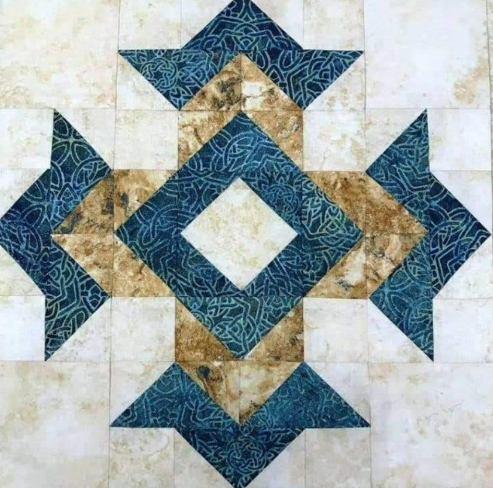
1. Unveiling the Origin and Symbolism of the God’s Eye Quilt Block
The God’s Eye quilt block, or Ojo de Dios, finds its roots in the rich cultural heritage of indigenous communities, particularly those in Mexico and the southwestern United States. The term “Ojo de Dios” itself translates to “Eye of God.” For groups like the Huichol people, the creation of these woven structures was deeply spiritual. A central wooden cross formed the foundation, around which colorful yarns were meticulously wrapped, creating a design that represented the spiritual eye capable of seeing and understanding the unknown. This was more than art; it was a potent symbol of protection and guidance.
This sacred symbol made its way into the quilting tradition through cultural exchange and adaptation. Settlers and travelers interacting with these indigenous groups were captivated by the beauty and meaning of the Ojo de Dios. While the original form used yarn and wood, resourceful quilters adapted the design using the materials available to them: fabric scraps and thread. The concentric diamonds and squares of the God’s Eye quilt block pattern mirrored the woven design, preserving the essence of the “watchful eye” while translating it into a new medium.
The meaning of the God’s Eye quilt block often centers on divine protection and foresight. The multiple colors are frequently interpreted as representing the various elements or directions, and the central focus represents the eye that sees all. Quilts featuring the God’s Eye quilt block pattern were often gifted with wishes for the recipient’s well-being, particularly for children, to watch over them as they slept or grew. The symbol’s power of protection was a source of comfort, making these quilts more than just functional items; they were infused with prayer and love.
The transition from a three-dimensional woven object to a two-dimensional quilted block is a fascinating example of cultural adaptation. This evolution speaks to the ingenuity of early American quilters who found inspiration in the diverse cultures surrounding them. By integrating the God’s Eye quilt block pattern into their repertoire, they not only preserved a powerful cultural symbol but also expanded the artistic language of quilting. The block became a bridge between different worlds, carrying forward a message of spiritual connection and protective watchfulness.
Today, quilters continue to be drawn to the God’s Eye quilt block for both its aesthetic appeal and its symbolic depth. While the explicit spiritual context may vary among contemporary makers, the inherent sense of watchfulness and protection remains a central theme. Incorporating the God’s Eye quilt block pattern into a modern quilt allows quilters to connect with a long lineage of artisans who found beauty and meaning in this design. The block serves as a reminder that quilts are often more than just practical objects; they are vessels for stories, intentions, and well-wishes.
Understanding the history and symbolism of the God’s Eye quilt block enriches the quilting experience. Knowing that each strip of fabric placed in a God’s Eye quilt block pattern carries a legacy of protection and spiritual insight adds an extra layer of meaning to the creative process. It transforms the act of sewing into a form of meditation, a way to connect with past generations and express hopes for the future. This deep-rooted significance is a major reason why the God’s Eye quilt block remains a popular and respected design in the quilting world today.
2. Choosing Fabrics to Bring the God’s Eye Quilt Block Pattern to Life
Selecting the right fabrics is crucial for achieving a stunning God’s Eye quilt block. The traditional Ojo de Dios used vibrant, contrasting colors of yarn, and this principle translates beautifully to the quilted version. High-contrast colors are essential for defining the distinct layers that create the “eye” effect within the God’s Eye quilt block pattern. Bold primaries, deep earth tones, or even a mix of bright modern fabrics can work well. The goal is to ensure each concentric band stands out sharply against its neighbors, drawing the viewer’s eye towards the center.
While the original symbolism often relied on specific colors for their elemental or directional meanings, contemporary quilters have greater freedom. You might choose colors that resonate personally, coordinate with a specific room, or simply evoke a particular mood. However, keeping the idea of the “watchful eye” in mind, using a darker color for the central square can create a strong sense of focus. Surrounding that dark center with progressively lighter bands in the God’s Eye quilt block pattern can create a luminous effect, making the “eye” appear to open outwards.
Don’t be afraid to mix prints with solids. Small, non-directional prints can add subtle texture to the bands of the God’s Eye quilt block pattern without distracting from the overall design. Solids offer clean, crisp lines that emphasize the geometric nature of the block. Experimenting with a combination, such as solid squares alternating with patterned triangles, can create a visually dynamic God’s Eye quilt block. Consider using a consistent fabric for all the background triangles across several blocks to create a cohesive look when they are sewn together in a quilt top.
Fabric quality matters greatly in quilting, especially for intricate patterns like the God’s Eye quilt block. Opting for high-quality, 100% cotton quilting fabric is always recommended. These fabrics have a consistent weave, tend to bleed less during washing, and withstand the multiple pressings required for precise piecing. Good quality fabric also ensures that your finished quilt, featuring the meticulous work of the God’s Eye quilt block pattern, will endure for years to come. Investing in good materials from the start prevents frustration during the sewing process and leads to a superior finished product.
When gathering your materials, don’t overlook your scrap basket. The God’s Eye quilt block is an excellent pattern for using up leftover fabric strips from previous projects. Since the block consists of narrow bands and small triangles, even small pieces can find a home within the design. Creating a God’s Eye quilt block pattern from scraps not only adds variety and personal history to your quilt but also honors the traditional practice of resourcefulness that has always been a hallmark of the quilting community.
Ultimately, the best fabrics for your God’s Eye quilt block are the ones that speak to you. Lay out potential fabric combinations before you begin cutting. See how the colors interact and if they create the desired contrast. This planning stage is critical for achieving a successful God’s Eye quilt block pattern. Once you are satisfied with your fabric choices, you’re ready to proceed to the cutting and sewing process, bringing your unique vision of the God’s Eye quilt block to life.
3. Step-by-Step Guide to Creating the God’s Eye Quilt Block
Creating the God’s Eye quilt block pattern requires careful cutting and precise sewing, but the results are incredibly rewarding. There are a few different methods for constructing this block, but one common approach involves building concentric squares from the center outward using fabric strips and triangles. For a basic 12-inch finished God’s Eye quilt block, you will start with a small central square and add increasing layers. Accuracy in cutting is the foundation for a neat and accurate block, so use a sharp rotary cutter and a reliable quilting ruler.
For a specific example, let’s look at creating a 12″ finished block. You’ll need four different fabrics. Start by cutting one 2-1/2″ square from Fabric A (center). Then, cut two 1-1/2″ x WOF (width of fabric) strips each from Fabric B and Fabric C. From Fabric D (background), cut two 1-1/2″ x WOF strips, and from the remainder, cut eight 4″ squares. Sub-cut the Fabric B strips into four 1-1/2″ x 2-1/2″ pieces and four 1-1/2″ x 4-1/2″ pieces. Sub-cut the Fabric C strips into four 1-1/2″ x 4-1/2″ pieces and four 1-1/2″ x 6-1/2″ pieces. This careful cutting ensures that the pieces for your God’s Eye quilt block pattern fit together precisely.
The construction of the God’s Eye quilt block begins at the center. Sew a 1-1/2″ x 2-1/2″ piece of Fabric B to opposite sides of the central Fabric A square. Press the seams towards the added strips. Then, sew a 1-1/2″ x 4-1/2″ piece of Fabric B to the remaining sides. This completes the first round of the God’s Eye quilt block pattern. Repeat this process using the Fabric C strips (first the shorter pieces, then the longer ones), sewing them to the edges of the existing unit. Remember to press after each step, as this is crucial for achieving flat, precise seams.
After adding the rounds of Fabric B and C, your God’s Eye quilt block unit is growing. The final layers are added using rectangles cut from Fabric D strips. Sew 1-1/2″ x 6-1/2″ pieces to opposite sides of the block, then 1-1/2″ x 8-1/2″ pieces to the remaining sides. This forms a square within the God’s Eye quilt block pattern. Continue this pattern: 1-1/2″ x 8-1/2″ pieces followed by 1-1/2″ x 10-1/2″ pieces, then 1-1/2″ x 10-1/2″ pieces and 1-1/2″ x 12-1/2″ pieces. You have now created the inner section of the God’s Eye quilt block.
To create the large background triangles that define the overall square shape of the God’s Eye quilt block pattern, take the eight 4″ squares from Fabric D. Cut each square diagonally once to create sixteen triangles. Take four of these triangles and center one on each side of the central square of the large pieced unit. Stitch the triangle to the edge, then trim the excess fabric and press the seam towards the triangle. Repeat this process, adding a triangle to each side for the outer edges as well, completing the striking geometric design of the God’s Eye quilt block.
Once all the pieces are assembled, give your completed God’s Eye quilt block a final, careful pressing. Use steam with caution to avoid stretching the bias edges of the triangles. Measuring your block at this stage is essential to ensure it is the correct size before you square it up. A 12″ finished block should measure 12-1/2″ square before being sewn into a quilt top. With attention to accurate cutting, precise piecing, and careful pressing, your God’s Eye quilt block pattern will be a beautiful addition to any quilting project.
4. Troubleshooting and Tips for a Perfect God’s Eye Quilt Block
Achieving precision with the God’s Eye quilt block pattern can sometimes present challenges, even for experienced quilters. One common issue is managing the bias edges of the triangles. The bias edges are the diagonal cuts on the triangles, and they tend to stretch easily when handled or pressed improperly. To minimize this, handle the triangle pieces as little as possible and press with an up-and-down motion rather than sliding the iron. Starching your fabrics lightly before cutting can also add stability to the bias edges within your God’s Eye quilt block.
Another potential challenge is ensuring that all the points of the squares and diamonds within the God’s Eye quilt block pattern meet precisely. This requires consistent, accurate 1/4″ seams throughout the entire process. Regularly check your seam allowance by sewing two small fabric scraps together and measuring. If your seams are inconsistent, use a piece of tape on your sewing machine needle plate as a guide or consider using a specialized 1/4″ piecing foot. Precise seam allowances are critical for the symmetrical look of the God’s Eye quilt block.
If your finished God’s Eye quilt block isn’t measuring up to the correct size or isn’t perfectly square, squaring up is necessary. Use a large square quilting ruler and a sharp rotary cutter. Align the ruler’s diagonal lines with the seams of your block to ensure it is centered and square. Trim any excess fabric carefully from all four sides of the God’s Eye quilt block pattern. This step is vital before sewing blocks together, as it ensures they fit properly and your final quilt top is flat and accurate.
Pressing is often overlooked but is fundamental for a neat and flat God’s Eye quilt block. Press seams towards the darker fabric whenever possible to prevent show-through on the lighter areas. Pressing seams open can help reduce bulk at intersecting points, which is particularly useful where several points meet in the God’s Eye quilt block pattern. Experiment with both pressing techniques and see which yields flatter results for your specific fabric choices. Remember to press each seam as you go rather than waiting until the end.
Maintaining consistent fabric tension is important when sewing the multiple strips and triangles. If one piece is pulled tighter than another during sewing, it can cause puckering or distort the overall shape of the God’s Eye quilt block. Feed the fabric pieces through the machine smoothly, letting the machine’s feed dogs do the work. If you notice puckering, check your machine’s tension settings and ensure you are using the correct needle size for your fabric weight. This helps preserve the geometry of the God’s Eye quilt block pattern.
Finally, don’t forget the importance of proper pinning. Pinning at critical intersections where multiple points meet is essential for keeping the pieces aligned as you sew. Use fine, sharp pins that won’t distort the fabric. Insert the pins through the intersection point and check the alignment on both sides before sewing. Removing the pins just before they reach the needle helps prevent broken needles and stitching problems, ensuring the points of your God’s Eye quilt block pattern remain crisp and well-defined.
FAQ: Common Questions about the God’s Eye Quilt Block
Is the God’s Eye quilt block suitable for beginners?
While the God’s Eye quilt block can be a bit challenging due to the need for precise piecing and bias edges, it is achievable for determined beginners. Starting with a smaller version of the God’s Eye quilt block pattern or practicing the basic construction with scrap fabric first can build confidence. Taking it slow, focusing on accurate cutting, consistent 1/4″ seams, and careful pressing is key. Many quilters find the repetitive nature of adding strips manageable, making it a good project for learning these fundamental skills while creating a meaningful block.
What are the best methods for constructing the God’s Eye quilt block?
The most common methods are strip piecing and using background triangles, as described earlier. Some quilters prefer foundation paper piecing for the God’s Eye quilt block pattern because it provides excellent accuracy for points and seam lines, eliminating the need to manage bias edges directly. Another variation might use different size central squares and varying widths for the strips to alter the proportions of the “eye.” Choosing the method that best aligns with your skill level and preference is important when working on a God’s Eye quilt block.
What type of fabric works best for a God’s Eye quilt block?
High-quality, 100% cotton quilting fabric is the gold standard for the God’s Eye quilt block pattern. Cotton fabrics are stable, hold their shape well, press crisply, and come in endless colors and prints. While other fabrics can be used, they often present more challenges, such as slipping (satin), stretching (knits), or difficult pressing. Using contrasting colors in cotton fabric will best highlight the intricate design and symbolism of the “watchful eye” in your God’s Eye quilt block.
How can I personalize a God’s Eye quilt block?
Personalization can be achieved through color choices, fabric textures, and embellishments. While the structure of the God’s Eye quilt block pattern is fixed, you can interpret the central point differently. Perhaps you could hand-embroider a small, meaningful symbol in the center, or add a special charm. You could also vary the widths of the strips for each round, creating a more dynamic “eye” effect in your God’s Eye quilt block. Another way to personalize is by using fabrics from clothing with sentimental value.
What is the significance of the number of colors used in a God’s Eye quilt block?
While there’s no strict rule, the traditional Ojo de Dios often used multiple bright colors, sometimes linked to the four directions, the elements, or aspects of life like health or wealth. In a quilted God’s Eye quilt block pattern, the number of colors typically determines the number of concentric rounds. You might use three colors for a simpler look, or multiple distinct fabrics for a detailed, vibrant “eye.” The number of colors you choose can be based purely on aesthetics or chosen with symbolic intent for your God’s Eye quilt block.
Where can I find variations of the God’s Eye quilt block pattern?
You can find numerous variations of the God’s Eye quilt block pattern online, in quilting books, and through social media groups dedicated to quilting. Websites like Pinterest often showcase creative interpretations of the God’s Eye quilt block, while quilting pattern designers frequently offer digitized versions. Exploring these resources can provide inspiration for different color schemes, size options, and layout ideas for your next quilting project featuring the beautiful and meaningful God’s Eye quilt block.
Conclusion
In conclusion, the God’s Eye quilt block is far more than just an arrangement of fabric strips and triangles; it is a powerful symbol of protection, tradition, and creative adaptation. We’ve explored the origins of this captivating design, rooted in spiritual beliefs, and followed its journey into the heart of quilting history. We’ve also discussed the importance of color and fabric choice, provided a detailed guide for creating your own God’s Eye quilt block pattern, and shared essential tips for troubleshooting and achieving precision.
From understanding its historical and symbolic significance to mastering its construction, this article has covered the essential aspects of the God’s Eye quilt block. The beauty of this block lies not only in its striking geometry but also in the rich meaning woven into every seam. We hope this exploration inspires you to bring the watchful elegance of the God’s Eye quilt block to life in your own unique quilting creations. Please share your thoughts and experiences with the God’s Eye quilt block. Leave a comment below with your feedback on this article and any suggestions you have for future topics.