
Crochet Elephant – Tutorial is your ultimate guide to creating an adorable, pocket-sized companion or a stunning nursery decoration from simple loops of yarn. Crafting handmade toys, commonly known in the fiber art community as amigurumi, brings an unparalleled sense of joy and fulfillment to makers of all skill levels. If you are looking for a meaningful weekend project, a heartfelt baby shower gift, or an opportunity to sharpen your three-dimensional shaping skills, this lovable pachyderm design is the perfect choice for you.
The magic of embarking on this comprehensive Crochet Elephant – Tutorial lies in the unique way simple, repetitive stitches can form realistic and whimsical structures. You do not need decades of expert knitting or weaving experience to successfully breathe life into this charming, floppy-eared creature. By learning how to properly increase, decrease, and manage your tension, you will effortlessly transform a basic skein of yarn into a cherished heirloom that will be loved for generations.
In this deeply detailed and encouraging guide, we are going to explore the complete step-by-step process of making your very own plush safari friend from scratch. We will discuss selecting the softest materials, mastering the core stitches required for toy making, assembling the delicate ears and trunk, and stuffing the body with professional precision. Grab your favorite shades of gray or pastel yarn, find your most comfortable crochet hook, and let us dive together into this wonderfully rewarding creative adventure.
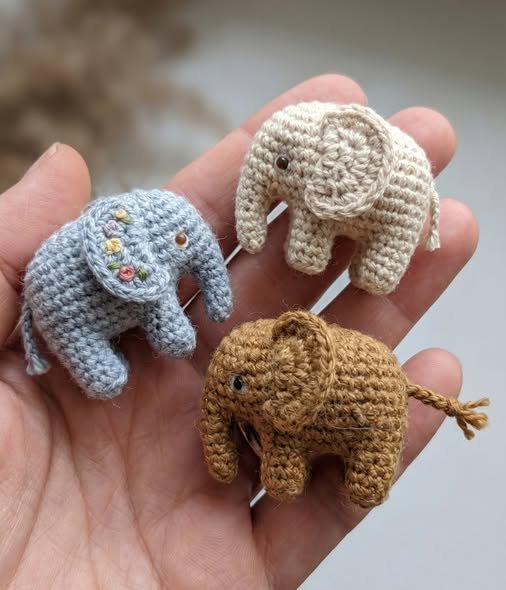
1. Selecting the Ideal Materials for Toy Making Success
Choosing the right type of yarn is the absolute foundation for a successful experience with this Crochet Elephant – Tutorial. For creating plush toys, a worsted weight (medium number 4) or light worsted weight (DK number 3) acrylic or cotton blend yarn is highly recommended. Acrylic yarn offers incredible softness, excellent elasticity, and is completely budget-friendly, making it a favorite for crafters worldwide.
On the other hand, 100% cotton yarn provides phenomenal stitch definition and an unmatched structure that helps your toy hold its shape over years of play. Whichever material you select, make sure it is machine washable, especially if your finished creation is intended for toddlers or babies. Selecting gentle, classic tones like slate gray, soft blue, or whimsical blush pink can give your project a beautifully modern appearance.
Selecting the appropriate crochet hook size is the secret weapon to achieving a perfect finish in amigurumi. Unlike flat blankets or shawls, stuffed toys require a very tight fabric so that the interior fiberfill does not peek through the loops. For a worsted weight yarn, it is best to drop down to a 3.25mm (D-3) or 3.5mm (E-4) hook to ensure your stitches remain dense and compact.
You will also need high-quality polyester fiberfill stuffing to give your safari companion its signature squishy, huggable body. Look for premium stuffing that is lightweight, hypoallergenic, and resilient against clumping when washed. Having a generous amount on hand ensures you can firmly pack the head and body sections without running out mid-project.
Safety eyes are another essential component that adds immediate personality, charm, and life to your handmade animal. Plastic safety eyes feature a threaded post and a secure washer that locks firmly inside the fabric to prevent them from loosening. For a standard four-inch to six-inch plush toy, 8mm or 10mm black safety eyes usually provide the most endearing proportions.
Lastly, assemble a few necessary notions including a sharp pair of scissors, a blunt tapestry needle, and several locking stitch markers. Stitch markers are absolutely vital when working in continuous spirals because they help you identify the exact start of each new round. A long yarn needle will also be indispensable later on when it is time to sew the limbs securely onto the main body.
2. Fundamental Stitches and Techniques for Amigurumi Shapes
Before diving directly into the pattern rows of this Crochet Elephant – Tutorial, it is important to understand the magic ring technique. The magic ring, or adjustable loop, is the gold standard for starting any circular amigurumi project because it can be pulled tightly to eliminate holes. Mastering this simple opening ensures that your stuffing stays securely inside the head and limbs without spilling out.
The single crochet stitch is the primary building block you will use for almost ninety-five percent of this entire project. This short, dense stitch creates a sturdy grid-like fabric that withstands everyday wear and tear perfectly. Practicing your single crochets so they are uniform in height will make your toy look incredibly professional and smooth.
Learning how to perform a neat increase is another critical skill you will develop as you work through the design. An increase simply means working two single crochet stitches into the exact same loop from the previous round. This technique expands the diameter of your fabric, allowing you to sculpt rounded cheeks, wide foreheads, and plump bellies.
Equally important is the invisible decrease technique, which is specifically designed to reduce your stitch count without leaving unsightly bumps. To execute an invisible decrease, insert your hook into the front loops only of the next two stitches, yarn over, and complete a normal single crochet. This clever trick keeps your toy’s skin looking flawless, uniform, and beautifully smooth.
Working in continuous rounds is another hallmark of toy making that differentiates it from flat row-by-row crocheting. Instead of joining each circle with a slip stitch and chaining up, you will simply spiral upward continuously. This method prevents a noticeable seam from forming along the back of your animal, giving it a beautifully seamless look.
Maintaining a consistent tension throughout the entire process is the ultimate key to achieving symmetry in your final piece. If you notice your hands getting tired, take brief breaks to stretch your fingers and relax your shoulders. Consistent, relaxed tension ensures that pairs of ears and limbs turn out identical in size, which makes final assembly a breeze.
3. Stitching the Body Head and Whimsical Details
To begin the actual construction of our Crochet Elephant – Tutorial, we will start by sculpting the head from the top down. Work 6 single crochets into a magic ring, then systematically increase by adding 6 stitches in each subsequent round until you reach a total of 36 stitches. This creates a beautifully rounded dome that forms the upper forehead and skull structure.
Around round 12, it is time to insert the safety eyes between rounds 11 and 12, leaving about 7 stitches of space between them. Once the eyes are locked in place with their washers, you can begin the decrease rounds to taper the neck area. Before the opening becomes too small, firmly pack the head with polyester fiberfill to establish its shape.
The trunk is crocheted by starting with a small circle of 6 stitches and working several rounds outward without increasing. This creates a long, slender tube that you can slightly curve by adjusting your stitch tension on one side. Once the trunk reaches about two inches in length, sew it securely onto the face right between the eyes.
The iconic large ears are worked in flat rows or semi-circles to give them their characteristic wide, floppy appearance. You will create two identical ear pieces, leaving a long yarn tail at the end of each piece for sewing purposes. Flattening the base of the ear slightly before attaching it to the head adds a realistic, heavy drape.
The body is started similarly to the head, expanding into a sturdy pear shape that can sit upright on its own. Ensure the bottom of the body is stuffed very firmly to create a stable base that prevents your toy from toppling over. Sew the completed head securely onto the neck opening using a whipstitch with your tapestry needle.
Finally, crochet four simple stubby legs and a tiny braided tail to complete the anatomy of your gorgeous creature. Stuff the legs lightly at the bottom and leave the tops empty so they can swing freely and sit naturally. Attach the legs to the lower quadrants of the body, making sure to check their alignment so your animal sits perfectly balanced.
4. Pro Tips for Flawless Assembly and Expressive Features
The assembly phase of any Crochet Elephant – Tutorial is often where the true magic happens, turning individual shapes into a character with personality. Many crafters find it incredibly helpful to use long sewing pins to temporarily hold the ears, trunk, and limbs in place before stitching. This allows you to step back, check the symmetry, and adjust the placement until the expression looks absolutely perfect.
When sewing the pieces together, always pull your stitches firmly but gently to prevent the yarn from snapping or puckering the fabric. Use the exact same color yarn as the body so that your joining stitches disappear entirely into the surrounding background. Passing your needle through both the limb loop and the body loop creates an exceptionally strong, child-safe bond.
If you want to give your safari friend an extra sweet, sleepy expression, you can use a small strand of black embroidery floss. Embroider tiny curved eyelashes next to the safety eyes, or use a French knot to create soft, minimalist eyes instead of plastic ones. This embroidered alternative is highly recommended if you are gifting the plushie to an infant under three years old.
Adding a touch of soft pink cosmetic blush or pink fabric marker to the inside of the ears and cheeks brings immediate warmth to the design. Use a dry makeup brush to apply a very tiny amount of powder gently onto the yarn loops. This simple shading technique gives your handmade creation a beautiful, storybook illustration aesthetic that everyone will adore.
If you notice minor gaps between your stitches where the white stuffing is showing through, do not panic. You can easily disguise these small spots by using a blunt needle to gently massage and shift the yarn fibers to cover the gap. For your next project, remember to reduce your hook size by another half-millimeter to keep the fabric completely solid.
Never rush through the final details, as taking your time during assembly is what elevates a project from amateur to boutique-quality. Celebrate each milestone as you attach the final limb and watch your creation take on a life of its own. With patience and practice, you will soon find yourself gliding through this pattern with absolute ease and confidence.
FAQ – Frequently Asked Questions
Is this elephant pattern safe for newborn babies to play with?
To make this toy completely safe for newborns, it is highly recommended to embroider the eyes using black yarn instead of using plastic safety eyes. While safety eyes are very secure, embroidered features eliminate any potential choking hazard, making the plushie one hundred percent infant-safe.
How can I make my crochet elephant significantly larger?
The easiest way to scale up your project without changing the pattern rows is to use a thicker yarn and a larger hook. For example, using super bulky blanket yarn with a 6.0mm hook will instantly transform this pocket-sized design into a giant, ultra-soft huggable pillow.
What should I do if my toy’s head is drooping or floppy?
A drooping head usually happens if the neck area is not stuffed firmly enough, or if the joining stitches are too loose. To fix this, you can insert a rolled-up piece of sturdy clean felt or an extra clump of dense stuffing into the neck core during assembly to provide structural support.
How do I clean my finished handmade plush animal?
If you used premium acrylic or cotton yarn, you can spot clean small stains with cold water and mild soap. For a deep clean, place the elephant inside a mesh lingerie bag and wash it on a delicate cycle, then reshape it and allow it to air dry completely.
Why does my magic ring keep pulling open over time?
To prevent your magic ring from unraveling, ensure you leave a three-inch tail when starting your circle. Once you pull the ring closed tightly, use your tapestry needle to securely weave that starting tail through the center stitches in a reverse direction at least twice to lock it permanently.
How many hours does it typically take to finish this project?
For an intermediate crocheter, this entire project can easily be completed in roughly three to five hours of continuous crafting. It makes an incredible weekend activity because the individual components are small, highly portable, and very quick to stitch up while watching your favorite show.
Conclusion
Completing this delightful Crochet Elephant – Tutorial is a wonderful achievement that adds a beautifully textured, handmade treasure to your crafting portfolio. Throughout this comprehensive guide, we have explored selecting the best structural materials, mastering essential amigurumi techniques like the magic ring, assembling the whimsical anatomy, and finishing with expressive details.
This adorable pachyderm project perfectly demonstrates how simple loops of thread can be transformed into a soulful companion capable of bringing smiles to anyone who holds it.