
If you love sewing, crafting, or simply staying organized, creating a Mini Organizer Bag – Tutorial is the perfect weekend project to dive into. In a world where our bags are constantly cluttered with charging cables, lip balms, keys, and loose change, a compact, stylish pouch becomes an absolute lifesaver. This step-by-step guide is designed to help you craft a beautiful, functional, and durable pouch from scratch, even if you are relatively new to the world of sewing.
Mastering a Mini Organizer Bag – Tutorial allows you to customize your storage solutions to fit your exact needs, whether you need a travel tech pouch or a chic makeup holder. Throughout this comprehensive article, we will explore the essential materials, structural secrets, step-by-step assembly, and creative personalization techniques required to achieve professional-grade results. By the end of this guide, you will not only have a gorgeous finished product but also a set of versatile sewing skills you can apply to future projects.
Let’s dive into the ultimate Mini Organizer Bag – Tutorial and explore how choosing the right fabrics, stabilizers, and construction methods can transform a simple piece of cloth into a high-quality accessory. We will break down every single phase of the process, ensuring your crafting journey is smooth, enjoyable, and incredibly rewarding. Grab your sewing machine, prepare your workspace, and let’s get started on making your new favorite organization companion.
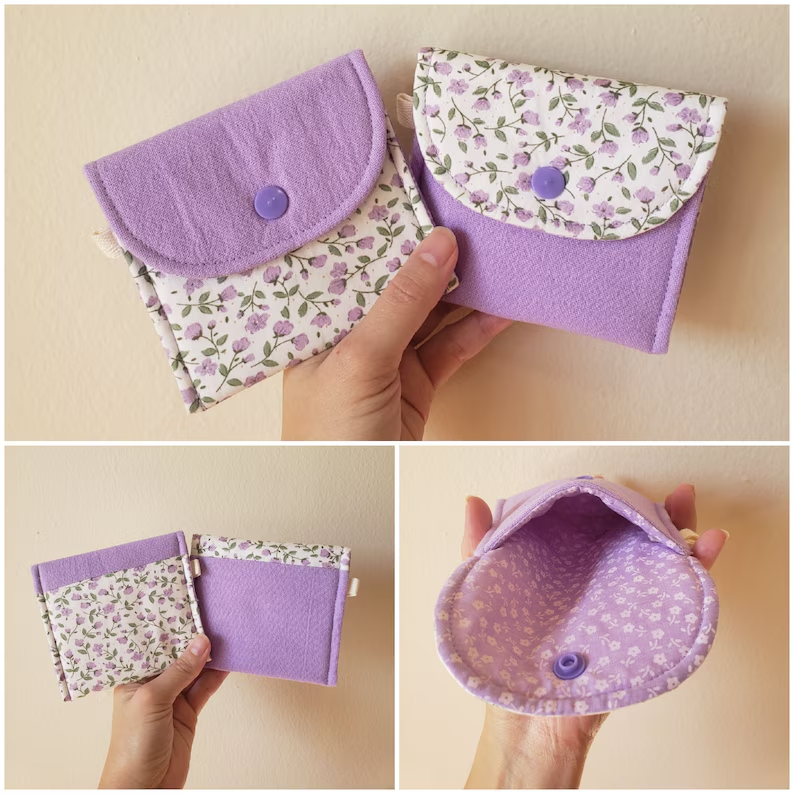
1. Selecting the Perfect Fabric and Essential Materials
The success of your Mini Organizer Bag – Tutorial depends heavily on the materials you select before making your very first cut. For the exterior fabric, you want something sturdy yet easy to work with, such as quilting cotton, canvas, or denim. These fabrics provide the durability needed for an item that will be handled daily, tossed into larger bags, or carried around by itself.
For the interior lining, a lighter weight quilting cotton is highly recommended because it reduces bulk at the seams while keeping the inside neat. Choosing a bright or contrasting color for the lining makes it much easier to find small items hiding at the bottom of your mini organizer bag. Avoid fabrics that fray excessively or stretch too much, like loose knits, unless you are an advanced sewist.
Beyond the fabric, you will need a few essential notions to ensure a smooth sewing experience and a beautiful finish. A high-quality nylon coil zipper or metal zipper is crucial for securing your belongings safely inside the pouch. You will also need standard sewing threads that match your fabric, sharp fabric shears, sewing pins or fabric clips, and a reliable sewing machine.
2. The Secret to Structure Using Interfacing and Stabilizers
One common mistake when following a Mini Organizer Bag – Tutorial is skipping the support layers, which results in a limp, floppy pouch. To give your bag that professional, store-bought look, you absolutely must use fusible interfacing or foam stabilizers. These materials are ironed onto the wrong side of your fabric to add body, crispness, and strength.
For a lightweight yet structured feel, a medium-weight Pellon SF101 shape-flex fusible interfacing works beautifully on your exterior cotton pieces. If you prefer a more padded, protective feel—especially if you plan to carry fragile items like headphones or jewelry—a thin layer of fusible fleece is an excellent alternative. The added cushion protects your items while giving the bag a satisfying, premium texture.
Applying the interfacing correctly is just as important as choosing the right type for your mini organizer bag. Always follow the manufacturer’s instructions regarding iron temperature and pressing time, using a pressing cloth to protect your fabric. Make sure there are no air bubbles or wrinkles trapped underneath, as these will show through on the outside of your finished project.
3. Step-by-Step Assembly and Zipper Installation Techniques
Now it is time for the core of our Mini Organizer Bag – Tutorial, where we actually assemble the pieces and conquer the feared zipper installation. Start by prepping your zipper; if it is longer than your fabric pieces, you can easily trim it down and add fabric zipper tabs to the ends for a cleaner look. Sandwich the zipper between one exterior fabric piece (right side up) and one lining piece (wrong side up).
Using a specialized zipper foot on your sewing machine, sew along the edge, keeping your stitches straight and close to the zipper teeth. Once sewn, flip the fabrics back so their wrong sides are facing each other, press the seam flat with an iron, and topstitch along the edge. Repeat this exact sandwiching process for the remaining exterior and lining pieces on the other side of the zipper.
Open the zipper halfway—this is a vital step, or you won’t be able to turn your bag right-side out later! Align your two exterior pieces right sides together, and your two lining pieces right sides together. Sew all the way around the perimeter, leaving a 3-inch opening at the bottom of the lining for turning, then box the corners for depth, turn the bag right-side out, and hand-sew the lining opening closed.
4. Creative Customization and Expert Sewing Tips
The best part of completing a Mini Organizer Bag – Tutorial is making the project entirely your own through creative personal touches. You can easily add internal mesh pockets, elastic bands, or fabric dividers to keep your lipsticks, flash drives, or cards perfectly separated. Planning these internal details before assembling the main body allows you to sew them directly onto the lining fabric with ease.
On the outside, you can experiment with fussy cutting to highlight a specific pattern on your fabric, or try your hand at free-motion quilting to create beautiful textures. Adding a small fabric loop or a D-ring to the side seam allows you to attach a wristlet strap or clip the pouch onto a larger backpack. Little details like leather zipper pulls or custom woven labels instantly elevate the overall aesthetic.
To ensure your sewing looks flawlessly professional, always press your seams with a hot iron after every single step of construction. Use a slightly longer stitch length for your visible topstitching to give it a clean, defined look that mimics high-end manufacturing. Take your time around the corners and bulky seams, gently guiding the fabric to avoid skipped stitches or broken needles.
Frequently Asked Questions (FAQ)
What is the best fabric for a beginner making a mini organizer bag?
The best fabric for beginners is 100% quilting cotton. It is widely available, comes in endless prints, does not stretch out of shape while sewing, and presses beautifully with a standard iron.
Can I make this project without a sewing machine?
Yes, you can absolutely hand-sew this entire bag using a strong backstitch. While it will take significantly longer than using a machine, hand-sewing allows for immense precision and is a relaxing project to do while watching TV.
How do I choose the right zipper size for my pouch?
It is always best to choose a zipper that is at least two inches longer than the width of your bag pattern. It is much easier to cut a long nylon zipper down to size than it is to work around a zipper slider that is cramped inside your seam allowance.
Why is my sewing machine skipping stitches when sewing the layers together?
Skipped stitches usually occur because your needle is either dull or too thin for the thickness of the project. When sewing through fabric, interfacing, and zipper tape, switch to a fresh heavy-duty needle, such as a size 90/14 or 100/16 denim needle.
How can I wash my finished mini organizer bag?
If you used high-quality quilting cotton and standard fusible interfacing, you can hand wash the bag in cold water with mild detergent. Reshape the bag while it is damp and let it air dry completely before pressing it with a warm iron to remove wrinkles.
Conclusion
In this Mini Organizer Bag – Tutorial, we have covered everything from selecting the right durable fabrics and applying structural interfacing to mastering the zipper installation and customizing your final design.
Crafting your own organizational pouches is an incredibly rewarding experience that blends utility with personal creativity, helping you clear the clutter in your life in style.