
Basic crochet shapes – Tutorial: if you have ever wanted to dive into the wonderful world of yarn crafts, mastering the foundation is your very first step to success. Learning how to create different forms is essential for anyone picking up a hook, as almost every complex project is built upon simple geometry. In this comprehensive guide, we will explore how to master these foundational elements so you can confidently move on to advanced patterns, amigurumi, and beautiful home decor items.
The beauty of fiber arts lies in how a simple strand of yarn can transform into almost anything with just a few stitches. When you understand how to manipulate increases and decreases, you unlock the ability to construct 3D objects, flat blankets, and wearable garments. This basic crochet shapes – tutorial is designed to take you from a complete beginner to someone who can visualize and execute any geometric form with ease.
Before we jump into the step-by-step instructions, make sure you have a comfortable crochet hook, some medium-weight acrylic yarn, a pair of scissors, and a few stitch markers. Having the right tools makes the learning process much smoother and helps you maintain an even stitch tension. Let’s grab our supplies and explore the magical process of shaping your yarn into beautiful, structured designs.
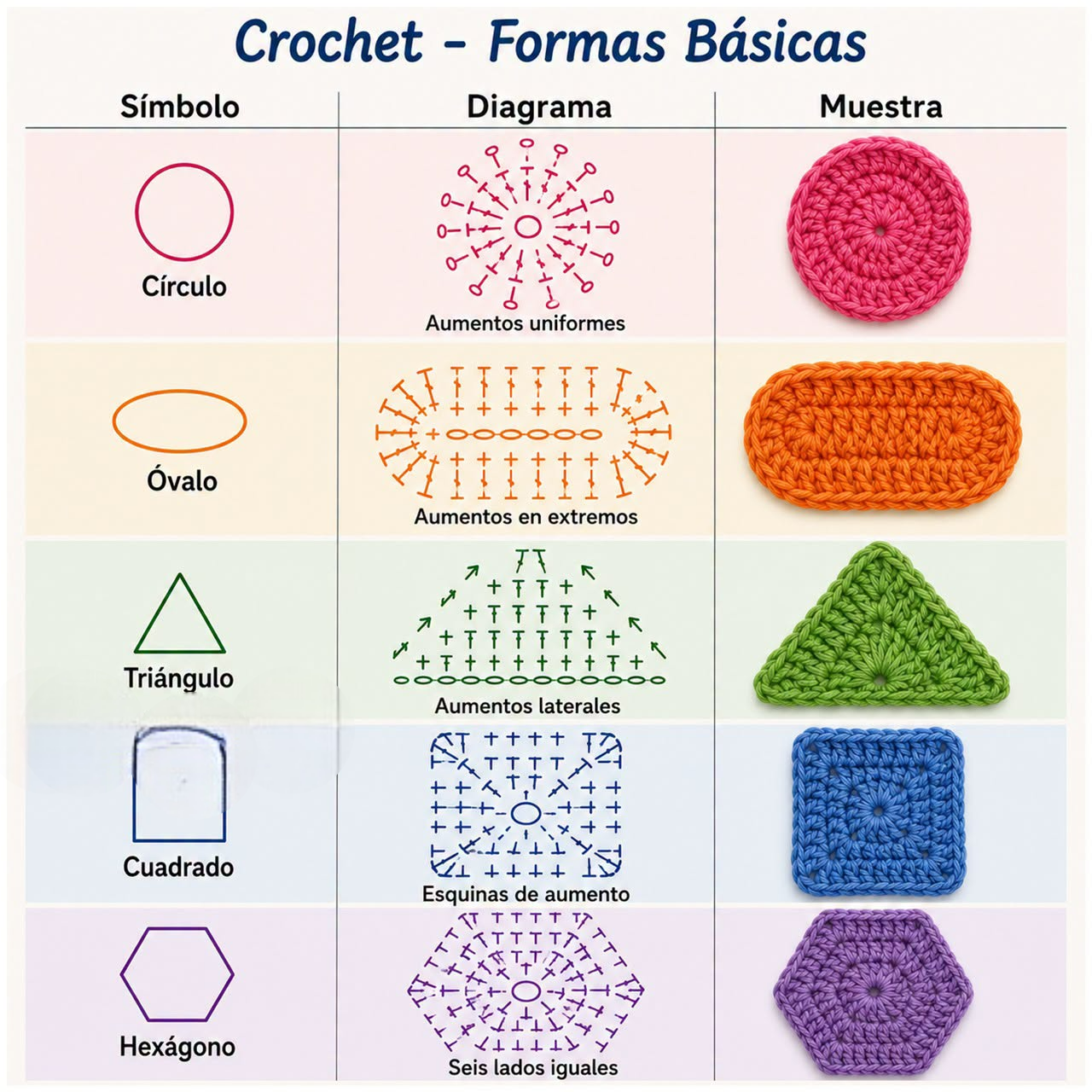
1. How to Crochet a Perfect Flat Circle
Creating a flat circle is one of the most vital skills you will learn in this basic crochet shapes – tutorial. The secret to keeping a circle perfectly flat without it ruffling or curling into a bowl lies in consistent, mathematical crochet increases. If you increase too quickly, your work will wavy; if you increase too slowly, it will cup upward.
To begin your circle, you can either use a magic ring (also known as a magic circle) or chain a few stitches and join them into a ring. The magic ring is highly recommended for beginners because it allows you to pull the center completely tight, leaving no hole in the middle of your work.
In the first round, you will typically work 6 to 8 single crochet stitches directly into the ring. Once your initial round is complete, you will secure it and prepare for the systematic increasing that builds the flat structure.
For the second round, the standard rule for a flat circle is to place two stitches into every single stitch from the previous row. This doubles your stitch count and provides enough room for the circle to expand outward smoothly.
As you move to the third round and beyond, you will space out your increases by alternating between regular stitches and increase stitches. For example, the pattern usually follows a sequence of one single crochet, then one increase, repeated all the way around the row.
Using stitch markers is incredibly important during this process so you never lose track of where your rounds begin and end. With a little practice, your circles will turn out beautifully flat every single time, serving as the perfect base for coasters, hats, and toy heads.
2. Mastering the Classic Square and Granny Square
Squares are the ultimate building blocks in the textile world, allowing you to piece together massive blankets, cardigans, and bags. In this part of our basic crochet shapes – tutorial, we will look at how to transform a round start into four distinct, sharp corners.
To make a solid square, you start similarly to a circle but quickly establish your corners by grouping stitches together separated by chain spaces. These chains create the necessary slack to turn a sharp 90-degree angle without distorting the fabric.
The most famous variation is undoubtedly the traditional granny square, which uses clusters of three double crochet stitches. This style is loved worldwide because it is incredibly fast to work up and uses up scrap yarn beautifully.
When working on the edges of your square, you will simply crochet standard stitches across the flat sides to maintain a straight line. The magic happens exclusively in the corners, where you will typically work a combination of stitches, chains, and more stitches into the exact same space.
Maintaining a straight edge requires you to carefully count your stitches on each side to ensure they remain perfectly symmetrical. If one side has even one extra stitch, your square will slowly distort into an uneven trapezoid over time.
Once you finish your square, a technique called blocking can be used to pin the corners down and spray them with water to set the shape permanently. This extra step gives your handmade squares a highly professional, crisp finish that makes joining them together a breeze.
3. Crafting Triangles for Modern Geometric Designs
Triangles add a wonderful, modern flair to your projects and are frequently used for bunting, shawl patterns, and modern geometric blankets. This basic crochet shapes – tutorial wouldn’t be complete without explaining how to manipulate your rows to create clean, three-sided forms.
There are two main ways to approach a triangle: working from the bottom up by systematically decreasing, or working from the top point down by increasing. Both methods yield beautiful results, but top-down triangles are often preferred for their drape and flexibility.
To build a triangle from the top down, you start with a tiny ring and immediately create a central point by adding extra stitches in the middle. This splits your work into two symmetrical wings that expand outward with every row you complete.
Alternatively, working in flat rows from the bottom up involves making a long foundation chain and utilizing crochet decreases at the start and end of every single row. By combining two stitches into one, your row gradually shrinks until you are left with just one final point.
Paying close attention to the turning chain is critical when making triangles, as it dictates how clean and straight your outside edges will look. If your edges look a bit messy, you can always add a final border of single crochet around the entire perimeter to clean it up.
Triangles are incredibly versatile and allow you to experiment with color changes to create vibrant, eye-catching chevron patterns. Once you master the basic math behind the three sides, you can scale them up to any size you desire.
4. Shaping 3D Spheres for Amigurumi and Toys
The art of amigurumi, or crocheting stuffed toys, relies almost entirely on your ability to turn flat yarn into a three-dimensional sphere. This section of our basic crochet shapes – tutorial will show you how combining circles, straight walls, and decreases creates a perfect 3D ball.
To create a sphere, you start exactly like you are making a flat circle, working up a series of continuous rounds with systematic increases. This initial phase forms the bottom half of your ball, expanding the width to your desired size.
Once your base is wide enough, you will transition into the “straight wall” phase by working several rounds without any increases or decreases at all. This stops the piece from expanding outward and forces it to grow upward, creating the middle section of the sphere.
After creating the walls, it is time to mirror your initial increases by using neat invisible decreases to close the top of the sphere. The invisible decrease is a special technique where you only hook into the front loops of the stitches, ensuring no unsightly gaps appear in your fabric.
Before the opening becomes too small to work with, you must pause and firmly pack your shape with high-quality polyester fiberfill stuffing. Stuffing your shape correctly is an art form itself; too little makes it look saggy, while too much can stretch the stitches open.
Finally, you will decrease down to your original stitch count, cut your yarn, and use a tapestry needle to weave the tail through the remaining loops to pull it shut. You now possess a perfect 3D sphere that can become the head of a doll, a Christmas ornament, or a bouncy toy.
Frequently Asked Questions (FAQ)
What is the best yarn for a beginner practicing basic crochet shapes?
The best choice for beginners practicing this basic crochet shapes – tutorial is a worsted weight (category 4) acrylic yarn or cotton yarn in a light, solid color. Light colors make it significantly easier to see your loops and understand exactly where to insert your hook, while acrylic is forgiving and easy to undo if you make a mistake.
Why is my crochet circle curling up like a bowl instead of laying flat?
If your circle is curling upward, it means you do not have enough stitches in your outer rows, causing the fabric to pull inward. This usually happens if you accidentally missed an increase stitch or if your overall stitch tension is far too tight. Try loosening your grip or double-checking your pattern count for that specific round.
What is the difference between a traditional decrease and an invisible decrease?
A traditional decrease pulls two stitches together but can sometimes leave a small, noticeable bump or a tiny gap in your project. An invisible decrease is a technique primarily used in amigurumi where you only insert your hook into the front loops of the next two stitches before completing the move, making the reduction virtually imperceptible on the outside.
How do I stop my granny squares from twisting as they get bigger?
Granny squares can sometimes develop a slight twist if you work continuously in the same direction row after row. To prevent this, many crocheters flip their work over after completing each round, alternating between the front and back sides, which keeps the corners perfectly square and balanced.
Do I need to count my stitches on every single row?
Yes, especially when you are a beginner learning how to shape yarn. Missing just one stitch can throw off the symmetry of a square, a triangle, or a sphere, forcing you to unravel your work later on. Using stitch markers at the start of each round makes tracking your numbers much faster and less stressful.
Conclusion
Mastering the fundamentals outlined in this basic crochet shapes – tutorial is the ultimate gateway to creative freedom in fiber arts. By learning how to precisely control flat circles, crisp squares, structural triangles, and three-dimensional spheres, you now possess the core skills required to tackle almost any pattern available online. Every massive blanket, intricate garment, and adorable stuffed animal is simply a clever combination of these exact geometric concepts. Keep practicing your stitch consistency, don’t be afraid to make mistakes, and enjoy the meditative process of creating something beautiful with your own two hands.