
When you dive into the world of yarn crafts, mastering a crochet design in hexagons – tutorial is one of the most rewarding milestones you can achieve. While the classic square has its place, the six-sided hexagon brings a dynamic, modern geometric flair to blankets, garments, and home decor. This versatile shape allows for seamless color transitions and unique structural layouts that easily elevate any handmade project from simple to sophisticated.
Learning how to construct a crochet design in hexagons opens up a world of creativity for crafters of all skill levels. By understanding the foundational anatomy of a six-sided motif, you can manipulate stitches to create solid, dense fabrics for cozy winter cardigans or airy, lace-like patterns for summer shawls. The secret lies in mastering the corners and increases, which naturally guide your yarn into a perfect geometric layout.
In this comprehensive guide, we will walk you through everything you need to know about creating a stunning crochet design in hexagons – tutorial. We will explore essential techniques, yarn selection, assembly methods, and advanced design tips to ensure your finished projects look flawless and professional. Grab your favorite hook, select your yarn palette, and let’s explore the infinite possibilities of hexagon crochet work.
1. Choosing the Right Yarn and Hook for Hexagonal Patterns
Selecting the perfect materials is the foundational step for any successful crochet design in hexagons. The weight of your yarn and the size of your hook will directly dictate the drape, size, and overall appearance of your finished motifs. For beginners, a medium-weight worsted weight yarn paired with a 5.0mm (H-8) hook is highly recommended because it offers excellent stitch visibility and control.
When browsing for materials, consider the fiber content based on what you plan to create. Acrylic yarn is a budget-friendly, durable, and machine-washable choice that works beautifully for large geometric blankets. On the other hand, natural fibers like merino wool or breathable cotton yarn are ideal if you are designing wearable garments that require a softer feel against the skin.
The relationship between your hook size and yarn tension is critical when working with six-sided shapes. If your stitches are too tight, your hexagon will begin to bowl or curl at the edges instead of laying flat. Conversely, if your tension is too loose, the center of your motif might distort, causing the corners to lose their sharp, distinct geometric definition.
To achieve a professional finish, always check the recommended gauge on your yarn label before beginning your crochet design in hexagons – tutorial. If you naturally crochet tightly, do not hesitate to move up a half-size in your hook selection. A slightly larger hook can give your stitches the breathing room they need to settle into a perfectly balanced, flat geometric layout.
Experimenting with different textures can also add incredible depth to your hexagonal work. Bouclé yarn or variegated colorways can create stunning visual effects, though they might hide intricate stitch patterns. For your first few hexagons, sticking to smooth, solid-colored yarns will help you track your increases easily and master the basic anatomy of the shape.
Ultimately, the best yarn and hook combination is the one that matches the functional needs of your final project. Take the time to create a few trial swatches to see how the fabric behaves when multiple motifs are placed side by side. This small preparatory step will save you hours of adjustments later on and ensure your creative vision comes to life beautifully.
2. Step-by-Step Foundation and Increasing Techniques
To begin your crochet design in hexagons, you must first establish a solid center ring. You can achieve this by using the magic ring technique, which allows you to pull the center completely closed, leaving no visible hole. Alternatively, you can chain four, slip stitch to form a ring, and work your first round of stitches directly into that central loop.
The magic of a hexagon relies entirely on creating six equal sides separated by six distinct corners. In your first round, you will typically work groups of double crochet stitches separated by short chain spaces. A standard formula involves crocheting two double crochets, chaining two, and repeating this sequence exactly six times around the ring before joining.
As you move into the subsequent rounds of your crochet design in hexagons – tutorial, you will need to apply strategic increases. To maintain a flat shape, you must place your increases exclusively inside the chain spaces created in the previous round. This means every time you reach a corner, you will work a specific cluster, such as two double crochets, a chain space, and two more double crochets all in the same opening.
Understanding this rhythm of continuous growth is essential for scaling your motifs to any size you desire. The straight sides of your hexagon will naturally grow by a set number of stitches in each round, while the corners remain the fixed anchors of your geometry. Consistently counting your stitches along each of the six sides will prevent your hexagon from warping.
Common mistakes during this stage usually involve skipping the very first stitch after a corner or forgetting a chain space entirely. Miscounting even a single stitch can throw off the alignment of the next round, transforming your clean hexagon into an uneven pentagon or a wavy heptagon. Take it slow and check your work at the end of every single round.
Once you master this foundational sequence of stitches and corner increases, you can grow a single hexagon indefinitely. You can choose to make dozens of small, intricate motifs to join together later, or you can simply keep expanding one massive hexagon to create a seamless, continuous starburst blanket or a cozy lounge sweater.
3. Joining Methods for Seamless Geometric Assembly
Once you have crocheted a collection of beautiful motifs, the next phase of your crochet design in hexagons is joining them together. The method you choose will drastically affect both the flexibility and the final aesthetic of your project. One of the most popular and beginner-friendly techniques is the whipstitch method, which uses a yarn needle to sew the edges together.
For a completely flat, nearly invisible connection, the mattress stitch is an exceptional choice. This technique involves threading your yarn through the back loops only of the opposing hexagons, pulling the yarn taut to lock the edges seamlessly. It creates a smooth fabric that is perfect for garments where bulky internal seams might cause discomfort against the skin.
If you prefer to keep your crochet hook in hand rather than switching to a sewing needle, you can use a slip stitch join. By inserting your hook through the inner loops of both motifs simultaneously, you can slip stitch along the borders. This method is incredibly fast and creates a sturdy bond, though it does leave a slight, raised ridge on one side.
For crafters looking to add a decorative element to their crochet design in hexagons – tutorial, the single crochet join is highly effective. Working single crochets across the right side of your panels creates a bold, framed border around each hexagon. This technique is fantastic for geometric blankets, as it highlights the unique six-sided structure of every individual piece.
An advanced yet highly rewarding approach is the join-as-you-go method. This technique involves connecting your hexagons during the final round of crocheting rather than waiting until all pieces are finished. By replacing standard chain spaces with slip stitches into adjacent completed motifs, you eliminate the need for any tedious sewing at the end of your project.
No matter which assembly method you select, keeping your joining tension consistent is absolutely paramount. Pulling your joining yarn too tightly will cause the edges of your hexagons to pucker, ruining the flat layout of your hard work. Lay your project out on a flat surface frequently during assembly to ensure everything remains perfectly aligned and supple.
4. Advanced Pattern Variations and Color Work
After mastering the basic solid shape, you can elevate your crochet design in hexagons by introducing intricate pattern variations. The Granny Hexagon is a timeless variation that utilizes clusters of three double crochets to create an airy, vintage aesthetic. This style is incredibly popular because it works up quickly and breathes beautifully, making it perfect for lightweight throws.
For those who love floral aesthetics, the African Flower hexagon is a breathtaking variation to explore. This pattern uses strategic color changes across multiple rounds to build a distinct, eight-petaled flower right in the center of the six-sided frame. It is an amazing way to use up scrap yarn while creating a vibrant, artistic masterpiece.
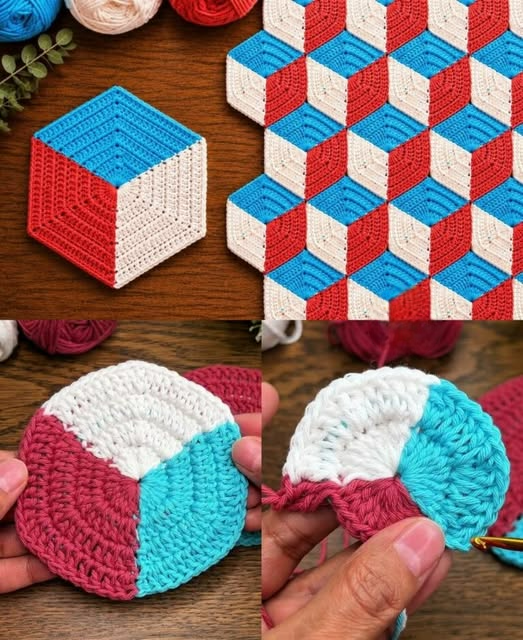
Color theory plays a massive role in how your final crochet design in hexagons – tutorial will be perceived. You can create a striking ombre effect by changing shades on every round of a single large hexagon. Alternatively, you can use contrasting solid colors for alternating motifs to create a dramatic, modern honeycomb mosaic across your living room blanket.
Incorporating textured stitches like popcorn stitches, puff stitches, or front-post double crochets can add incredible physical dimension to your work. Placing these textured elements near the center of your hexagon draws the eye inward, turning each individual motif into a standalone piece of textile art before they are even joined together.
Another modern trend involves changing the internal geometry of the motif itself, starting with a circular mandala center and squaring it off into a hexagon in the outer rounds. This fusion technique allows you to enjoy the soft, flowing nature of circular crochet while still retaining the practical, easy-to-assemble edges of a six-sided geometric shape.
Never be afraid to experiment with unconventional yarn weights, such as using lightweight lace yarn to create delicate lace table runners, or jumbo chenille yarn for a chunky, oversized floor pillow. The structural integrity of the hexagon remains intact no matter the scale, giving you complete artistic freedom to innovate and design without limits.
Frequently Asked Questions (FAQ)
How do I prevent my crochet hexagons from ruffling or curling at the edges?
Ruffling usually happens when you have too many stitches along the sides, which means you might be accidentally adding extra increases outside of the designated corners. Curling or “bowling” happens when your tension is too tight or you don’t have enough stitches. Ensure you are following the exact increase formula in the corners, and try switching to a larger hook if your work continues to curl inward.
Can I wash projects made with a crochet design in hexagons?
Yes, but the washing instructions depend entirely on the fiber content of the yarn you used. If your project is made from premium acrylic or cotton, it can usually be machine-washed on a gentle cycle inside a mesh laundry bag. For wool or delicate blends, hand washing in cold water with a gentle wool soak is highly recommended to prevent shrinking and felting.
What is the best way to hide yarn tails when changing colors frequently?
When working on a colorful crochet design in hexagons, weaving in your ends as you go is life-saving. You can crochet over your yarn tails for a few centimeters during the next round to secure them temporarily, but for maximum security, always use a yarn needle to weave the tails back and forth through the dense parts of your stitches in three alternating directions.
How many hexagons do I need to make a standard throw blanket?
The exact number depends on the size of your individual motifs and your desired blanket dimensions. For a standard throw blanket using medium-sized hexagons (roughly 15 centimeters from point to point), you will generally need between 70 to 90 motifs. It is always helpful to lay out a small grid of finished pieces to calculate your exact layout math before crocheting the entire batch.
Is it necessary to block my crochet hexagons before joining them?
While it isn’t strictly mandatory, blocking your hexagons before assembly is highly recommended for professional results. Wet blocking or steam blocking relaxes the yarn fibers, evening out minor tension inconsistencies and ensuring that every single motif is exactly the same size. This makes the final joining process significantly easier and ensures your seams lay completely flat.
Conclusion
In this crochet design in hexagons – tutorial, we have journeyed through the entire creative process of mastering the six-sided motif. We explored how choosing the right yarn and hook sets the foundation for success, and we broke down the exact step-by-step techniques required to create perfect geometric increases.
Additionally, we reviewed seamless joining methods to connect your pieces flawlessly and looked into advanced pattern variations, such as the Granny and African Flower styles, to inspire your next big project. With these techniques in your crafting toolkit, you are fully equipped to design stunning, professional-grade crochet items that showcase the beautiful symmetry of the hexagon.