
The Crochet Flower Pendant Necklace – Tutorial is the perfect gateway for anyone looking to merge the world of fiber arts with high-end personal accessories. There is something deeply satisfying about taking a simple ball of yarn and a small hook to create a handmade jewelry piece that looks like it came straight out of a boutique. This guide is designed to walk you through every loop and stitch, ensuring that your DIY necklace project results in a professional, wearable piece of art.
Whether you are a seasoned veteran of the craft or a complete beginner, making a Crochet Flower Pendant Necklace – Tutorial provides a unique opportunity to practice precision and tension control. Unlike larger projects like blankets or sweaters, micro-crochet or jewelry-making requires a delicate touch and an eye for detail. By focusing on small-scale construction, you will learn how to manipulate fine threads and beads to create intricate floral patterns that capture the light and draw the eye.
In today’s world of fast fashion, a Crochet Flower Pendant Necklace – Tutorial offers a sustainable and personalized alternative to mass-produced accessories. You have the creative freedom to choose eco-friendly yarns, such as mercerized cotton or bamboo silk, and customize the color palette to match your favorite wardrobe pieces. This article will explore the essential materials, the step-by-step assembly process, and the finishing techniques needed to make your crochet flower pendant a durable and stylish staple of your collection.
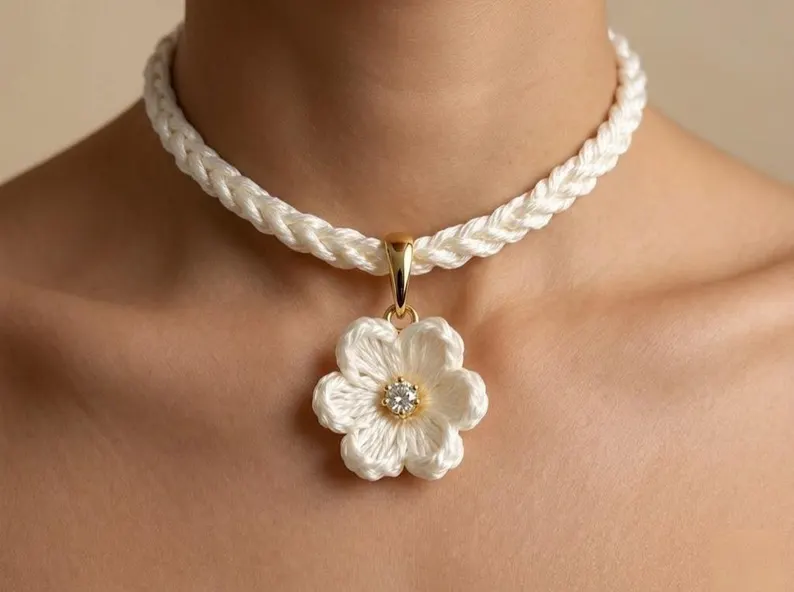
1 Gathering the Essential Materials for Success
The first step in our Crochet Flower Pendant Necklace – Tutorial is selecting the right tools, as the quality of your yarn dictates the final look. For a refined, jewelry-grade finish, you should opt for lace-weight yarn or crochet thread (size 10 or 20) rather than standard worsted weight. This ensures the flower remains delicate and lightweight enough to hang comfortably around the neck without sagging or losing its botanical shape.
Choosing the correct ergonomic crochet hook is equally vital for maintaining consistent tension throughout the project. For the thread sizes mentioned, a steel hook ranging from $1.0mm$ to $1.75mm$ is usually the gold standard. A smaller hook creates tighter, more defined stitches, which is crucial when you want your crochet pendant to hold its structure without the need for excessive chemical stiffeners or sprays.
Beyond the yarn and hook, you will need high-quality jewelry findings to transform your textile flower into a functional necklace. This includes jump rings, a sturdy lobster clasp, and a chain of your choice—be it sterling silver, gold-plated, or even a simple waxed cotton cord. Having these components ready before you start prevents interruptions and keeps your creative momentum flowing as you transition from hook to assembly.
Incorporating decorative beads or a central pearl can elevate your Crochet Flower Pendant Necklace – Tutorial from simple to sophisticated. If you plan to add beads to the petals, you will need a needle thin enough to pass through the bead’s center while carrying the thread. This “beaded crochet” technique adds a touch of sparkle and weight, giving the pendant a more expensive, artisanal feel that mimics fine metalwork.
Don’t forget the practical “behind-the-scenes” tools like a sharp pair of embroidery scissors and a fine-tipped tapestry needle. Weaving in ends is often the most overlooked part of crochet jewelry, but it is the most important for longevity. A clean finish ensures that no stray threads ruin the silhouette of your crochet flower, making the back of the piece look just as professional and tidy as the front.
Finally, consider having some fabric stiffener or a homemade water-and-glue solution on hand for the final blocking phase. While tight stitches go a long way, a bit of reinforcement helps the crochet necklace withstand humidity and daily wear. This ensures that the petals stay crisp and open, allowing the floral design to remain the focal point of your outfit regardless of the weather or activity level.
2 Mastering the Basic Stitches for Floral Design
To begin the core of this Crochet Flower Pendant Necklace – Tutorial, we start with the magic ring (or magic circle) method. This technique is superior to the “chain 4” method because it allows you to pull the center of the flower completely closed, leaving no visible hole. This creates a solid foundation for the pendant, ensuring that any central beads or embellishments sit perfectly flush against the yarn.
Once your ring is established, the first round usually consists of single crochet (sc) stitches to create a sturdy heart for the flower. It is important to count your stitches accurately here, as the number of single crochets will determine how many petals your flower pendant will have. Most classic designs utilize a five or six-petal symmetry, which is visually pleasing and provides a balanced weight for a hanging necklace.
The transition to the petals involves a combination of half-double crochet (hdc) and double crochet (dc) stitches to create height and curvature. By placing multiple stitches into a single base loop, you create that iconic rounded petal shape. This Crochet Flower Pendant Necklace – Tutorial emphasizes the “increase” technique, which is what gives the flower its three-dimensional, organic “bloom” rather than a flat, circular appearance.
For those who want a more intricate look, the picot stitch is a fantastic addition to the edge of each petal. A picot adds a tiny, pointed decorative tip that mimics the natural irregularities of real flora. While it requires a bit more patience, adding these small details significantly increases the perceived value of your handmade crochet jewelry, making it look more like a designer piece and less like a craft project.
Tension is the secret ingredient in this Crochet Flower Pendant Necklace – Tutorial that separates amateurs from experts. In micro-crochet, you want your stitches to be firm but not so tight that the hook cannot pass through the loops. If your tension is too loose, the flower will be floppy and lose its shape; if it’s too tight, the fabric may curl inward. Finding that “Goldilocks” zone of tension is key to a flat, beautiful pendant.
As you finish the final round, the slip stitch (sl st) is used to join the work seamlessly. Instead of just cutting the thread, we recommend leaving a long “tail” for assembly. This tail can be used to sew the jewelry bail directly onto the back of the flower or to secure the central bead. Understanding these foundational movements ensures that your Crochet Flower Pendant Necklace – Tutorial results in a durable masterpiece that won’t unravel.
3 Assembling Your Necklace with Professional Finishes
Assembly is where your textile art truly becomes a piece of wearable jewelry. The first step after finishing the crochet work is to block your flower. Pinning the damp flower onto a foam board helps even out the stitches and ensures the petals are perfectly symmetrical. This stage of the Crochet Flower Pendant Necklace – Tutorial is the difference between a “crafty” look and a high-end “boutique” aesthetic.
Once the flower is dry and stiffened, it is time to attach the metal hardware. Using a pair of needle-nose pliers, gently open a jump ring by twisting it sideways rather than pulling it apart. Loop the jump ring through the top of one petal (ensure you catch at least two strands of yarn for strength) and then slide on your necklace bail or directly onto the chain before closing it securely.
If you are creating a multi-layered crochet flower, you will need to stack your pieces from largest to smallest. Use a tapestry needle and the matching thread to sew through the center of all layers. This adds depth and a “pop” to the Crochet Flower Pendant Necklace – Tutorial design, allowing you to play with color gradients—such as a dark center fading into lighter outer petals—for a trendy ombre effect.
The choice of necklace chain can completely change the vibe of your piece. A delicate snake chain offers a modern, sleek look, while a link chain feels more traditional and rustic. If you want a fully “vegan” or metal-free option, you can even crochet a long foundation chain or use a simple cord. This versatility is why the Crochet Flower Pendant Necklace – Tutorial is so popular among diverse fashion circles.
Security is paramount when dealing with small components, so consider adding a tiny drop of jewelry glue to the knot after weaving in your ends. Since a necklace is subject to movement and friction against clothing, this extra step prevents the thread from popping out over time. A well-secured crochet pendant can last for years, becoming a cherished heirloom or a thoughtful, long-lasting gift for a friend.
Final inspections are the hallmark of a great creator. Hold the necklace up to a mirror to check how the flower pendant hangs. It should sit flat against the chest without tilting forward. If it tilts, you may need to adjust the placement of the jump ring or add a small weight (like a heavy bead) to the bottom of the flower. This attention to balance completes the Crochet Flower Pendant Necklace – Tutorial assembly process.
4 Customizing and Styling Your Crochet Jewelry
The beauty of the Crochet Flower Pendant Necklace – Tutorial lies in its infinite customization options. You are not limited to just one flower species; by changing the stitch heights, you can create roses, daisies, or even lilies. Experimenting with variegated yarn can also produce a stunning natural look where the colors shift organically across the petals, mimicking the complex hues found in a real garden.
Seasonality plays a big role in how you might style your handmade necklace. For spring and summer, bright pastels and whites in cotton thread feel light and airy. For autumn and winter, consider using darker jewel tones like burgundy or emerald, and perhaps a slightly fuzzier mohair blend to add warmth and texture. This makes the Crochet Flower Pendant Necklace – Tutorial a versatile project for any time of year.
Layering is a major trend in the jewelry world right now. You can create multiple crochet pendants of different sizes and hang them on chains of varying lengths. This “layered look” adds a bohemian flair to a simple white t-shirt or a sundress. Because crochet jewelry is so lightweight, you can layer several pieces without the discomfort or heaviness associated with bulky metal statement necklaces.
For those interested in the business of crochet, these necklaces are excellent items for craft fairs or Etsy shops. They require very little raw material but have a high perceived value due to the “labor of love” involved. By following this Crochet Flower Pendant Necklace – Tutorial, you can build a consistent inventory of high-margin items that are easy to ship and always in demand as unique, artisan gifts.
You can also incorporate other materials like charms, feathers, or leather tassels to the bottom of your flower. This “mixed media” approach is very popular in contemporary jewelry design. Don’t be afraid to break the rules of traditional crochet; adding a small metal charm in the center of the flower can provide a beautiful contrast between the soft yarn and the hard “industrial” metal.
Ultimately, the most important part of this Crochet Flower Pendant Necklace – Tutorial is the joy of creation. Each loop you pull is a testament to your patience and skill. When someone asks where you bought your beautiful necklace, you’ll have the immense satisfaction of saying, “I made it myself.” Wear your floral pendant with pride, knowing it is a one-of-a-kind reflection of your personal style and dedication to the craft.
FAQ – Frequently Asked Questions
What is the best yarn for a crochet necklace?
The best yarn is mercerized cotton thread (sizes 10, 20, or 40). It has a slight sheen, doesn’t pill easily, and is strong enough to hold the weight of jewelry hardware while maintaining its shape.
How do I keep the crochet flower from curling?
Curling usually happens due to tight tension or the natural behavior of the stitches. You can fix this by blocking the flower (wetting it and pinning it to shape) and applying a small amount of fabric stiffener or starch once it’s dry.
Can I wash my crochet pendant necklace?
Yes, but do so carefully. Hand-wash with mild soap and cold water. Avoid soaking the metal parts to prevent tarnishing. Reshape the petals and let it air dry completely before wearing it again.
Is this project suitable for absolute beginners?
Absolutely! While it uses fine thread, the stitches are fundamental (sc, hdc, dc). If you find the thread too difficult at first, try practicing the pattern with thicker yarn and a larger hook until you have the movements memorized.
How long does it take to make one necklace?
A single Crochet Flower Pendant Necklace – Tutorial can usually be completed in 30 to 60 minutes, depending on your speed and the complexity of the assembly. It is a perfect “palette cleanser” project between larger works.
What if I don’t have jewelry pliers?
While jewelry pliers are recommended to avoid scratching the metal, you can use standard small household pliers. Just wrap the tips in masking tape to protect the finish of your jump rings and clasps.
Conclusion
This Crochet Flower Pendant Necklace – Tutorial has covered everything from selecting the finest lace threads to the final assembly of jewelry hardware.
We have explored how the magic ring, double crochet stitches, and proper blocking techniques come together to create a professional-grade accessory. By following these steps, you’ve transformed simple materials into a stunning piece of botanical jewelry that is both modern and timeless. We hope this guide inspires you to keep experimenting with colors, textures, and styles in your future micro-crochet endeavors.