
Mastering a new geometric shape is one of the most exciting milestones for any yarn crafter, and this Crochet Hexagon – Tutorial is designed to guide you effortlessly through the process of creating flawless six-sided motifs. While the classic square has long been a staple in the crafting community, six-sided motifs offer a refreshing, modern alternative that opens up a whole new world of structural possibilities. Whether you want to piece together a stunning geometric blanket, fashion a trendy lightweight cardigan, or design unique home decor items, learning how to construct a perfect crochet hexagon will instantly elevate your stitching repertoire.
The beautiful geometry of a six-sided motif relies on a simple, rhythmic repetition that is incredibly soothing to stitch once you understand the basic formula. In this comprehensive tutorial, we break down the mechanics of expanding a central ring into six distinct corners separated by flat, clean edges. By understanding exactly where to place your increases and how to maintain consistent tension, you will be able to grow your crochet hexagon to any size imaginable, transitioning from a tiny coaster to a massive, continuous floor rug using the exact same foundational steps.
As you dive into this creative project, you will quickly realize that geometric motifs are highly addictive because they provide instant gratification and are incredibly portable. This Crochet Hexagon – Tutorial focuses on a solid, versatile design that minimizes large gaps, ensuring your finished fabric is dense, cozy, and perfectly suited for structural assembly. Grab your favorite yarn, find a comfortable seat, and let’s explore the essential materials, core techniques, and step-by-step methods required to master this beautiful and timeless geometric shape.
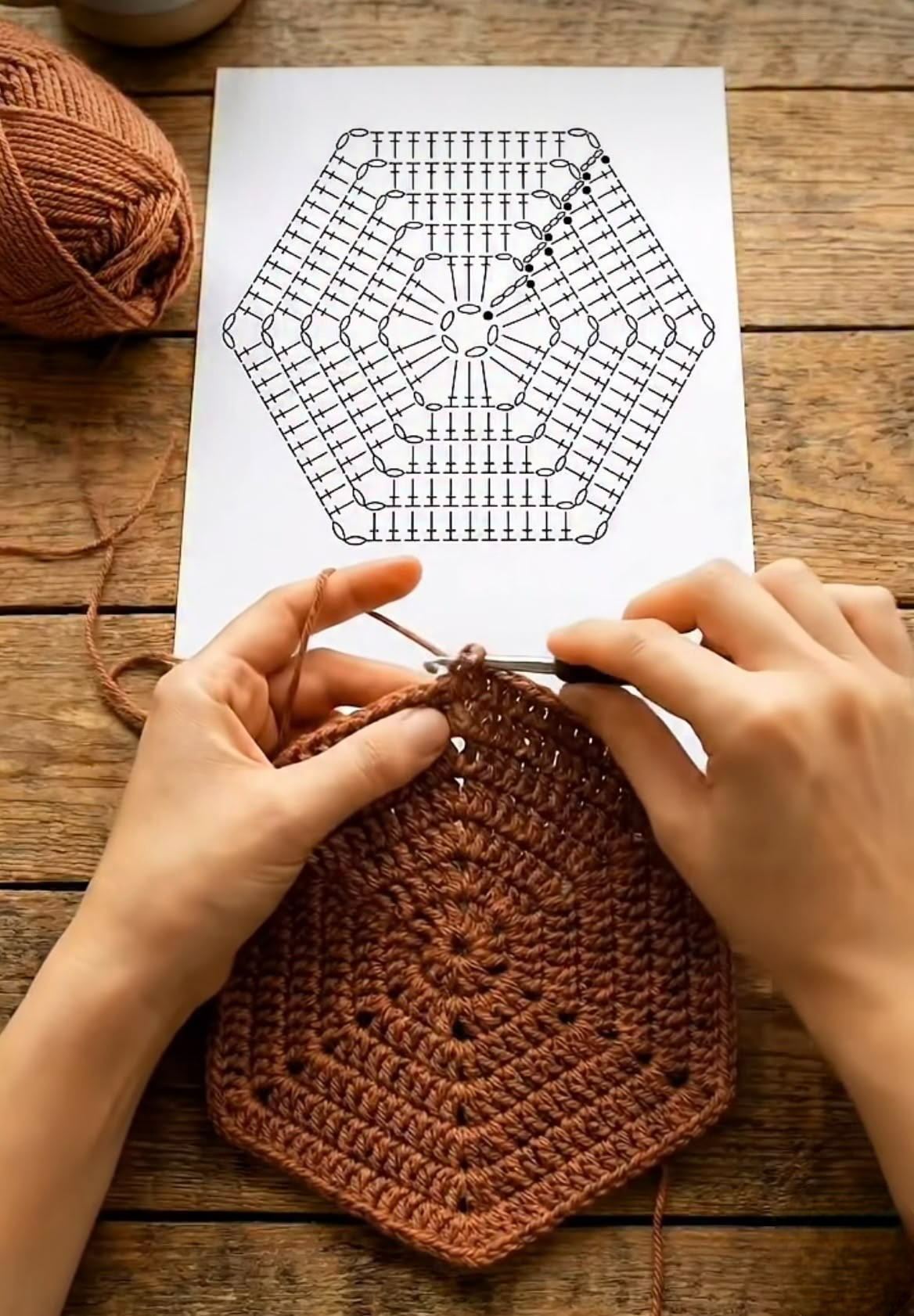
1. Selecting Your Materials and Understanding Tension
Choosing the proper yarn and hook combination is the critical first step to ensuring your geometric motifs lay completely flat without curling at the edges. For beginners tackling this Crochet Hexagon – Tutorial, a smooth, worsted weight acrylic or cotton yarn in a light, solid color is highly recommended because it makes your stitches exceptionally easy to see. Cotton yarn provides excellent stitch definition and structural rigidity, making it perfect for functional home items, while premium acrylic offers a soft, cozy drape that is ideal for wearable garments and warm winter blankets.
Your crochet hook should comfortably match the weight of your chosen yarn, but keeping a close eye on your natural stitch tension is what will truly determine the neatness of your six-sided motifs. If you tend to stitch very tightly, your crochet hexagon may begin to cup or bowl upward rather than resting completely flat on your work table. Conversely, if your tension is overly loose, the corners can become floppy, causing the edges to ripple unnaturally and making future assembly much more difficult.
To combat tension issues, practicing a uniform rhythm throughout the entire tutorial is essential for creating identical pieces that piece together seamlessly later on. Using a standard 4.0mm or 5.0mm hook is generally a safe starting point for medium weight yarns, but do not hesitate to adjust your hook size up or down if your initial test rounds look distorted. Gathering high-quality, comfortable ergonomic hooks, sharp scissors, a sturdy metal tapestry needle, and plenty of locking stitch markers before you begin will make your entire crafting session smooth and highly productive.
2. Step by Step Guide to Building the Foundational Rounds
To begin the construction of your geometric motif, you will start by forming a secure center point using either a traditional chain loop or a modern magic ring technique. For this specific Crochet Hexagon – Tutorial, making a magic ring is ideal because it allows you to pull the center completely closed, eliminating any unwanted holes in the middle of your work. Inside this initial ring, you will establish the six pillars of your shape by working clusters of double crochet stitches separated by small chain spaces that will act as your future corners.
Once your first round of twelve double crochets and six corner spaces is securely established, you will slip stitch to the top of your initial chain to close the circle neatly. For the second round of your crochet hexagon, you will chain up to gain height and work standard double crochets into the tops of the previous stitches, expanding the flat edges outward. When you reach a corner chain space, you will place a specific increase cluster—usually consisting of two double crochets, a chain, and two more double crochets—directly into that open space.
This repetitive pattern of working straight along the sides and multiplying your stitches inside the chain spaces is what creates the perfect six-sided symmetry. As you finish the second round, you will already see the distinct, sharp corners forming a beautiful, balanced geometric silhouette. Always take a brief moment at the end of each round to count your stitches along each of the six sides, ensuring they match perfectly so your motif does not become lopsided as it grows.
3. Expanding Your Motif and Managing Seamless Color Transitions
As you move into the third and subsequent rounds of this tutorial, the method remains beautifully consistent, though the number of straight stitches along the flat edges will increase with every layer. You will continue to place one double crochet in each stitch from the previous row and execute your signature increase formula inside each of the six corner points. This steady math ensures that your crochet hexagon remains perfectly proportional, expanding outward smoothly while maintaining its crisp, sharp angles and completely flat posture.
If you want to create a vibrant, eye-catching design, integrating multiple colors into your geometric motifs is a fantastic way to showcase your personal style and creativity. To achieve a perfectly clean color change without messy knots showing on the front of your work, always introduce your new color during the final pull-through of the very last slip stitch. This technique hides the yarn transition completely, giving your finished crochet hexagon a professional, store-bought appearance with sharp, well-defined boundaries between each colorful ring.
Managing your loose yarn ends as you go will save you hours of tedious finishing work once your project is fully completed. Try crocheting directly over your yarn tails for a few inches as you start a new color round, anchoring the threads securely inside the fabric. After completing a few expansive rounds using this helpful Crochet Hexagon – Tutorial, you will feel confident enough to experiment with unique color blocking, ombre gradients, or even a classic vintage scrap-blanket style using leftover yarn.
4. Joining Hexagons and Blocking Your Finished Project
Once you have crocheted an assortment of beautiful six-sided motifs, the final step in your creative journey is joining them together to form your ultimate master project. There are several highly effective ways to connect a crochet hexagon, ranging from a completely invisible mattress stitch using a tapestry needle to a decorative slip stitch join using your crochet hook. Whichever joining method you select, consistency is key; make sure to align the corner chain spaces perfectly before you begin attaching the flat edges together.
To truly elevate the quality of your finished project, taking the time to block your individual motifs or your completed blanket is highly recommended by professional crafters worldwide. Wet blocking involves soaking your items in lukewarm water with a gentle wool wash, squeezing out the excess moisture, and pinning the motifs down onto foam blocking boards. By pinning out each of the six corners sharply, you train the yarn fibers to relax, resulting in crisp, perfectly straight edges and a beautifully uniform drape.
Once your blocked pieces are completely dry, you will notice an incredible transformation in the overall texture, symmetry, and professional appearance of your work. This essential finishing step ensures that your crochet hexagon project looks polished, holds its shape through years of use, and resists curling or warping over time. Congratulations on completing this comprehensive tutorial and unlocking an incredibly versatile geometric technique that you can enjoy using for many wonderful crafting years to come.
FAQ – Frequently Asked Questions
Why is my crochet hexagon starting to ripple or wave at the edges?
Rippling usually occurs when you have added too many stitches along the flat edges or inside the corner spaces, causing the fabric to expand faster than it should. Double-check your stitch count for the round to ensure you are following the increase formula precisely, or try using a slightly smaller hook to tighten up your tension.
How do I calculate how many hexagons I need to make a full-sized blanket?
To calculate the total number of motifs needed, measure the width and height of one completed, blocked hexagon from your pattern. Divide the desired total width and length of your final blanket by those measurements, and multiply the two results together to get an accurate estimate of the total pieces required.
Can I use different weights of yarn within the same hexagon project?
It is highly recommended to stick to the same yarn weight and brand throughout a single geometric project to ensure uniform sizing. Mixing different yarn weights will cause your motifs to turn out completely different sizes, making it incredibly difficult to align the edges and corners neatly during the final assembly process.
What is the best and strongest method for joining six-sided motifs together?
The slip stitch join and the single crochet join are incredibly strong, durable options that are worked on the wrong side of the fabric using a crochet hook. For a completely flat, invisible join that allows the geometric shapes to take center stage, the sewn mattress stitch is the top choice among experienced crafters.
My center ring is pulling open over time; how can I fix this permanently?
If you started your motif with a magic ring, ensure you leave a long yarn tail at the very beginning of your work. Use a tapestry needle to weave that initial tail securely in a tight circle through the base of your first-round stitches at least three times, reversing directions to lock the yarn completely in place.
Conclusion
In this comprehensive Crochet Hexagon – Tutorial, we have covered every essential element required to create beautiful, perfectly flat, and symmetrical six-sided motifs from scratch.
We discussed selecting the ideal yarn weights and hook sizes, mastering foundational increases inside the corner spaces, managing clean color changes, and utilizing professional blocking techniques to achieve sharp geometric lines. By understanding the simple, progressive math behind this classic motif, you now possess the creative freedom to design custom blankets, clothing items, and home accessories with complete confidence.