
The Log Cabin Block – Pattern is widely regarded as one of the most iconic and beloved designs in the history of quilting, representing hearth, home, and American tradition. This versatile design allows quilters of all skill levels to create stunning visual effects simply by varying the placement of light and dark fabrics around a central square. Whether you are a beginner looking for your first project or an experienced artist seeking a timeless aesthetic, mastering this layout is a fundamental step in your creative journey.
When you begin working with a Log Cabin Block – Pattern, you are participating in a rich legacy that dates back generations, yet remains perfectly suited for modern interiors. The construction process is rhythmic and meditative, involving the “folding” or “stacking” of fabric strips in a clockwise or counter-clockwise sequence. Because it relies primarily on straight lines and consistent seam allowances, it serves as an excellent exercise for improving your precision while allowing for endless experimentation with color theory and geometric arrangements.
In the following guide, we will break down the essential components and technical steps required to successfully execute a professional-grade Log Cabin Block – Pattern. By focusing on accurate measurements and high-quality materials, you can ensure that your final quilt is both durable and visually striking. We will explore the symbolic meanings behind the color choices, the best tools for the job, and the secret to achieving perfectly flat blocks every time, ensuring your work meets the highest standards of the craft.
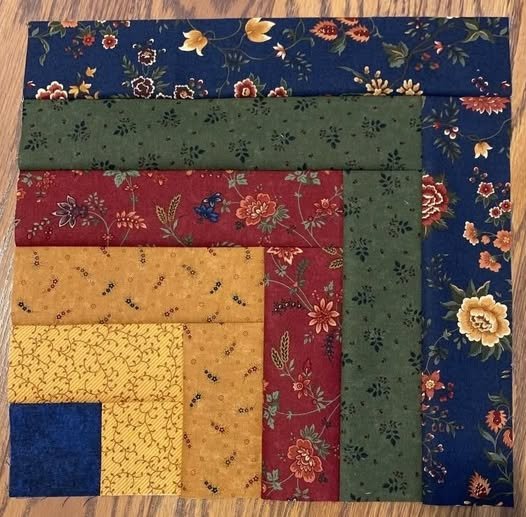
1. Understanding the Anatomy of the Log Cabin Block – Pattern
The foundation of every Log Cabin Block – Pattern starts with a central square, which traditionally symbolizes the “hearth” or the fireplace of a home. In many vintage designs, this center square is cut from red fabric to represent the warmth of the fire, or yellow to signify a welcoming light in the window. Choosing your center fabric is the first step in establishing the emotional tone and color palette of your entire project.
Surrounding this center are the “logs,” which are strips of fabric added in a specific sequence to build the square outward. The beauty of the Log Cabin Block – Pattern lies in the contrast between the two sides of the block. Usually, one half is composed of light-colored fabrics while the other half uses dark tones. This stark division is what creates the famous “light and shadow” effect that defines the style.
To ensure success with your Log Cabin Block – Pattern, consistency in strip width is absolutely vital for a professional finish. Most quilters prefer using 2.5-inch strips, which is the standard size for “jelly rolls,” making this a very accessible project for those who enjoy pre-cut fabrics. However, you can adjust the width to create “skinny” logs or wider, chunkier versions depending on your personal artistic vision.
Precision cutting is the secret weapon of any successful quilter working on this specific design. Because the block grows with every round, a tiny error in the first few strips can lead to a significant distortion by the time you reach the outer edges. Using a high-quality rotary cutter and a non-slip acrylic ruler will help you maintain the exact dimensions required for a perfectly square Log Cabin Block – Pattern.
Organization is another key element when dealing with the multiple strips involved in this assembly. It is often helpful to sort your light and dark fabrics into two distinct piles before you even sit down at your sewing machine. This prevents accidental placement errors, which can be frustrating to correct once the sewing process is underway and the block has reached a large size.
Finally, remember that the Log Cabin Block – Pattern is highly adaptable to different themes. While traditionalists stick to calicos and reproduction prints, modern designers often use solid bolds or monochromatic gradients. The structural integrity of the block remains the same regardless of the fabric style, providing a reliable framework for your unique creative expression and textile exploration.
2. Essential Materials and Tools for Success
Before diving into the assembly of your Log Cabin Block – Pattern, gathering the right tools will make the process much smoother and more enjoyable. You will need a reliable sewing machine with a consistent 1/4-inch presser foot. This specific seam allowance is the universal standard in quilting, and maintaining it throughout the project is what ensures all your blocks will eventually fit together perfectly.
High-quality cotton fabric is the best choice for a Log Cabin Block – Pattern because it holds its shape well and is easy to press. Look for “quilter’s weight” cotton, which has a high thread count and minimal shrinkage. Pre-washing your fabrics is a matter of personal preference, but if you are using high-contrast colors like deep reds and crisp whites, it may prevent “bleeding” later on.
A sharp rotary cutter and a large cutting mat are indispensable for preparing the strips for your Log Cabin Block – Pattern. Unlike using traditional scissors, a rotary cutter allows you to slice through multiple layers of fabric with perfect accuracy. This saves an immense amount of time, especially when you are cutting dozens of logs for a full-sized bed quilt or a large decorative wall hanging.
Thread choice also plays a significant role in the longevity of your Log Cabin Block – Pattern. A 50-weight cotton thread is usually recommended because it is strong enough to hold the seams but thin enough to avoid adding bulk at the intersections. Choosing a neutral color like gray or tan allows the thread to blend into both the light and dark sections of your patchwork seamlessly.
Pressing is just as important as sewing when it comes to the Log Cabin Block – Pattern. You will need a reliable steam iron and a flat ironing board. The rule of thumb in this pattern is to “press toward the dark side,” which helps hide the seam allowances behind the darker fabric and prevents them from showing through the lighter strips on the front of the quilt.
Lastly, consider using a “design wall” or a large flat surface to lay out your completed Log Cabin Block – Pattern units. Seeing the blocks together allows you to experiment with different layouts, such as “Barn Raising,” “Straight Furrows,” or “Sunshine and Shadows.” This visual feedback is crucial for deciding how the individual blocks will interact to create a larger, cohesive secondary pattern.
3. Step-by-Step Construction of the Block
To begin your Log Cabin Block – Pattern, sew your first light strip to the side of your center square using a precise 1/4-inch seam. Once attached, flip the strip open and press the seam flat. It is important to press the fabric rather than “ironing” it back and forth, as the latter can stretch the fibers and cause the block to become distorted or bowed.
The second step involves adding another light strip to the adjacent side of the center square, covering both the center and the end of the first strip. This “log” should be the same length as the combined edge of the first two pieces. After sewing, again press the seam away from the center. You have now completed the first “light” half of your Log Cabin Block – Pattern‘s first round.
Next, you will transition to your dark fabrics to complete the rotation. Attach a dark strip to the next side of the square, ensuring it spans the entire length of the current edge. As you work through the Log Cabin Block – Pattern, you will notice the block growing in a spiral fashion. This repetitive motion is what makes the pattern so addictive and satisfying for many hobbyists.
The fourth strip, also a dark one, will complete the first full round of your Log Cabin Block – Pattern. This strip will be the longest one yet, as it covers the center square and the ends of the strips added previously. Once this is pressed, your center hearth is completely surrounded, and you have established the foundation for all subsequent rounds of the design.
Continue adding strips in this same order—two light followed by two dark—until your Log Cabin Block – Pattern reaches its desired size. Most standard blocks consist of three or four full rounds, but you can add as many as you like. The more rounds you add, the more dramatic the contrast becomes, especially when you step back to view the quilt from a distance.
Always “square up” your block after each round or at the very end of the process. Even the most careful sewist might experience a bit of “drift” in their measurements. Trimming the edges of your Log Cabin Block – Pattern to a perfect square ensures that when you join multiple blocks together, the corners will align perfectly, resulting in a professional and polished final product.
4. Advanced Layouts and Creative Variations
One of the most exciting aspects of the Log Cabin Block – Pattern is how a single block can be rotated to create entirely different looks. In the “Barn Raising” layout, blocks are arranged so the light halves form concentric diamonds. This creates a sense of depth and movement that draws the eye toward the center of the quilt, making it a popular choice for focal point pieces.
For a more modern and architectural feel, the “Straight Furrows” layout aligns the dark and light sections into diagonal rows. This variation of the Log Cabin Block – Pattern mimics the look of a plowed field and provides a very clean, rhythmic aesthetic. It works particularly well with contemporary fabrics or a limited color palette of just two or three high-contrast shades.
If you want to try something slightly different, consider the “Courthouse Steps” variation of the Log Cabin Block – Pattern. In this version, strips are added to opposite sides of the center square (top and bottom, then left and right) rather than in a spiral. This results in a symmetrical block that looks more like a staircase, offering a balanced and formal appearance to the finished quilt top.
Another popular twist is the “Off-Center” or “Wonky” Log Cabin Block – Pattern. By using strips of varying widths or cutting the center square at an angle, you can create a block that looks like it is tilting or vibrating. This approach is perfect for “art quilts” or projects where you want to break away from traditional geometric rigidity and explore a more improvisational style of sewing.
Scrappy quilts are perhaps the best use for a Log Cabin Block – Pattern. Because the design relies on value (light vs. dark) rather than specific colors, you can use up your smallest fabric scraps. As long as you maintain the “light side” and “dark side” distinction, you can use dozens of different prints within a single block, resulting in a vibrant, textured, and eclectic masterpiece.
Finally, don’t forget the impact of quilting designs on your finished Log Cabin Block – Pattern. Whether you choose simple “stitch-in-the-ditch” to emphasize the geometric lines or elaborate free-motion feathers to contrast with the straight edges, the quilting will add the final layer of texture. Your choice of batting and backing will also influence the “drape” and warmth of your completed handmade heirloom.
FAQ: Frequently Asked Questions about the Log Cabin Block
What is the best size for the center square in a Log Cabin Block – Pattern?
Most traditional patterns use a center square that is the same width as the strips (e.g., a 2.5-inch square for 2.5-inch strips). However, using a larger center square can make the block look more modern and highlights a specific “fussy-cut” fabric or motif.
How do I keep my Log Cabin Block – Pattern from becoming wavy?
Waviness usually occurs from stretching the fabric during pressing. Always press with a straight up-and-down motion rather than sliding the iron. Additionally, ensure your 1/4-inch seam is accurate, as small deviations can lead to “growing” edges that don’t lie flat.
Can I use different widths for the light and dark strips?
Yes! This is often called a “Variable Log Cabin.” Using wider strips for the dark side and narrower strips for the light side can create a curved or 3D effect. It is an advanced technique that adds great visual interest to a standard Log Cabin Block – Pattern.
Is the Log Cabin Block – Pattern suitable for beginners?
Absolutely. It is one of the best projects for beginners because it only requires straight-line sewing. It teaches fabric value, seam consistency, and pressing techniques—all of which are fundamental skills for any aspiring quilter.
How many blocks do I need for a throw-sized quilt?
This depends on the finished size of your block. If your Log Cabin Block – Pattern finishes at 12 inches square, a 5×6 arrangement (30 blocks) would create a 60×72 inch quilt, which is a perfect size for a sofa throw or a large lap quilt.
Conclusion
In this article, we have explored the timeless beauty and technical construction of the Log Cabin Block – Pattern. We covered everything from selecting your “hearth” center square and choosing high-contrast fabrics to the step-by-step assembly process and the various ways to arrange your finished blocks for maximum visual impact. This pattern truly represents the heart of quilting, offering a perfect balance between simplicity and infinite creative complexity.
We hope this guide inspires you to sit down at your sewing machine and start your own project. Whether you go with a traditional red-center design or a modern scrappy look, the Log Cabin Block – Pattern is sure to result in a piece of art you will cherish for years.