
Crochet Coasters with Daisy Flowers – Tutorial is the ultimate guide you need to bring a cheerful, handmade touch to your home decor. There is something incredibly satisfying about combining utility with beautiful design, and these floral coasters do exactly that by protecting your wooden surfaces while adding a bright pop of color. Whether you are looking for a quick weekend project, a thoughtful housewarming gift, or new inventory for your handmade shop, learning how to create a crochet coaster shaped like a beautiful flower is a fantastic project for crafters of all skill levels.
In this comprehensive step-by-step crochet guide, we will explore how to craft these delightful kitchen accessories using basic stitches and vibrant yarn. Daisies symbolize purity, innocence, and new beginnings, making this specific design a timeless favorite in the crafting community. By mastering this easy crochet flower pattern, you will not only create a functional item but also practice the art of color changing, working in the round, and creating textured petals that pop.
Grab your favorite crochet hooks and some cotton yarn, because we are diving deep into everything you need to know about making these charming pieces. From selecting the absolute best materials to mastering the finishing techniques, this article covers every single detail to ensure your project turns out absolutely flawless. Let us get started on this creative journey and transform simple yarn into gorgeous, durable table protection.
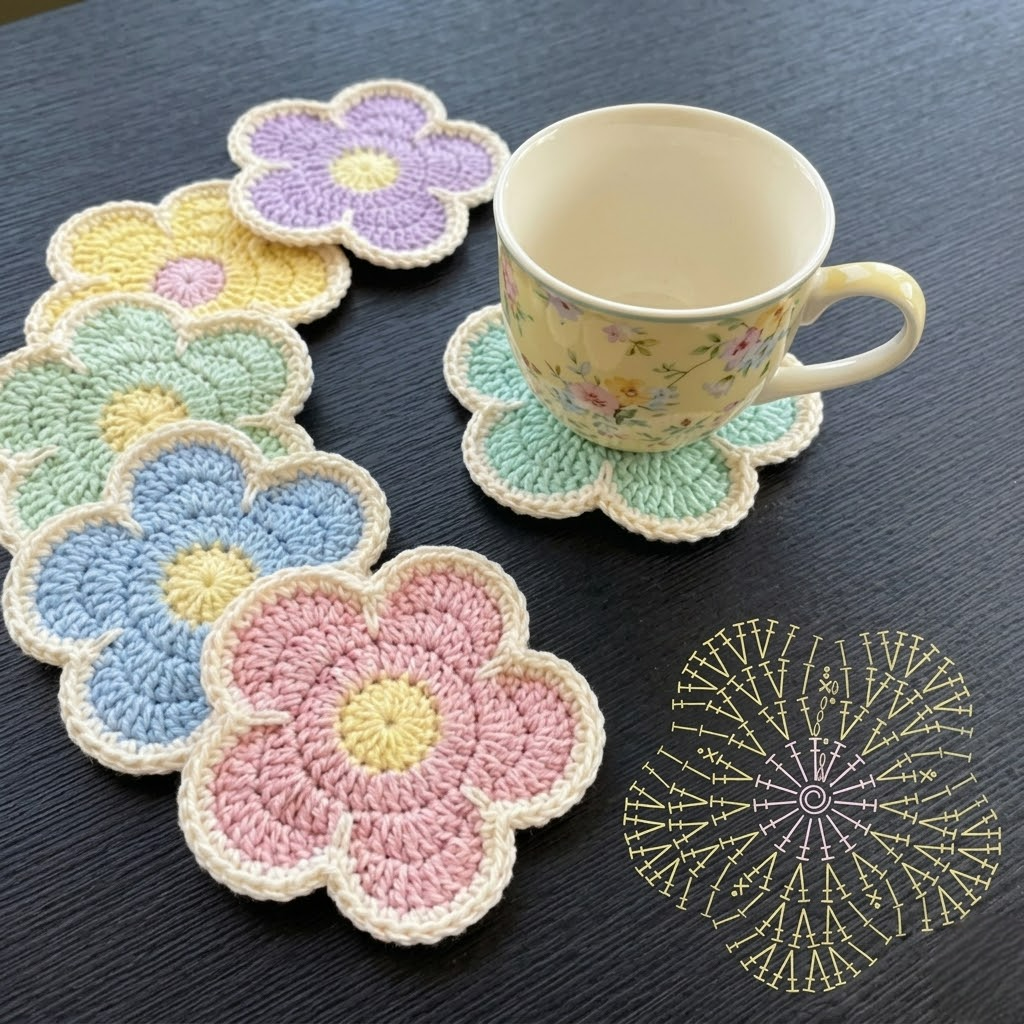
1. Choosing the Best Materials for Your Crochet Coasters with Daisy Flowers – Tutorial
Selecting the right yarn is the foundation of any successful project, especially when making a functional crochet coaster. For items that will hold hot mugs or sweaty iced drinks, 100% cotton yarn is the absolute best choice because it is highly absorbent, durable, and heat-resistant. Acrylic yarn can melt under high heat and does not absorb moisture well, so stick to natural fibers to ensure your handmade drink coasters last for years.
For this daisy flower crochet design, you will generally want three distinct colors of medium-weight (worsted weight or DK) cotton yarn. You will need a bright yellow or gold for the flower center, a crisp white or cream for the delicate petals, and optionally a beautiful green or neutral background color if you want to frame the daisy inside a solid circle. Mixing and matching these shades allows you to create a personalized spring crochet decor set.
Along with your yarn, you will need a suitable crochet hook, typically ranging from a 3.5mm (E) to a 4.5mm (G) hook, depending on your personal tension. A slightly tighter tension is actually preferred for a crochet mug rug because it creates a sturdier fabric that prevents condensation from leaking through onto your tables. Check your yarn label for recommendations, but do not be afraid to go down a hook size for better structure.
Do not forget to gather your essential notions before you sit down to start stitching. You will definitely need a sharp pair of scissors and a sturdy tapestry needle (or yarn needle) to weave in those loose ends securely. Since this project involves a few color changes, having a reliable needle makes the finishing process much smoother and ensures your flower coasters look professional from front to back.
Stitch markers can also be incredibly helpful, especially when you are working the initial rounds for the center of the flower. When working a crochet pattern in the round, it can sometimes be tricky to identify the exact first stitch of the row, so marking it keeps your stitch count perfectly on track. Accurate counts are vital for ensuring your daisy petals distribute evenly all the way around.
Investing in quality materials upfront truly transforms the final outcome of your diy crochet coasters. High-quality mercerized cotton gives the stitches a beautiful sheen and excellent definition, making the daisy motif stand out vividly. Now that your crafting basket is fully stocked with the perfect supplies, you are completely ready to move on to learning the foundational stitches required for this design.
2. Essential Stitches and Foundations for the Daisy Flower Pattern
Before jumping into the full Crochet Coasters with Daisy Flowers – Tutorial, it helps to review the core stitches that build this beautiful floral structure. This project is incredibly beginner-friendly because it relies primarily on foundational stitches like the chain stitch, slip stitch, and single crochet. Mastering these basics will give you the confidence to execute the more textured stitches that form the outer layout.
The magic ring (or magic circle) is the absolute best way to begin your circular crochet coaster. This technique allows you to pull the center loop completely closed, leaving zero gaps in the middle of your yellow flower center. If you struggle with the magic ring, you can easily substitute it by chaining four and joining with a slip stitch to form a small ring, though the center opening might be slightly larger.
To create the bright yellow center of the daisy, we use the single crochet stitch and the half double crochet stitch to gradually expand the circle. Working multiple stitches into a single space increases the diameter evenly while maintaining a flat surface, which is crucial for a stable crochet cup mat. Keeping your stitches even during these initial rounds ensures your coaster lies perfectly flat on the table.
The beautiful, raised petals of the daisy are achieved by using taller stitches like the double crochet and the treble crochet. By grouping these longer stitches together into a single base stitch, you create a beautiful teardrop shape that mimics a real flower petal. This technique, often referred to as a puff, popcorn, or cluster stitch, adds wonderful dimension to your floral crochet pattern.
Understanding how to seamlessly change yarn colors is another vital skill you will practice during this tutorial. The transition from the yellow center to the white petals needs to be sharp and clean to maintain the classic look of a daisy flower craft. The secret is always introducing the new color during the very last pull-through of the final stitch of the previous round.
Practicing these stitches on a small gauge swatch can be highly beneficial if you are completely new to crochet. Ensuring your tension is consistent across the single, double, and treble stitches will prevent your finished piece from curling up at the edges or buckling in the center. With these foundational techniques fresh in your mind, you are ready to stitch the actual project step by step.
3. Step-by-Step Instructions for Stitching Your Floral Coaster
Let us begin the core work of our Crochet Coasters with Daisy Flowers – Tutorial by creating the vibrant flower center. Using your yellow cotton yarn, start by making a magic ring and chaining one to secure it. Work twelve single crochet stitches directly into the ring, then pull the yarn tail firmly to close the center hole, joining the round with a clean slip stitch to the very first stitch.
For the second round of the center, chain two (this counts as your first half double crochet) and place another half double crochet into that exact same stitch. Continue around the circle by placing two half double crochets into every single stitch from the previous row, ending with a total of twenty-four stitches. Cut your yellow yarn, leaving a short tail, and join your white yarn during the final slip stitch.
Now we will build the gorgeous white petals that make this crochet daisy pattern so iconic. Attach your white yarn to any stitch, chain three, and then work two double crochet stitches into that same space, keeping the final loop of each stitch on your hook before pulling through all loops at once to create a cluster. Chain two, skip one stitch, and repeat this cluster process in the next stitch all the way around.
You should now see twelve distinct, beautiful white petals forming around the bright yellow core of your homemade coaster. To give the coaster a traditional, functional square or larger circular border, you can choose to join a third color, like green or cream, into the chain spaces between the petals. This step provides a wider surface area to accommodate larger mugs and glasses.
If you prefer a purely flower-shaped finish, you can add a final round of white single crochets and picot stitches around the tips of the petals to accentuate their natural curves. This keeps the look highly organic and whimsical, perfect for a cheerful summer crochet project. Whichever border style you choose, ensure you maintain an even stitch count to prevent the edges from waving.
Once you complete the final round, slip stitch to the beginning, cut your yarn, and pull it through the loop to secure your work. You have officially crocheted a stunning flower motif that is almost ready to use. Take a moment to admire your handiwork before we move on to the crucial steps of weaving in ends and blocking your completed set.
4. Professional Finishing Techniques and Blocking for Flat Coasters
The difference between an amateur craft and a professional-grade handmade crochet item lies entirely in the finishing details. After completing your stitching, you will notice several loose yarn tails on the back of your work from the color changes. Use your tapestry needle to carefully weave these ends through the dense stitches on the wrong side of the coaster, changing directions at least thrice to lock them safely.
Because coasters handle constant movement and washing, securing these ends is vital to prevent the project from unraveling over time. Avoid simply tying knots, as they can create uncomfortable lumps on the bottom of your crochet table mat, causing cups to tip over. Weaving the yarn smoothly along the natural path of the stitches keeps the surface beautifully flat and completely seamless.
Once the ends are secured and clipped, you might notice your freshly crocheted daisy looks a little bit wrinkled or curled at the edges. This is entirely normal and is easily fixed through a simple process known as wet blocking. Blocking relaxes the tension of the cotton fibers, evening out your stitches and ensuring your crochet flower coaster sits perfectly flat.
To block your coasters, submerge them in lukewarm water mixed with a drop of gentle wool wash for about fifteen minutes. Gently squeeze out the excess moisture by rolling them inside a clean, dry towel—never wring or twist your crochet work, as this can permanently stretch out the delicate floral shape. Shape them gently with your hands on a flat surface.
Pin each coaster down onto a foam blocking board using rust-resistant T-pins, carefully stretching the white daisy petals into their ideal, symmetrical positions. Leave the pieces to air dry completely, which usually takes about twenty-four hours depending on your local climate. Once dry, remove the pins, and you will find your coasters are beautifully shaped, crisp, and ready for display.
To extend the lifespan of your new cotton crochet coasters, remember to care for them properly during daily use. If they get stained with coffee or tea, hand washing them in cool water with mild soap and laying them flat to dry will preserve their vibrant colors and structural integrity. Your beautiful daisy set is now complete and ready to bring joy to your living space.
5. Frequently Asked Questions (FAQ)
What is the best yarn weight for making crochet coasters?
The ideal choice for a durable crochet drink coaster is a medium-weight category 4 (Worsted weight) or a category 3 (DK weight) 100% cotton yarn. These weights provide the perfect balance of thickness, stitch definition, and absorbency, ensuring your furniture remains well-protected from moisture and heat.
Can a complete beginner try this daisy flower tutorial?
Yes, absolutely. This project uses fundamental techniques like the magic ring, single crochet, and double crochet, making it an excellent learning piece for beginners. The color changes and cluster stitches offer a gentle, rewarding challenge that helps build your confidence and expands your crafting skillset.
How do I stop my crochet coasters from curling up at the edges?
Curling is usually caused by tight tension or incorrect stitch counts during the increase rounds. If your piece is curling into a bowl shape, try switching to a slightly larger crochet hook or ensure you are not accidentally skipping stitches. Proper wet blocking after finishing will also help flatten out minor tension issues completely.
How long does it take to crochet one daisy coaster?
Because of their compact size, these quick crochet projects can typically be completed in about twenty to forty minutes per coaster, depending on your individual stitching speed. This efficiency makes them an ideal choice for last-minute gifting or for building up large amounts of inventory for craft fairs.
Are these floral coasters machine washable?
If you used 100% cotton yarn, your coasters can technically be machine washed on a gentle, cool cycle inside a mesh laundry bag. However, to keep the delicate daisy petals looking sharp and to prevent color bleeding, hand washing and laying them flat to dry is highly recommended.
How many coasters should be included in a gift set?
A standard, thoughtful handmade gift set typically includes four to six matching floral cup mats. Packaging them tied together with a rustic piece of twine or a custom paper sleeve adds an incredibly elegant, professional presentation touch that highlights their handmade charm.
Conclusion
This Crochet Coasters with Daisy Flowers – Tutorial provides you with all the knowledge needed to create gorgeous, practical accessories that capture the cheerful essence of nature.
By focusing on quality cotton yarn, mastering foundational stitches, and taking the time to properly block your finished work, you can easily create a beautiful set of coasters that seamlessly blend style with everyday utility.
!