
Triangle Border Fabric – Tutorial is exactly what you need to elevate your quilting projects from standard to spectacular. Adding a unique, geometric edge to your quilts, table runners, or throw pillows completely transforms the final look of your handmade items. Many quilters find themselves stuck in a rut using traditional straight borders, but learning this technique opens up a whole new world of design possibilities. This step-by-step guide is designed to make the process completely stress-free, even if you consider yourself a beginner.
When you dive into a triangle border fabric – tutorial, you are investing your time into mastering a classic quilting skill with a modern twist. The geometric precision of triangles adds movement and visual excitement to any textile project. Whether you are aiming for a traditional heirloom look or a sleek, contemporary aesthetic, learning how to assemble these jagged, beautiful borders is an essential milestone in your sewing journey. Best of all, it is an incredible way to utilize your fabric scraps efficiently.
Throughout this comprehensive triangle border fabric – tutorial, we will break down the essential tools, cutting methods, layout strategies, and sewing techniques required for success. You do not need an advanced degree in mathematics to achieve perfectly pointed triangles that line up beautifully along the edges of your quilt. By following these structured steps, practicing patience, and focusing on accurate seam allowances, you will soon be creating breathtaking borders that showcase your growing expertise. Let us get your sewing machine ready and begin this creative process together.
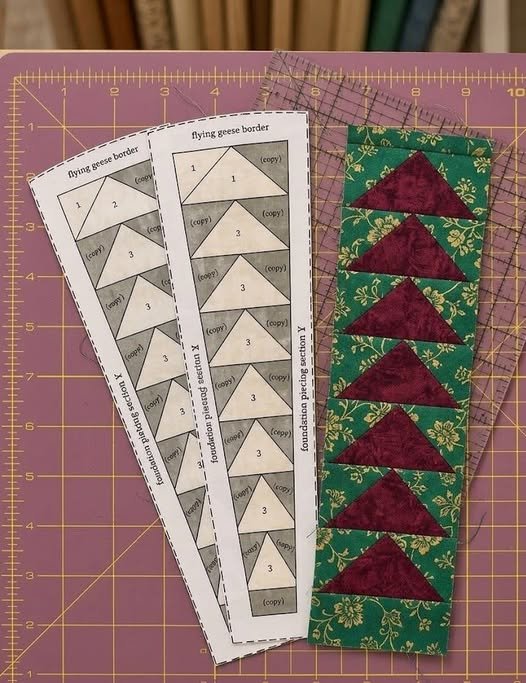
1. Selecting the Perfect Fabrics for Your Triangle Border
Choosing the right color combinations and patterns is the foundational step of this entire project. For a truly striking border, you want to select fabrics that offer a high level of contrast with the main body of your quilt. If your quilt top is busy with multi-colored prints, a solid or tonal fabric for the triangles will give the eyes a peaceful place to rest. Conversely, if your quilt center is minimalist, vibrant and energetic prints within the border can create a gorgeous frame.
The weight and quality of your material play a massive role in the final outcome of your triangle border fabric – tutorial. It is highly recommended to stick with 100% quilting cotton, as it holds its shape beautifully under the iron and does not slip around excessively while sewing. Mixing different fabric types, like flannel or polyester blends, can lead to uneven stretching and puckering along your delicate bias edges. Consistency in fabric weight ensures that your points lay completely flat when finished.
Pre-washing your fabric is a personal choice, but for intricate geometric borders, it is highly beneficial. It prevents unexpected fabric shrinkage and color bleeding later on when you wash the completed quilt for the first time. If you decide not to pre-wash, consider using a fabric stabilizer or spray starch during the pressing stage to give the cotton extra crispness. This added stiffness makes the cutting and sewing process significantly easier to manage.
Pay close attention to the scale of the prints you choose for your border pieces. Large-scale floral prints might get completely lost or look awkward when chopped up into small, geometric triangles. Small-scale prints, polka dots, stripes, or directional fabrics can look absolutely incredible if you align them intentionally. Take some time to audition your fabric bolts next to each other under natural lighting before making your final cuts.
Another wonderful approach to this project is creating a scrappy look by utilizing left-over pieces from your previous sewing adventures. A multicolored, scrappy triangle border adds a charming, cozy, and traditional feel to an otherwise uniform quilt design. Just ensure that the background fabric behind these scraps remains constant to tie the whole design together cohesively. This consistency prevents the final border from looking chaotic or unorganized.
Ultimately, the goal of selecting your materials is to create harmony between the border and the central design. Do not be afraid to step outside of your comfort zone and try bold, unexpected color pairings. Trust your creative instincts, gather your favorite quilting cottons, and prepare your workspace for the next exciting phase of preparation. Proper fabric selection guarantees that your hard work will shine beautifully in the finished product.
2. Essential Tools and Precise Cutting Techniques
To achieve the crisp points demonstrated in this triangle border fabric – tutorial, you will need a few specialized quilting tools. A high-quality self-healing cutting mat, a sharp rotary cutter with a fresh blade, and a non-slip acrylic quilting ruler are absolute prerequisites. Attempting to cut these geometric shapes with standard household scissors will often lead to jagged edges and inaccurate sizes. Precision at the cutting mat directly translates to stress-free sewing at the machine.
The mathematical calculations for triangles can sometimes feel intimidating, but we will keep it simple. To make standard half-square triangles, you generally cut squares that are 7/8 of an inch larger than your desired finished size. For example, if you want your finished triangles to measure 2 inches, you will need to cut your initial fabric squares to exactly 2 and 7/8 inches. Accurate cutting ensures that your border fits perfectly along the perimeter of your quilt top.
Once your initial fabric squares are cut, you will slice them diagonally from one corner to the opposite corner to create two triangles. This action creates a bias edge along the longest side of the newly formed triangle. Bias edges are inherently stretchy and fragile because the fabric fibers run diagonally rather than horizontally or vertically. Handle these cut pieces with extreme care to avoid stretching them out of shape before they reach the sewing machine.
If you prefer to avoid handling stretchy bias edges altogether, you can utilize the popular two-at-a-time half-square triangle method. Instead of cutting the squares diagonally beforehand, you draw a single diagonal line on the back of the lighter fabric square. You then place two contrasting squares right sides together and sew exactly a quarter-inch away from both sides of that drawn line. Slicing directly on the drawn line afterwards yields two perfect units with stable edges.
Regardless of the specific cutting method you choose, taking your time during this preparation phase saves hours of frustration later. Always double-check your measurements on the ruler before pressing down with your rotary cutter. Keep your cutting blade perpendicular to the mat to prevent the fabric from shifting slightly under the ruler’s edge. Consistency across all your cut pieces is the secret ingredient to a perfectly aligned border.
Once all your individual pieces are cut, organize them into neat stacks near your sewing machine according to color or pattern. Keeping your workspace tidy prevents you from accidentally sewing the wrong pieces together during the assembly process. With your pieces cut precisely and organized beautifully, you are fully equipped to move on to the actual construction phase of your border.
3. Step-by-Step Construction and Sewing Methods
Now that your pieces are organized, it is time to focus on the assembly process of our triangle border fabric – tutorial. Set your sewing machine to a short stitch length, roughly 2.0 mm, to ensure the seams remain tight and secure when handled. The golden rule of quilting is to maintain a precise quarter-inch seam allowance throughout the entire assembly process. Even a tiny deviation can cause your border to end up too short or too long for your quilt.
Begin by pairing your triangle pieces right sides together, aligning the raw edges perfectly. If you are a beginner, do not hesitate to use fine quilting pins to hold the fabric pieces securely in place. Chain piecing is an excellent technique to save time and thread during this step. This means feeding your paired fabric pieces through the machine one after another without lifting the presser foot or cutting the thread in between units.
Once you have sewn your pairs together, carefully clip the connecting threads between your chain-pieced units. Move over to your ironing station, as pressing is just as critical as sewing when it comes to geometric borders. Always set your iron down flat onto the fabric rather than sliding it back and forth aggressively. Sliding the iron can easily distort the stretchy bias seams, ruining your precise dimensions.
When pressing your seams, it is standard quilting practice to press the seam allowance toward the darker fabric. This simple trick prevents the darker seam from showing through a lighter background fabric on the front of your quilt. For areas where multiple triangle points meet, you might want to press the seams open instead. Pressing seams open distributes the fabric bulk evenly, allowing your sewing machine to glide smoothly over the intersections.
After pressing, it is time to assemble your individual units into a long, continuous border strip. Lay out your pieces on a flat table or a design wall to verify that the pattern flows correctly around the perimeter. Sew the units together side-by-side, paying close attention to where the diagonal seams intersect at the top edge. You want your needle to pass directly through the apex of that intersection to preserve your sharp points.
Measure your quilt center across the middle horizontally and vertically before attaching your newly constructed border strips. Never measure along the outer edges, as they can sometimes stretch out of shape during handling. Trim your triangle border strips to match these exact central measurements, pin them generously to the quilt top, and sew them down smoothly to finish the frame.
4. Troubleshooting Points and Achieving a Flawless Finish
Even experienced quilters occasionally encounter minor issues when working through a triangle border fabric – tutorial. The most common frustration is accidentally cutting off the beautiful points of the triangles when attaching the border to the quilt center. This usually happens because the quarter-inch seam allowance was slightly too wide during the final attachment step. If you notice your points are disappearing, gently use a seam ripper to adjust that specific section.
Another frequent issue is a wavy or puckered border that refuses to lay flat on an ironing board. This problem generally occurs when the border strip is longer than the quilt top, forcing the fabric to bunch up during sewing. To prevent this, always pin your border at the center point and both outer corners before sewing the seam. Let the feed dogs of your sewing machine naturally pull and distribute any minor fabric fullness evenly.
If your triangle units are turning out slightly different sizes, try squaring them up using a specialized squaring ruler before sewing them together. Trimming away just a fraction of an inch of excess fabric ensures that every single unit is completely identical. This extra step takes a bit of time upfront, but it eliminates alignment issues entirely when assembling the long strips. It is a highly recommended habit for pristine results.
Be extremely mindful of “dog ears,” which are the tiny triangular fabric flaps that stick out at the corners after sewing seams. Trimming these little excess flaps away keeps your seam allowances clean and reduces unnecessary bulk at your intersections. A clean seam allowance makes it infinitely easier to quilt over those areas later, whether you are quilting by hand or machine. Your sewing machine needle will thank you for removing that extra density.
If you find that your fabric is stretching excessively despite your best efforts, consider using a walking foot on your machine. A walking foot feeds the top and bottom layers of fabric through the machine at the exact same speed simultaneously. This completely eliminates the friction that causes shifting, making it a fantastic tool for attaching long border strips seamlessly. It provides an extra layer of control over difficult bias seams.
Once your border is securely attached, give the entire quilt top a final, thorough press with a warm iron. Check all your intersections one last time to celebrate your beautifully pointed geometric shapes. With patience, precision, and the helpful tips from this guide, your border will look professional, flat, and absolutely stunning. You have successfully completed a major milestone in your creative journey.
Frequently Asked Questions
What is the best fabric choice for a triangle border?
The absolute best option is 100% premium quilting cotton. It provides the stability needed for geometric cuts and resists excessive stretching along bias edges.
How do I prevent my triangle points from getting cut off?
Always maintain a strict, precise quarter-inch seam allowance. When joining strips, make sure your needle passes exactly through the V-shaped intersection of your previous seams.
Should I use steam when pressing my geometric border pieces?
It is best to use a dry iron or very minimal steam. Excessive steam combined with a scrubbing motion can easily distort the bias edges of your cut triangles.
Can I use scrap fabrics of different weights for this project?
It is highly recommended to use fabrics of similar weights. Mixing heavy fabrics like denim with lightweight cotton can cause uneven tension, puckering, and alignment issues.
What is chain piecing and why should I use it here?
Chain piecing involves sewing your fabric pairs consecutively without cutting the thread between them. It saves time, conserves thread, and keeps your project highly organized.
How do I accurately measure my quilt before adding the border?
Always measure through the exact center of your quilt top horizontally and vertically. Do not measure the outer edges, as they can stretch and lead to inaccurate border lengths.
Conclusion
This triangle border fabric – tutorial has guided you through the entire process of creating a spectacular geometric frame for your quilting projects.
We explored how to carefully select contrasting fabrics, utilize essential cutting tools with mathematical precision, and construct long border strips using reliable sewing techniques. Additionally, we covered vital troubleshooting advice to help you maintain perfectly sharp points and achieve a beautifully flat finish. By taking your time and prioritizing accuracy, you can confidently add this elegant design element to any future textile creation.