
Crochet Bag with Granny Squares – Tutorial is a project that perfectly blends vintage charm with modern fashion utility. If you have been looking for a way to transform simple yarn into a functional masterpiece, creating a handcrafted crochet bag is one of the most rewarding experiences a crafter can have. This guide is designed to provide you with a comprehensive look at how to assemble a stunning accessory using the most iconic element in the crochet world: the granny square.
The beauty of a Crochet Bag with Granny Squares – Tutorial lies in its incredible versatility and the room it allows for personal expression. Whether you are aiming for a boho-chic aesthetic with earthy tones or a vibrant, eclectic look using scrap yarn, the granny square technique provides the structural foundation needed for a durable and stylish bag. In this article, we will explore the materials, the step-by-step construction, and the professional finishing touches that make a crochet tote stand out.
Mastering the Crochet Bag with Granny Squares – Tutorial is not just about following a pattern; it is about understanding the geometry of crochet. By learning how these individual squares interact, you can scale your project from a small crochet clutch to a large crochet market bag. As we dive into the technical details, you will see why the granny square motif remains a favorite for beginners and experts alike, offering a rhythmic, meditative process that results in a high-quality, handmade accessory.
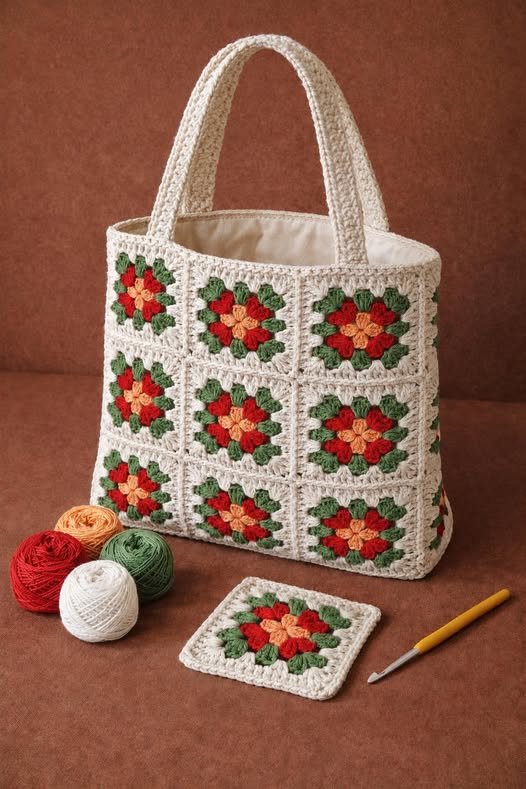
1. Essential Materials and Yarn Selection for Your Crochet Bag
To begin your Crochet Bag with Granny Squares – Tutorial, you must first select the right crochet supplies. The durability of your bag depends heavily on the yarn weight and fiber content. For a sturdy bag that won’t stretch excessively, mercerized cotton yarn or a cotton-acrylic blend is highly recommended. These fibers provide the structural integrity required to carry daily essentials without losing the bag’s original shape over time.
Selecting the correct crochet hook size is equally vital for this granny square project. Usually, a 4.0mm (G) or 5.0mm (H) hook works best with medium-weight yarn. A tighter tension is often preferred for bags to ensure the crochet stitches are dense enough to prevent small items from falling through the gaps. Always check your yarn label for the manufacturer’s recommendation, but don’t be afraid to go down a hook size for a firmer fabric.
Beyond yarn and hooks, your Crochet Bag with Granny Squares – Tutorial kit should include a tapestry needle, sharp scissors, and stitch markers. The tapestry needle is essential for weaving in ends and joining your squares seamlessly. If you plan to carry heavier items, consider purchasing fabric lining and a magnetic snap closure or a zipper. Adding a lining is a professional touch that elevates a simple DIY crochet bag to a retail-quality product.
Color theory plays a massive role in the visual impact of your granny square bag. You can opt for a monochromatic color scheme for a sophisticated look or a multicolor palette to create a traditional “scrapghany” style. Using a neutral border color like cream, white, or black can help unify disparate colors and make each granny square motif pop. Planning your colors before you start stitching will save time and ensure a cohesive final design.
Don’t forget the importance of blocking tools. When you finish your individual crochet squares, they might look a bit curled or uneven. Using a blocking board or stainless steel pins on a foam mat allows you to set the squares into perfect dimensions. This step is a secret used by professional designers to ensure that when the crochet bag assembly begins, every piece aligns perfectly, resulting in clean lines and a polished finish.
Finally, consider the strap material. While you can certainly crochet your handles using the sc (single crochet) or hdc (half double crochet) stitch for strength, you might also explore leather straps or wooden handles. These mixed-media elements add a touch of luxury to the Crochet Bag with Granny Squares – Tutorial. Regardless of your choice, ensuring the handles are securely attached is the key to a long-lasting, functional crochet art piece.
2. Understanding the Classic Granny Square Technique
The core of our Crochet Bag with Granny Squares – Tutorial is the classic motif itself. A standard granny square is worked in rounds, starting from the center and expanding outward. It typically consists of double crochet clusters (groups of three double crochets) separated by chain spaces. This rhythmic pattern is easy to memorize, making it the perfect “on-the-go” project for busy crafters who want to make progress in short bursts.
To start the square, you can use a magic ring or a chain-four loop. The magic ring is preferred by many for a Crochet Bag with Granny Squares – Tutorial because it allows you to pull the center tight, leaving no hole. The first round establishes the four corners of the square, using chain-2 or chain-3 spaces to create the turns. Mastering this foundation is crucial, as the symmetry of your bag depends on the consistency of these initial rounds.
As you progress through the rounds, you will work your clusters into the chain spaces of the previous row. This creates the signature “ventilation” or “lace” look of the granny square. In a crochet bag tutorial, we often recommend working three to five rounds per square, depending on the desired size of the final tote. Keeping your stitch count consistent across all squares is the most important factor for a successful assembly later on.
One advanced tip for the Crochet Bag with Granny Squares – Tutorial is to “flip” your work after every round. While many patterns suggest working only on the right side, turning your work helps prevent the square from “slanting” or spiraling. This ensures your geometric crochet motif stays perfectly square. It is a simple adjustment that significantly improves the professional appearance of your handmade crochet squares.
Color changes are where the magic happens in a granny square bag. You can change colors every round by fastening off the old color and joining the new one in any corner space. This crochet colorwork creates a vibrant, kaleidoscopic effect. If you prefer a more subtle look, you can use a self-striping yarn or a variegated yarn to let the colors transition naturally without the extra work of weaving in multiple yarn tails.
Once you have completed the required number of squares—usually 13 for a standard origami-style crochet bag or 24 for a large crochet tote—you must finish them properly. Each square should be fastened off with a long tail if you plan to use the “invisible join” or “mattress stitch” for assembly. This preparation stage is the bridge between making small pieces of fabric and creating a fully realized crochet fashion accessory.
3. Assembling and Joining Your Crochet Squares
Joining is perhaps the most critical phase of the Crochet Bag with Granny Squares – Tutorial. There are several methods to connect your pieces, such as the slip stitch join, the single crochet join, or the sewn mattress stitch. The slip stitch join creates a flat, nearly invisible seam, while a single crochet join adds a decorative, raised ridge that can frame each square beautifully, adding texture to your crochet handbag.
The layout of your squares determines the shape of the bag. For a modern market bag, a common layout involves arranging the squares in a grid or a specific “L” shape for the origami fold technique. In this Crochet Bag with Granny Squares – Tutorial, we recommend laying all your squares out on a flat surface first. This allows you to visualize the color placement and ensure that the crochet pattern is balanced before you commit to any permanent joins.
When joining, always ensure that you are matching the corner spaces of adjacent squares. Using stitch markers to pin the squares together prevents shifting as you work across the edges. For a durable crochet bag, it is vital that the joins are secure. If you are sewing the squares together, use a whip stitch or mattress stitch with the same yarn used in the project to maintain a seamless look throughout the crochet assembly.
A popular variation in the Crochet Bag with Granny Squares – Tutorial is the “Join-As-You-Go” (JAYGO) method. This technique involves connecting the squares during the final round of crochet. While it requires more focus, it eliminates the need for sewing at the end and creates a very cohesive crochet fabric. This is an excellent SEO-friendly tip for crafters looking to streamline their process and reduce the time spent on finishing tasks.
Once the main body of the bag is joined, you will likely have a jagged top edge. To fix this, you can work several rounds of solid crochet stitches (like single or half-double crochet) around the entire opening. This “border” stabilizes the top of the crochet tote and provides a sturdy base for attaching the handles. It also helps the bag keep its shape when filled with items like a wallet, phone, or books.
The final step in assembly is the handle attachment. Whether you are crocheting long shoulder straps or short hand-held grips, they must be reinforced. Crocheting over a piece of cord or using a thermal stitch can prevent the handles from stretching over time. Attachment points should be reinforced with extra stitches or even small pieces of fabric on the inside to ensure your Crochet Bag with Granny Squares – Tutorial project is as practical as it is beautiful.
4. Professional Finishing Touches and Lining
To truly complete your Crochet Bag with Granny Squares – Tutorial, you should consider adding a fabric lining. While crochet is beautiful, the holes in the granny squares can allow small items like pens or coins to slip through. Using a coordinating cotton fabric to line the interior not only solves this problem but also prevents the yarn from stretching out of shape. It adds a layer of professionalism that distinguishes premium handmade crafts.
Installing a lining is simpler than it sounds. You essentially create a fabric bag of the same dimensions and slip it inside your crochet shell. Hand-sewing the lining to the top border using a blind stitch creates a clean, hidden seam. If you’re feeling adventurous, you can even add interior pockets to your lining to help organize your belongings, making your crochet granny square bag a highly functional everyday tool.
Adding a closure is another way to enhance your Crochet Bag with Granny Squares – Tutorial. A simple crochet loop and button is a charming, rustic choice that fits the granny square aesthetic. Alternatively, for a more secure option, a zipper can be sewn into the top border. If you prefer a minimalist look, hidden magnetic snaps are an excellent choice that provides security without changing the external silhouette of the crochet design.
Don’t overlook the power of branding and embellishments. Adding a small leather “handmade” tag or a personalized label can make your project feel like a high-end boutique item. You might also consider adding crochet tassels, fringe, or pom-poms to the corners for a more playful, bohemian vibe. These small details are what make your Crochet Bag with Granny Squares – Tutorial unique and reflective of your personal style.
Maintenance is key to keeping your hand-crocheted bag looking new. Include a small care note if you are giving the bag as a gift. Most cotton crochet items should be hand-washed in cool water and laid flat to dry. Advise against hanging the bag while wet, as the weight of the water can permanently stretch the yarn fibers. Proper care ensures that your hard work remains a staple in your wardrobe for years to come.
As you finish this Crochet Bag with Granny Squares – Tutorial, take a moment to admire the texture and color of your work. The granny square is a timeless symbol of the craft community, and by creating this bag, you have joined a long tradition of artisans. Whether you keep it for yourself or share it with others, your custom crochet bag is a testament to your creativity and skill in the wonderful world of fiber arts.
FAQ – Frequently Asked Questions
How many granny squares do I need for a standard bag?
For a classic tote or “origami” style bag, you typically need 13 or 24 squares. However, the number can vary depending on the size of your squares and the specific crochet bag construction you choose.
What is the best yarn for a crochet bag?
Cotton yarn is widely considered the best choice because it is inelastic and durable. Unlike wool or acrylic, cotton won’t sag as much when you put heavy items inside your handcrafted bag.
Can a beginner make a granny square bag?
Yes! The Crochet Bag with Granny Squares – Tutorial is a perfect beginner-to-intermediate project. If you know how to make a basic square and a double crochet stitch, you can successfully create a beautiful bag.
Should I line my crochet bag?
While not strictly necessary, lining a crochet bag is highly recommended. It prevents the bag from stretching and keeps smaller items from falling through the gaps in the granny square motif.
How do I stop my crochet handles from stretching?
To minimize stretching, use a non-stretchy yarn, a smaller hook for a tighter gauge, or crochet your handles around a piece of nylon cord. Adding a fabric lining to the handles also works wonders.
Conclusion
In this Crochet Bag with Granny Squares – Tutorial, we have covered everything from selecting the perfect cotton yarn and mastering the classic granny square to the intricate process of joining and adding a professional fabric lining.
This project is a wonderful way to practice your crochet skills while creating something that is both fashionable and functional. By focusing on stitch consistency and quality materials, you can produce a handmade accessory that rivals any store-bought bag.