
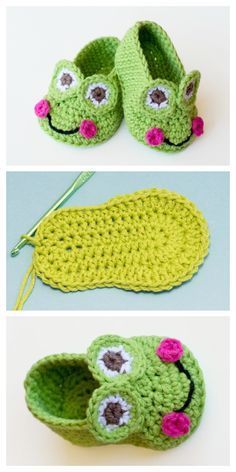
Crochet Frog Baby Booties Pattern is a playful handmade project that transforms a simple pair of baby booties into adorable little frogs with dimensional eyes, rosy cheeks, and a cheerful personality. Inspired by the photographed design, these booties begin with an oval crochet sole and gradually build upward to create a soft, comfortable shoe. The decorative frog face is then added with crocheted circles and small details. Because the construction uses familiar stitches and repetitive shaping, the project can be enjoyable for crocheters who already understand the basics and want to practice working in rounds, increasing, decreasing, and assembling small appliqués.
One of the nicest features of this Crochet Frog Baby Booties Pattern is how easily it can be personalized. Traditional bright or apple green yarn creates the recognizable frog appearance, while white, brown, black, and pink yarn scraps can be used for the eyes and cheeks. You can also experiment with pastel green for a softer nursery look or combine several shades of green to give the finished booties more depth. The pattern is worked mainly with single crochet, making the fabric compact enough to hold its shape while remaining flexible and comfortable. For a baby project, choosing a smooth, washable, baby-friendly yarn is especially helpful.
The finished size can be adjusted according to the baby’s foot by changing the length of the starting chain or using a slightly different hook size. As a general reference, a small pair may have a sole approximately 3.5–4 inches (9–10 cm) long, although babies vary considerably in size. The instructions below should therefore be treated as a customizable handmade pattern rather than a substitute for measuring the intended recipient. The important construction principle is simple: crochet an oval sole, build the sides vertically, shape the toe, form the heel and opening, and finally decorate the front with the recognizable crochet frog face.
Materials, Crochet Abbreviations, and Preparing the Frog Booties
For this Crochet Frog Baby Booties Pattern, choose a soft DK or light worsted-weight yarn that feels comfortable against delicate skin. You will need green yarn for the sole, upper, and frog features, plus small quantities of white, brown or black, and pink yarn. A crochet hook around 3.5 mm to 4 mm is a practical starting point, but the best hook depends on your yarn and tension. You will also need a yarn needle, scissors, and removable stitch markers.
This tutorial uses standard U.S. crochet terminology. The main abbreviations are ch = chain, sl st = slip stitch, sc = single crochet, hdc = half double crochet, dc = double crochet, inc = increase by working two stitches into one stitch, and dec = decrease. A single crochet decrease can be made by working two neighboring stitches together. Knowing these abbreviations makes the instructions much easier to follow.
Begin by making a small gauge sample if accurate sizing is important. Baby booties are tiny projects, so even a small difference in tension can noticeably change the finished dimensions. Crochet several rows of single crochet and observe whether your fabric is firm but flexible. Extremely loose stitches may cause the bootie to lose its shape, while overly tight stitches can make the sole stiff.
For an approximately 3.5–4 inch (9–10 cm) sole, begin with ch 10 in green. Starting in the second chain from the hook, work 2 sc in the first available chain, sc across the intermediate chains, and work several sc into the final chain to turn around the end. Continue crocheting along the unused loops on the opposite side of the foundation chain. This creates the basic oval visible in the construction photo.
On the next round, place increases around both curved ends of the oval while working one sc into most stitches along the straight sides. The exact stitch count can vary according to yarn weight and the desired size, so focus on creating a sole that lies completely flat. If it curls upward, additional increases may be necessary. If it becomes wavy, reduce the number of increases.
Complete another shaping round using sc and hdc stitches around the toe and heel curves. The goal is an elongated oval with a slightly wider toe area. Make two matching soles before continuing if you want to compare their measurements. Consistency between the right and left booties is more important than achieving one exact stitch count.
Building the Sides, Toe, Heel, and Baby Bootie Opening
Once the sole is finished, begin the upper portion of the Crochet Frog Baby Booties Pattern. Work one round of sc around the entire sole without increasing. For a sharper transition between the sole and sides, work this first round through the back loops only. This creates a subtle ridge and encourages the new stitches to rise vertically rather than continuing outward.
Work another round of sc through both loops, keeping your tension consistent. At this stage, the piece should resemble a shallow bowl. Place a stitch marker at the beginning of the round and another marker at the center front of the toe. Identifying the toe center is important because the decreases must remain balanced on both sides to create a symmetrical bootie.
During the following round, work sc around the heel and sides until reaching the front section. Begin making several evenly spaced sc decreases across the toe. A practical method is to decrease approximately four to six times around the curved front, depending on the number of stitches in your sole. Continue with sc around the remaining side and heel.
Repeat the shaping process on the next round, concentrating the decreases more closely around the center front. This gradually closes the toe without making the shoe excessively narrow around the ankle. Check the shape after every few decreases. The photographed booties have a rounded, roomy front, so avoid reducing too aggressively.
Continue crocheting around the heel and sides while shaping the front until the opening has a comfortable oval form. You can add one or two additional rounds of sc around the ankle if you prefer a taller bootie. For a decorative finish, complete the final round with slip stitches or a neat single crochet edging. Fasten off and weave the yarn tail securely into several neighboring stitches.
Make the second bootie using exactly the same construction. Compare the two pieces frequently by placing their soles together and checking the height of the sides and size of the openings. Slight differences are normal in handmade crochet, but matching your tension and recording your round counts will produce a more professional-looking pair.
Crocheting the Frog Eyes, Cheeks, and Facial Details
The frog decorations transform an ordinary green shoe into the distinctive Crochet Frog Baby Booties Pattern. Begin with the eyes. Using brown or dark yarn, make a magic ring and work approximately 6 sc into the ring. Pull the ring closed and join with a slip stitch. This small circle creates the pupil or center portion of the frog’s eye.
Change to white yarn and work 2 sc into each stitch around the circle, creating approximately 12 stitches. Depending on your yarn thickness, you may add another partial or complete round to enlarge the eye. Keep the eye relatively small so that two pieces fit comfortably across the front of the bootie. Fasten off while leaving a long yarn tail for sewing.
For each bootie, make two matching eyes. Position them beside each other near the upper front of the toe. The photographed inspiration uses slightly raised eyes, which gives the frog a charming three-dimensional expression. Sew around the outer edge of each white circle using the yarn tail, keeping every stitch secure and avoiding excessively tight sewing that could distort the bootie.
The pink cheek circles can be created with another tiny crochet motif. Make a magic ring using pink yarn and work 6 sc into the ring. For larger cheeks, work 2 sc in each stitch during a second round. Fasten off with a long sewing tail. Make two cheeks for each bootie and place them beneath and slightly outside the eyes.
A simple smile can be embroidered with dark green, brown, or black yarn. Thread a yarn needle and make a gently curved line beneath the eyes. Instead of pulling one long strand tightly across the surface, secure the smile with one or two tiny anchoring stitches along the curve. This helps the expression remain in position after normal handling and washing.
You can also crochet tiny green bumps or side details to enhance the frog appearance. Make a very short chain, work several sc or hdc stitches into it, and sew the piece beside the face. Keep embellishments firmly attached and avoid beads, buttons, or other detachable small decorations on items intended for babies. Crocheted and embroidered facial features provide the decorative effect without requiring hard accessories.
Finishing, Sizing, Care, and Customizing Your Crochet Frog Baby Booties
After attaching all decorative pieces, inspect the inside of each bootie carefully. Weave every yarn tail through several stitches and trim the excess only after the ends feel secure. The interior should remain smooth, without bulky knots or long loose strands. This finishing step is particularly important for crochet baby booties, where comfort and secure construction matter as much as appearance.
To improve the shape, gently arrange the sole, toe, and heel with your fingers. If your yarn allows it, light blocking can help even the stitches. Avoid excessive heat, particularly with acrylic fibers. Instead, lightly dampen the booties and allow them to dry naturally in the desired shape. Always follow the care recommendations provided for the yarn you selected.
Sizing can be modified by changing the foundation chain. For a slightly larger bootie, add one or two chains and extend the straight sections of the oval accordingly. For a smaller version, remove one or two chains. Keep the increases concentrated around the rounded ends so the sole remains flat. Measure the sole throughout the process rather than relying exclusively on age labels.
The frog baby booties crochet pattern can also be customized through color. Bright green creates a classic cartoon-inspired frog, while mint, sage, lime, or pastel green produces very different styles. Pink cheeks provide a cheerful contrast, but peach, coral, yellow, or another complementary color can work beautifully. The eye centers can be brown, dark green, gray, or black.
If you want a warmer pair, select a slightly thicker yarn and adjust your hook accordingly. Remember that thicker yarn will increase every dimension of the project. Rather than automatically following the same number of rounds, compare the sole with your target measurement as you work. This simple habit makes it much easier to customize handmade footwear successfully.
Finally, make sure the completed booties are appropriate for their intended use. These soft crocheted shoes are best considered cozy decorative footwear rather than walking shoes. For babies who are beginning to stand or walk, smooth yarn soles may not provide suitable traction on hard floors. Keeping the design soft, securely assembled, and free from detachable embellishments preserves the practical handmade character of the project.
Frequently Asked Questions About the Crochet Frog Baby Booties Pattern
Is the Crochet Frog Baby Booties Pattern suitable for beginners?
Yes, it can be a good project for an adventurous beginner who already knows how to make chains, single crochet stitches, increases, decreases, and slip stitches. The basic bootie construction is repetitive, while the small frog appliqués provide useful practice with crocheting in the round.
What yarn is best for crochet baby booties?
A soft, washable yarn is generally the most practical choice. DK or light worsted-weight yarn works particularly well because it provides enough structure for the bootie while remaining comfortable. Always check the yarn manufacturer’s care instructions before making an item that will require frequent washing.
How large should the crochet sole be?
For the small size described in this tutorial, approximately 3.5–4 inches (9–10 cm) is a useful reference range. However, foot size differs from baby to baby, so measuring the intended recipient or comparing the sole with a properly fitting shoe provides better guidance than age alone.
Why is my crochet sole curling?
Curling often means there are too few increases around the curved ends or that your tension is unusually tight. Add increases gradually around the toe and heel and place the sole on a flat surface after each round. A properly shaped oval should rest relatively flat before you begin building the sides.
Why is my sole becoming wavy?
A wavy sole usually indicates too many increases. Instead of increasing repeatedly along the straight edges, concentrate increases around the curved toe and heel areas. If the fabric begins ruffling, undo the most recent round and reduce the number of increases.
How do I make both frog booties the same size?
Write down the stitch count and number of rounds used for the first bootie. Use the same yarn, hook, and tension for the second one. Comparing both pieces after the sole, side, and toe stages will help you notice differences before the project is completely assembled.
Can I make these frog booties in different colors?
Absolutely. Although green is strongly associated with frogs, the pattern can be personalized with lime, mint, sage, turquoise, or even imaginative multicolored combinations. Keeping contrasting eyes and cheeks helps the facial details remain visible.
Can I replace the crocheted eyes with buttons?
For baby items, securely crocheted or embroidered details are a preferable design choice because buttons and similar detachable pieces can become small loose parts. The crocheted eyes described here maintain the playful dimensional appearance without requiring hard decorative accessories.
How can I make the ankle opening tighter?
You can add a final round with a slightly smaller hook or carefully work a few evenly distributed decreases around the opening. Avoid making it excessively tight. The opening should be secure enough to help the bootie stay on while still allowing the foot to enter comfortably.
Can these booties be machine washed?
That depends primarily on the yarn. Many baby-friendly acrylic and cotton-blend yarns are washable, but fiber care instructions vary. Secure all yarn ends thoroughly and follow the washing and drying recommendations for the specific yarn used.
How do I make the frog face look symmetrical?
Position all pieces before permanently sewing them. Place the two eyes first and check their distance from the center of the toe. Then position the cheeks beneath them. Using removable stitch markers to temporarily hold the appliqués can help you compare both booties before sewing.
Are crochet baby booties appropriate for walking?
These booties are primarily soft handmade footwear for warmth, photographs, gifts, or pre-walking use. A standard crocheted sole may be slippery on smooth surfaces and does not provide the structure of footwear designed specifically for walking.
Conclusion
The Crochet Frog Baby Booties Pattern combines straightforward crochet construction with playful decorative details. Starting with an oval foundation allows you to establish the correct foot length before building the sides, while strategically placed decreases shape the rounded toe and comfortable opening. Once the basic bootie is complete, crocheted eyes, pink cheeks, and an embroidered smile transform the simple green shoe into a cheerful frog design.Throughout this project, the most useful techniques are single crochet, crochet increases, crochet decreases, working around a foundation chain, crocheting small circles, and securely sewing appliqués. These techniques appear in many other crochet projects, so making a pair of frog booties can also be a practical way to strengthen fundamental crochet skills.
Remember that handmade sizing naturally changes according to yarn weight, hook size, and individual tension. Measure as you crochet, keep notes from the first bootie, and use those same measurements for the second. Taking a little extra time during shaping and assembly can make a noticeable difference in the symmetry and finish of your completed pair.This Crochet Frog Baby Booties Pattern can become a charming handmade baby gift, nursery accessory, or addition to a collection of animal-inspired crochet projects. Experiment with different shades of green and facial expressions while keeping all decorations securely stitched and comfortable. If you make your own version, leave your sincere opinion about the pattern and share any suggestions or creative variations you would like to see included in future crochet projects.