
Toiletry Bag – Tutorial: Creating your own custom travel gear is one of the most rewarding sewing projects you can undertake. Whether you are prepping for a weekend getaway or looking for the perfect, thoughtful gift, learning how to construct a durable and stylish toiletry bag ensures you always travel in style. In this comprehensive step-by-step guide, we will break down the entire process from fabric selection to the final stitch, making it accessible even if you are relatively new to the sewing machine.
The beauty of a handmade toiletry bag lies in its complete customizability. You get to choose the exact dimensions, the number of internal pockets, and most importantly, the textiles that match your personal aesthetic. From rugged canvas to sleek waterproof linings, the choices you make during this tutorial will determine how well your pouch stands up to accidental shampoo spills and the rigors of travel.
Mastering this construction technique also opens the door to sustainable crafting practices. Many makers use a toiletry bag – tutorial like this one as a creative way to upcycle robust textiles, such as turning old denim jeans or heavy cotton remnants into sturdy, functional organizers. By focusing on proper reinforcement and neat seam finishes, your finished piece will easily rival high-end boutique options while carrying the unique charm of a handmade creation.
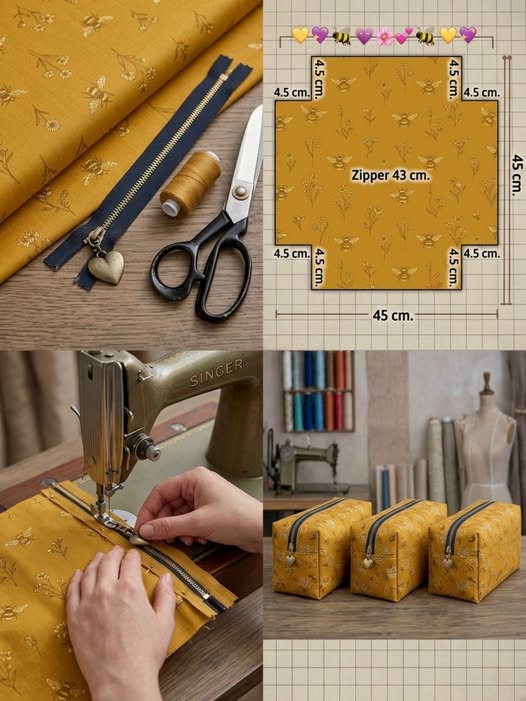
1. Selecting the Right Materials for Your Project
When embarking on a toiletry bag – tutorial, your first major decision revolves around fabric selection. The exterior of a toiletry bag needs to be durable enough to withstand being tossed into suitcases and placed on damp bathroom counters. Heavy-weight cotton canvas, waxed canvas, duck cloth, and structured denim are fantastic options that provide the necessary body and longevity for the exterior shell.
Equally important is the interior lining of your travel pouch. Since this item is designed to hold liquids, cosmetics, and shaving gear, choosing a water-resistant or easily cleanable lining fabric is highly recommended. Materials like laminated cotton, nylon ripstop, or water-resistant polyester will protect the outer shell from leaks and can be wiped clean with a damp cloth in seconds.
To give your travel organizer that professional, structured look, you must not skip the interfacing. A fusible fleece or heavy woven interfacing attached to the exterior pieces ensures the pouch holds its boxy shape even when completely empty. Without this hidden support layer, your finished project may end up looking slouchy and deflated rather than crisp and defined.
The hardware you select plays a massive role in both the functionality and aesthetic appeal of your build. A high-quality nylon coil or metal zipper measuring at least 10 to 12 inches is essential for creating a wide, accessible opening. Nylon coil zippers are particularly popular for beginners because they are easy to shorten and sew over without breaking your machine’s needle.
Do not forget the minor notions that make a major difference during construction. You will need strong polyester thread that matches your fabric, a denim or heavy-duty machine needle to pierce through multiple layers, and fabric clips rather than pins if you are working with waterproof materials that retain permanent pinholes.
Having the right cutting tools prepared will streamline your workspace significantly. A rotary cutter, a self-healing mat, and a long quilting ruler are ideal for achieving the perfectly square panels required for a boxy travel pouch. Ensuring your initial cuts are mathematically precise prevents alignment issues later when boxing the corners.
2. Preparing and Cutting Your Fabric Pieces
Before making your very first cut, it is highly recommended to pre-wash your exterior cotton fabrics. Pre-washing prevents unexpected shrinkage down the line if your travel pouch ever needs to go through the laundry machine. Once dried, give the textile a crisp press with an iron to eliminate all wrinkles, ensuring your measurements remain completely accurate.
For a standard, spacious travel case, you will need to cut two identical rectangles for the exterior shell and two for the lining. A versatile dimension to start with is 11 inches wide by 7 inches tall for each panel. This ratio provides ample room for full-sized toothbrushes and travel bottles without becoming overly bulky in your luggage.
Next, cut two pieces of your chosen fusible interfacing matching the exact dimensions of your exterior fabric panels. Follow the manufacturer’s instructions carefully to iron the bumpy, textured side of the interfacing directly onto the wrong side of your exterior fabric pieces. Use a pressing cloth to protect your iron’s soleplate from any stray adhesive.
If you want to add an external grab handle or a small finger loop near the zipper tape, cut a small strip of fabric measuring 2 inches wide by about 6 inches long. Fold this strip lengthwise, press it, open it up, fold the raw edges toward the center crease, and press again before topstitching down both sides to create a durable strap.
To create the classic boxy structure that allows the pouch to stand upright on its own, we need to mark and cut squares out of the bottom corners. On the bottom left and bottom right corners of all four main panels (two exterior, two lining), carefully measure and cut out a 1.5-inch square using your fabric shears.
Lay out your prepared pieces systematically on your cutting table before heating up your sewing machine. You should now have two interfaced exterior rectangles with corner cutouts, two lining rectangles with identical cutouts, your prepared zipper, and your finished grab handle strap. Double-checking your alignment now guarantees a much smoother assembly process.
3. Mastering the Zipper Installation Process
Installing a zipper can feel intimidating, but following a structured sandwich method makes it incredibly straightforward. Start by placing one of your interfaced exterior fabric pieces face-up on your work surface. Align the zipper tape face-down along the top raw edge of the fabric, ensuring the zipper pull is on the left side.
Next, place one of your lining pieces face-down directly on top of the zipper, matching the top raw edge exactly. Your zipper is now sandwiched perfectly between the right sides of your exterior and lining fabrics. Secure this multi-layered sandwich together tightly using fabric clips or sewing pins placed perpendicular to the edge.
Attach a specialized zipper foot to your sewing machine to allow you to stitch closely to the zipper teeth. Sew carefully along the top edge using a standard quarter-inch seam allowance. When you approach the bulky zipper pull, drop your needle down into the fabric, lift your presser foot, slide the pull out of the way, lower the foot, and continue sewing.
Once stitched, flip both fabric panels away from the zipper teeth so that the wrong sides are facing each other, exposing the beautiful zipper installation. Press the fabric gently away from the zipper with your iron, taking care not to melt the nylon teeth if you are using a synthetic zipper or a waterproof lining material.
To prevent the lining fabric from ever catching in the zipper teeth during daily use, it is crucial to topstitch this edge. Run a neat line of stitching roughly one-eighth of an inch away from the fabric edge through both the exterior and lining layers. This step adds immense structural integrity and looks highly professional.
Repeat this exact sandwiching process for the remaining side of the zipper tape using your second exterior panel and second lining panel. Take your time aligning the side edges of the fabrics perfectly so that your finished pouch does not twist or warp out of shape once the final seams are closed.
4. Assembling the Body and Boxing the Corners
Before proceeding with the main body assembly, there is one non-negotiable step: unzip your zipper at least halfway. If you forget to open the zipper now, you will lock yourself out of the project and will not be able to turn your finished travel case right-side out once the side seams are completely closed.
Separate your fabric layers so that the two exterior pieces are facing right sides together, and the two lining pieces are facing right sides together. Align all the outer edges perfectly, matching up the zipper seams in the center. Secure the perimeter with clips, ensuring the raw edges of the cut-out corner squares match up precisely.
Sew along the top long edge of the exterior pieces, the bottom long edge of the exterior pieces, and both short vertical sides. When sewing the lining side, leave a 4-inch opening unsewn along the bottom edge. This intentional gap is the turning hole that allows you to reverse the entire bag later.
Now it is time to transform your flat pouch into a three-dimensional container by boxing the remaining corners. Reach your fingers inside one of the cut-out corner squares and pull the two opposite fabric layers apart until the side seam aligns directly on top of the bottom seam. Flatten the resulting straight line and clip it securely.
Sew straight across this newly formed flat edge using a sturdy half-inch seam allowance, backstitching heavily at both the beginning and the end of the seam. Repeat this exact manipulation for all four corners—the two on the exterior shell and the two on the internal lining layer—to give the bag its stable, flat bottom.
Reach your hand through the open turning hole in the lining, grab the exterior fabric through the half-unzipped zipper, and carefully pull the entire bag right-side out. Use a blunt tool like a chopstick to gently poke out the corners, fold the raw edges of the lining turning hole inward, stitch it closed cleanly, and push the lining inside.
Frequently Asked Questions
What are the best dimensions for a travel makeup pouch?
A versatile and highly practical size for a daily makeup or travel pouch is roughly 8 to 10 inches wide, 5 to 6 inches tall, and 3 to 4 inches deep. This volume accommodates standard makeup brushes, compact palettes, and travel-sized lotion bottles without taking up excessive real estate inside a standard backpack or carry-on suitcase.
Can I make this project using a regular home sewing machine?
Yes, a standard home sewing machine can easily handle this project. However, because you will be stitching through multiple layers of heavy fabric, interfacing, and zipper tape at the corners, it is essential to install a heavy-duty needle (such as size 90/14 or 100/16 denim needle) and sew slowly over bulky intersections.
How do I clean my finished handmade travel bag?
Cleaning depends heavily on your material choices. If you utilized standard cotton canvas and a laminated cotton lining, hand washing in warm soapy water followed by air drying is best. Avoid putting waxed canvas or highly structured synthetic linings into a hot washing machine or dryer, as extreme heat can ruin the finishes.
Is it better to use a metal or a nylon zipper for toiletries?
Nylon coil zippers are generally preferred for items holding toiletries. Nylon does not rust when exposed to bathroom humidity or accidental water splashes, and the teeth are flexible, allowing the bag to pack down more easily. Metal zippers offer a premium aesthetic but can occasionally snag or corrode over time if kept in damp environments.
Conclusion
In this toiletry bag – tutorial, we covered everything needed to create a durable, gorgeous, and highly functional travel companion from scratch. By carefully selecting robust exterior fabrics, incorporating water-resistant linings, reinforcing your panels with interfacing, and mastering the art of boxed corners, you now possess the core skills to manufacture professional-grade fabric organizers.
This foundational pattern can be easily scaled up or down to create matching travel sets of various sizes.