
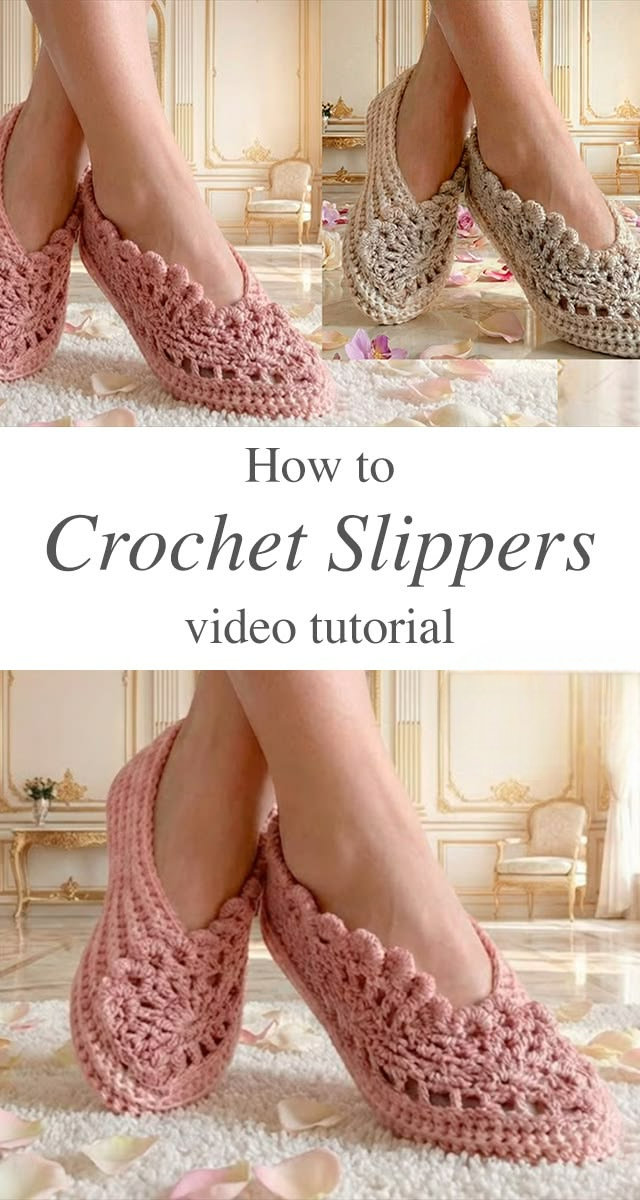
Lightweight crochet slippers – Tutorial is your ultimate guide to crafting the most comfortable, breathable, and stylish footwear for relaxing at home. There is nothing quite like slipping your feet into a pair of handmade shoes after a long, exhausting day, especially when they are customized to fit you perfectly. In this comprehensive guide, we will explore everything you need to know about creating your own cozy footwear using simple stitches and accessible techniques. Whether you are a seasoned maker looking for a quick weekend project or a beginner eager to dive into the world of functional yarn crafts, this step-by-step walkthrough is designed to ensure your complete success.
Choosing to make lightweight crochet slippers allows you to control every aspect of the final product, from the exact yarn composition to the thickness and flexibility of the sole. Many commercial slippers tend to trap heat, causing your feet to sweat, or they lack the custom shaping needed for genuine comfort. By mastering this crochet slippers tutorial, you will unlock the ability to make breathable footwear that keeps your toes cozy without overheating, making them ideal for year-round wear. Furthermore, these handmade items make incredibly thoughtful, personalized gifts for friends and family members who appreciate the charm and utility of artisan crafts.
As we dive into this project, you will find that optimizing your stitching technique and choosing the right materials are the keys to a durable and comfortable end result. This guide balances easy-to-follow directions with expert tips to help you elevate your crafting skills while producing a beautiful, wearable accessory. We will cover the best yarn selections, proper measurement techniques, a detailed construction process, and essential care instructions to keep your projects looking brand new. Get your hooks ready, gather your favorite lightweight yarn, and let us begin this rewarding creative journey together.
1. Choosing the Best Yarn and Hook for Your Project
When embarking on a project like lightweight crochet slippers, selecting the right fiber is the absolute foundation of your success. You want a material that is sturdy enough to withstand regular friction against the floor but light enough to remain breathable. A cotton blend or a high-quality bamboo yarn is often the perfect choice for summer or indoor wear because these fibers naturally wick moisture away from the skin. Avoid bulky or super-thick wools for this specific project, as they will make the footwear feel heavy and clumsy.
The weight of the yarn also plays a massive role in how the final piece sits on your foot. A category 3 lightweight yarn or a versatile sport weight is highly recommended for achieving a flexible, sock-like texture. If the yarn is too thick, the stitches become dense and rigid, which defeats the purpose of a delicate, airy design. Look for options with a small percentage of nylon or acrylic blended in, as this provides the necessary elasticity and tensile strength for long-term wear.
Matching your yarn with the correct hook size ensures your tension is absolutely flawless throughout the entire process. For a sport or DK weight yarn, a 4.0mm crochet hook or a G/6 hook is generally the industry standard to achieve a balanced drape. However, if you naturally tend to stitch tightly, you might want to size up slightly to keep the fabric soft and pliable. Conversely, loose stitchers should drop down a hook size to maintain a firm structure that holds its shape.
Before you begin working on the actual pattern, it is highly beneficial to create a small gauge swatch to test your tension. A gauge swatch prevents the frustrating scenario of completing a whole piece only to realize it is far too large or small for your foot. Simply chain a small square using the recommended hook and stitch, then measure how many stitches fit into a standard four-inch area. Adjust your hook size accordingly until your measurements align perfectly with the standard sizing guidelines.
Investing time in selecting premium materials means your finished footwear will survive multiple trips through the washing machine without losing its charm. Since these items spend all their time on the floor, choosing a machine-washable option is a practical decision that saves you maintenance headaches later. Check the yarn label carefully for care icons to confirm that the fiber can handle a gentle wash cycle without shrinking.
Ultimately, the combination of a breathable fiber and the correct hook gauge results in an exceptional piece of wearable art. The right tools make the actual crafting process incredibly smooth, reducing hand fatigue and allowing you to enjoy every single loop you form. Once your materials are neatly organized on your workspace, you are officially ready to transition into the next essential phase of preparation.
2. Accurate Measurements for a Perfect Custom Fit
The absolute best part of a lightweight crochet slippers – tutorial is the ability to customize the dimensions to match your exact foot shape. Standard store-bought sizes rarely account for wide feet, high arches, or unique toe shapes, but custom crochet solves all of these issues seamlessly. To begin, you will need a soft measuring tape, a piece of paper, and a pencil to record your unique dimensions accurately.
Start by placing your bare foot firmly on the piece of paper while standing up naturally to ensure your weight is distributed evenly. Trace around the entire perimeter of your foot with the pencil, keeping the lead as close to your skin as possible for accuracy. Once the outline is complete, use your measuring tape to measure the maximum distance from the back of your heel to the tip of your longest toe.
Next, you need to measure the widest part of your foot, which is typically located right across the ball of the foot near the base of your toes. Wrap the flexible measuring tape entirely around this area to find the circumference, ensuring the tape is snug but not constricting. Write down this number clearly, as it determines how many stitches you will need to accommodate the width of your foot.
It is vital to remember that crochet fabric naturally stretches and expands over time as you walk around the house. To prevent your finished footwear from slipping off your heels, it is a smart strategy to engineer negative ease into your calculations. This means you should design the piece to be roughly 5% to 10% smaller than your actual foot measurements, allowing the yarn to stretch comfortably for a secure fit.
If you are crafting these beautiful items as a surprise gift for a friend, you can utilize standard shoe size charts as a reliable baseline guide. For instance, a standard US women’s size 7 generally corresponds to a foot length of approximately 9.25 inches, while a size 9 is roughly 9.9 inches. You can easily adjust the row count in the sole section of the pattern to match these standard metrics whenever direct measurements are unavailable.
Taking these precise calculations into consideration before you begin stitching guarantees that your hard work results in an incredibly comfortable accessory. No one enjoys wearing shoes that slide off constantly or pinch the toes, so accurate measuring is the ultimate secret to professional-grade results. With your exact numbers written down, you can confidently move forward to the actual construction of the sole and upper body.
3. Step-by-Step Construction of the Slipper Sole
To begin the actual construction phase of your lightweight crochet slippers, we always start from the bottom up by building a sturdy, flat foundation. The sole needs to be dense enough to protect your feet from cold floors while remaining flexible enough to bend naturally as you walk. For this tutorial, we will use a combination of single and half-double crochet stitches to create an ergonomic shape that mimics a real foot.
Start by making a slip knot and creating a foundation chain that equals roughly 60% of your total measured foot length. For an average adult size, this is typically a starting chain of 15 to 20 stitches using your selected medium-weight yarn. You will work completely around both sides of this initial chain in continuous rounds, creating an elongated oval shape that gradually expands outwards.
In the first round, place multiple stitches into the very last chain to create a smooth, rounded curve for the toe area, then work back down the opposite side. As you reach the heel end, you will perform a similar increase sequence to ensure the piece stays perfectly flat on your table. Using a vibrant stitch marker to track the exact beginning of each round is highly recommended so you never lose your place.
As you progress into the second and third rounds, transition to half-double crochets around the wider toe area to give it extra room, while keeping tight single crochets near the heel. This clever variation in stitch height automatically creates a contoured shape that matches the natural anatomy of a human footprint. Keep a close eye on your tension here, making sure the edges do not curl upward prematurely during these base rounds.
Continue adding rounds and making structured increases at the exact turning points until the crocheted oval matches the width and length of your prepared foot template. For a standard lightweight model, three to four complete rounds are usually more than enough to achieve the desired surface area without adding unnecessary bulk. Once the sole matches your template, fasten off the yarn securely and weave in the loose ends with a tapestry needle.
Repeat this exact identical process a second time so that you have two matching soles ready for the next assembly phase of the project. Consistency is incredibly important here, so make sure to count your total stitches on both pieces to verify they are completely identical. With your durable foundations successfully completed, you are ready to build upward and create the cozy upper portion of the footwear.
4. Crafting the Upper Body and Elegant Finishing Touches
Now that your bases are complete, it is time to build the upper shell of your lightweight crochet slippers to enclose the foot comfortably. Reattach your yarn directly to the center of the heel area on your sole, preparing to work in vertical rounds without any more increases. This transition round is often worked into the back loops only, which creates a clean, crisp ridge that clearly defines the bottom edge of your shoe.
For the first few rows of the upper section, simply place one single crochet into every single stitch around the entire perimeter of the base. This uniform stitching causes the fabric to naturally cup upward, forming the side walls that hug the edges of your feet securely. Keep your stitches relatively firm during these rounds to ensure the sides provide adequate support and structural integrity.
As you reach the front section near the toes in subsequent rounds, you will begin executing strategic decreases to close the top of the foot. By crocheting two stitches together across the front half of the project, you quickly fashion a beautiful, sloped toe box that keeps your foot snugly inside. This rapid decrease technique gives the footwear its classic loafers shape while maintaining maximum flexibility over the instep.
Once the toe box reaches the desired height and covers your toes comfortably, you can customize how high up the ankle the remaining opening sits. Some makers prefer a low-cut ballet style for an ultra-light experience, while others like a higher ribbing for extra warmth and security. You can easily add a couple of rows of post-stitches around the opening to create a stretchy, ribbed cuff if you prefer a tighter fit.
To give your project a polished, professional look, finish the final top round with a clean surface slip stitch or a delicate reverse single crochet border. This simple step reinforces the opening of the shoe, preventing it from stretching out excessively after weeks of continuous daily use. Fasten off your yarn, leave a small tail for securing, and use a yarn needle to hide all remaining threads inside the stitches.
To add a touch of personal flair, you can embellish your finished creation with handmade wooden buttons, delicate crochet flowers, or stylish contrast borders. If you have slick hardwood or tile floors in your home, consider applying a few dots of puff paint or liquid silicone to the bottoms. This easy modification adds a highly effective non-slip grip to your lightweight crochet slippers, making them perfectly safe and incredibly cozy.
Frequently Asked Questions (FAQ)
What is the best type of yarn for making indoor slippers?
The ideal choice is a high-quality cotton blend, bamboo, or a premium acrylic yarn that features a blend of nylon. Pure cotton provides excellent structure and breathability, preventing your feet from sweating, while nylon adds necessary durability and stretch. Avoid heavy wools if you want a lightweight feel, and always ensure the material is machine-washable for easy maintenance.
How do I prevent my crochet slippers from being too slippery on smooth floors?
You can easily add a non-slip grip to the soles of your footwear using a few affordable techniques. Applying small dots or lines of clear puff paint, liquid silicone, or specialized rug stop spray to the bottom of the soles works beautifully. Alternatively, you can sew small patches of faux leather or suede to the high-friction areas for a classic look.
Can a total beginner successfully complete this crochet tutorial?
Yes, absolutely. This project relies primarily on foundational stitches like the single crochet, half-double crochet, and basic decreasing methods. Because it is a relatively small project, it serves as an excellent way for beginners to practice tension control, stitch counting, and working in continuous rounds without feeling overwhelmed.
How do I wash and dry my handmade lightweight footwear?
To maximize the lifespan of your project, it is best to wash them by hand in cool water with a mild detergent. If you prefer using a washing machine, place the items inside a mesh lingerie bag and select a delicate, cold cycle. Always reshape the footwear while damp and lay them flat on a dry towel to air dry completely.
How long does it typically take to finish a complete pair?
Because these items use a lightweight yarn design and compact construction, an average crafter can easily finish a complete pair in just 3 to 5 hours. This rapid turnaround time makes them an incredibly satisfying weekend project or a wonderful last-minute option for handmade holiday and birthday gifts.
Conclusion
In this comprehensive lightweight crochet slippers – tutorial, we have covered every essential stage of creating your own custom, comfortable indoor footwear. From choosing the ideal breathable fiber and selecting the perfect hook size to taking custom measurements and executing structured stitches, you now possess the knowledge to create high-quality accessories.
This project perfectly demonstrates how simple techniques can be combined to produce highly functional, beautifully fitted items that bring comfort to your daily routine. Crafting your own shoes allows you to showcase your creativity while enjoying a practical product that is perfectly tailored to your personal style.